Creating a Sleep Schedule That Works With Delayed Sleep Phase Disorder
You can create a sleep schedule that works with delayed sleep phase disorder by gradually shifting bedtime 15–30 minutes earlier each night. Pair morning light therapy-20–30 minutes near a 10,000-lux light box-with taking 0.5–3 mg melatonin 2–3 hours before your current bedtime. Keep wake times consistent, even on weekends. A calm evening routine, including dim lighting and screen avoidance, supports lasting change. More adjustments can help refine your rhythm over time.
Notable Insights
- Gradually shift bedtime earlier by 15 to 30 minutes nightly until reaching the desired sleep schedule.
- Use morning light therapy for 20–30 minutes upon waking to reset circadian rhythms effectively.
- Take 0.5–3 mg of melatonin 2–3 hours before current sleep onset to help advance the internal clock.
- Maintain consistent sleep and wake times daily, including weekends, to stabilize the new schedule.
- Create a calming pre-sleep routine with dim lighting and reduced screen exposure to support earlier sleep.
What Is Delayed Sleep Phase Disorder (DSPD)?
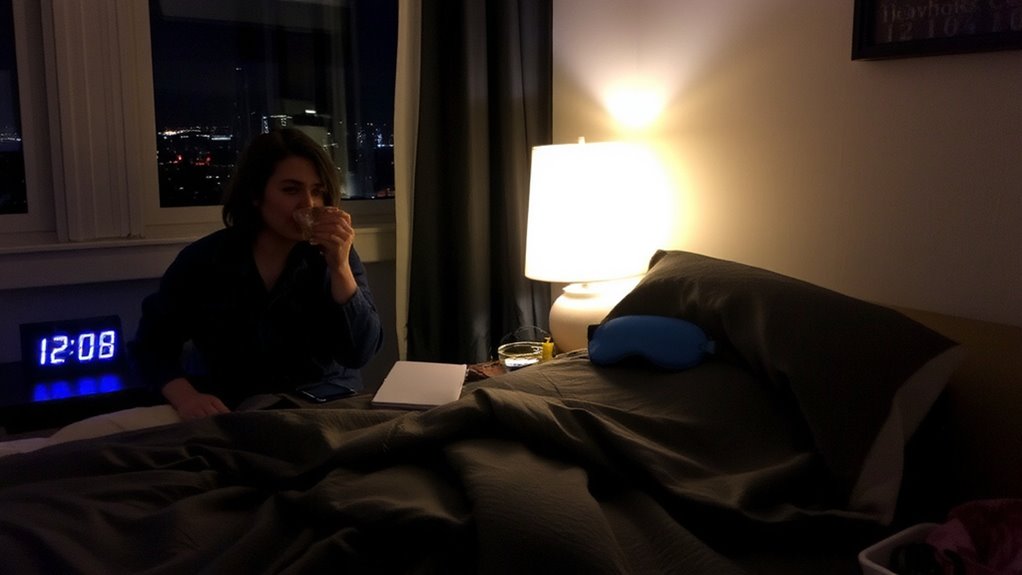
Ever wonder why you feel wide awake late at night when most people are asleep? You might have Delayed Sleep Phase Disorder (DSPD), a condition where your sleep patterns shift markedly later than typical. Your circadian rhythm - your body’s internal clock - runs on a delayed schedule, making you fall asleep much later and wake up later too. It’s not just staying up late; it’s a real timing mismatch between your body and societal norms. People with DSPD naturally drift toward sleeping from, say, 3 a.m. to noon. Trying to sleep earlier often leads to frustration or poor sleep quality. The disorder is common in teens and young adults. Treatments like light therapy or melatonin can help reset your circadian rhythm, but consistency matters most. Accurate diagnosis guarantees you choose effective, science-backed strategies tailored to your needs.
How DSPD Disrupts Your Daily Life
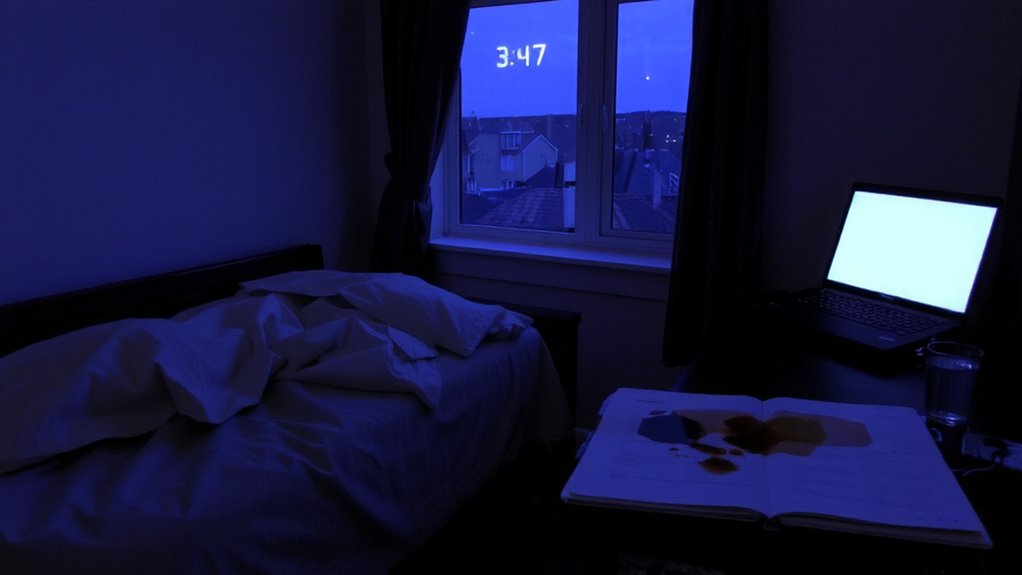
Why does waking up for school or work feel like climbing a mountain when you’ve barely slept? Because DSPD shifts your natural sleep cycle hours behind, making early mornings a constant battle. You’re not lazy-your body simply isn’t ready to wake then, no matter how hard you try. This ongoing mismatch leads to chronic mental fatigue, making focus, memory, and daily tasks harder over time. Missing morning commitments can strain relationships or limit opportunities, slowly leading to social isolation. You might skip events or decline plans just to protect your sleep, further disconnecting from friends or routines. These patterns affect job performance and school success, creating stress that’s hard to escape. Recognizing this disruption helps you consider options like adjusted schedules, consistent sleep hygiene, or professional support. Understanding your limits isn’t giving up-it’s taking the first step toward better decisions for your sleep and well-being.
Try Morning Light Therapy for DSPD

How do you reset a sleep cycle that feels stuck in another time zone? Morning light therapy might help. By using a light box that delivers bright, full-spectrum light exposure first thing in the morning, you signal your brain to stop producing melatonin and start waking up. This daily practice supports circadian alignment, gradually shifting your internal clock earlier. Aim for 20 to 30 minutes of light therapy within 30–60 minutes of waking, ideally with a 10,000-lux lamp positioned just off-center to reduce eye strain. Consistency matters-using the device at the same time every day improves results. While individual responses vary, many people with DSPD notice improved alertness and earlier sleep onset after a few weeks. Light therapy boxes are generally safe, non-invasive, and available without prescription, though some models include warranties or adjustable brightness settings for comfort.
Take Melatonin at the Right Time
When timing melatonin correctly, you can support your body’s natural shift toward an earlier sleep schedule. Timing precision matters-take melatonin 2 to 3 hours before your current sleep onset to gradually reset your internal clock. For it to work well, you’ll need dosage consistency, usually between 0.5 mg and 3 mg nightly. Sticking to the same dose and time helps your body adjust without disruption. A variety of best melatonin sleep aids are available to support consistent dosing and optimal absorption.
| Time Before Sleep | Dose Range (mg) |
|---|---|
| 3 hours | 0.5 |
| 2.5 hours | 1 |
| 2 hours | 2 |
| 1.5 hours | 3 |
| Not recommended | >3 |
Work with your doctor to find your ideal window and dose. Consistent use, combined with light exposure in the morning, increases effectiveness. Avoid late timing-it can delay sleep further. Trial different schedules under professional guidance to test responses safely.
Shift Your Sleep Schedule Gradually
You’ll usually find it more effective to shift your sleep schedule in small, steady steps rather than making sudden changes. Try moving your bedtime 15 to 30 minutes earlier each night until you reach your target time. This gradual shift supports better bedtime consistency and helps your body adjust without stress. Keep your sleep duration steady-around 7 to 9 hours-so you’re not losing rest while resetting your rhythm. Stick to the new time even on weekends, since inconsistency can slow progress. Light exposure matters too; get morning light to help anchor your internal clock. If you’re using melatonin, time it properly to support the shift. Be patient-this process can take days or weeks, depending on how far you’re shifting. Track your progress daily to see patterns and adjust as needed.
Build a Sleep-Ready Evening Routine
Shifting your bedtime in small steps sets the stage for a more effective reset of your internal clock, and pairing that change with a consistent evening routine strengthens the signal to your body that sleep is coming. Start your wind down strategies at the same time each night, like dimming lights, reading, or light stretching, to ease into sleep mode. A screen detox an hour before bed reduces blue light exposure, which can delay melatonin release and push your rhythm later. Choose low-light activities without stimulating content-audiobooks or podcasts work well. Keep the environment quiet and cool, and consider blackout curtains if light sensitivity is an issue. These steps aren’t a cure, but they support your body’s natural shift toward an earlier sleep window. Consistency matters more than perfection, so stick with it even on weekends. For added comfort during your wind-down routine, selecting the right pillow filler can improve sleep quality, with options like memory foam and down alternative offering distinct support and breathability benefits depending on your sleeping position and preferences. Best Pillow Fillers
See a Sleep Specialist for DSPD
While self-guided adjustments can help shift your sleep schedule over time, seeing a sleep specialist often makes a meaningful difference if you’re struggling with persistent delays in your sleep-wake cycle. A professional diagnosis confirms whether you truly have Delayed Sleep Phase Disorder and not another sleep issue. Sleep clinics offer monitoring tools and expert evaluations to assess your patterns accurately. They might use sleep studies or actigraphy to track your rhythms over time. Once confirmed, specialists recommend tailored strategies like timed light therapy, melatonin use, or chronotherapy. These treatments work best when guided by someone familiar with circadian disorders. Treatment plans may also include follow-up visits to adjust timing or dosage. Some clinics offer remote consultations, making access easier. A professional diagnosis not only validates your experience but also directs you toward evidence-based solutions that align with your biology.
On a final note
You can manage delayed sleep phase disorder by combining light therapy, well-timed melatonin, and gradual schedule shifts. A consistent evening routine helps signal bedtime, while morning light exposure supports circadian alignment. These strategies work best when tailored to your biology. Seeing a sleep specialist guarantees accurate diagnosis and safe use of treatments. Temporary aids like melatonin should be used as directed, with attention to timing and dosage. Small, steady changes often yield lasting results.