How to Advocate for Flexible Work Hours With Delayed Sleep Phase Disorder
You’re protected by disability laws if your delayed sleep phase disorder affects daily functioning, and your company likely has policies for accommodations. Track your sleep and alertness to show how early starts reduce focus. Pick a later start time that matches your energy peaks, like 10:15 a.m., and build a case using performance data. Propose a trial with clear goals, keep hours consistent, and adjust based on results-proof of sustained productivity helps secure long-term change. More steps make the process clearer.
Notable Insights
- Document your sleep patterns and work performance to show how DSPD impacts your productivity during standard hours.
- Review company policies and disability accommodations to understand your rights and procedural requirements for flexible hours.
- Align your proposed work schedule with your circadian rhythm to start when you are most alert and focused.
- Build a data-driven case showing improved performance during your peak hours and suggest a formal trial period.
- Maintain consistent sleep-wake times, even on weekends, to stabilize your rhythm and reinforce the need for schedule flexibility.
Know Your Rights and Company Policies

Start by understanding the legal protections and workplace rules that apply to your situation. You’re entitled to legal protections under disability laws if DSPD markedly affects your daily functioning. These laws may require your employer to evaluate adjustments like flexible hours. Check your company’s policy review documents-they often outline procedures for accommodations. Look for details on eligibility, required medical documentation, and submission steps. A thorough policy review helps you identify what changes are possible and how to request them properly. Don’t assume flexibility isn’t allowed; many workplaces allow adjustments if productivity stays consistent. Knowing both your rights and company guidelines puts you in a stronger position to propose solutions. This groundwork supports informed decisions about sleep management, including whether sleep aids or schedule shifts might help. Be prepared, factual, and clear when discussing options.
Track How DSPD Impacts Your Work
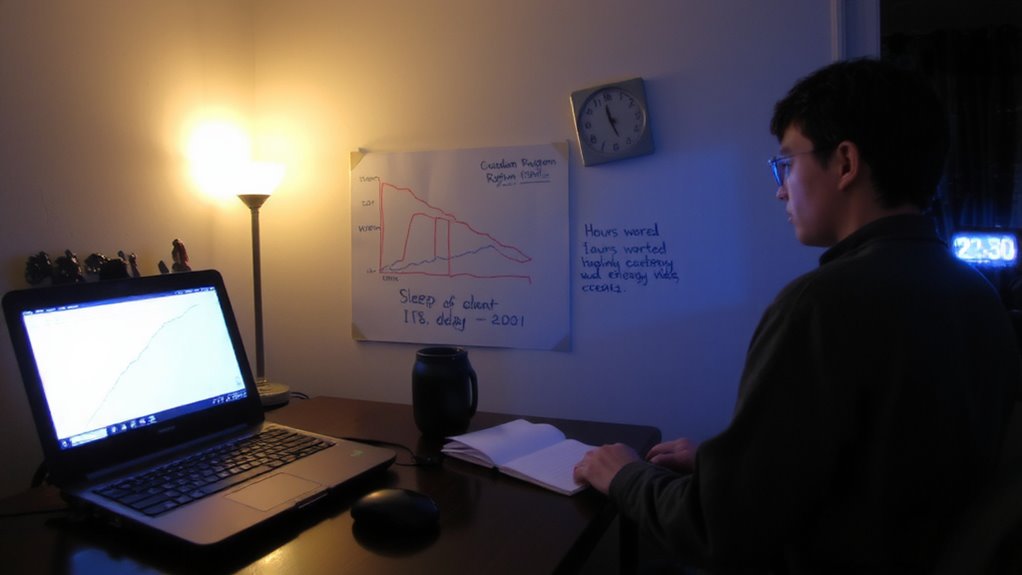
A daily log of your sleep patterns and work performance gives you solid evidence to show how Delayed Sleep Phase Disorder affects your focus, energy, and productivity. Track when you fall asleep, wake up, and feel most alert, along with your work performance each day. Note when you struggle to concentrate in morning meetings or when your energy spikes in the late afternoon. This record helps you spot trends and strengthens your case for schedule changes. You’ll see how your natural sleep patterns align-or clash-with standard work hours. Over time, the data can reveal whether adjustments like brighter lighting, short naps, or melatonin supplements impact your focus. Keep entries honest and consistent for at least two weeks. That way, you’ll have clear, factual support when talking to your manager or HR about realistic changes. For even more accurate tracking, consider using one of the best sleep trackers on the market to monitor your sleep stages and rest quality over time.
Pick a Start Time That Matches Your Rhythm
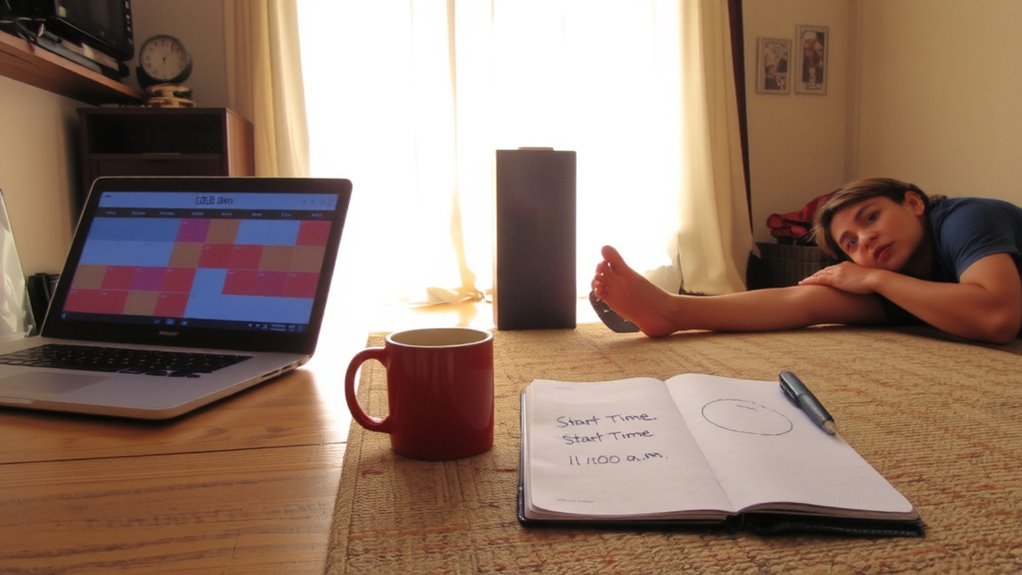
Your body’s natural rhythm isn’t just a preference-it’s a biological pattern that affects when you’re most alert and ready to work. For people with delayed sleep phase disorder, your circadian rhythm shifts later, making it hard to fall asleep and wake up at typical times. Trying to start work too early goes against this internal clock, which can hurt focus and performance. Picking a start time that aligns with your natural alertness improves daily function and supports better sleep hygiene. It’s not about avoiding effort-it’s about working with your body, not against it. A later start may mean working into the evening, but that trade-off often leads to higher-quality output. Match your schedule to when your energy and concentration peak, and stick to consistent sleep and wake times, even on weekends, to stabilize your rhythm.
Build a Business Case for Later Hours
Even if you thrive later in the day, you’ll need to show how a delayed schedule benefits your work output, not just your sleep. By aligning your hours with your natural circadian rhythm, you’re more alert and focused when it counts. That means fewer errors, faster problem-solving, and better-quality work. Starting too early often leads to chronic fatigue, which hurts performance over time. Employers care about results, so highlight how your peak hours boost productivity. For example, if you do your best work after 10 a.m., propose beginning then and staying later. Include data, like improved task completion rates during your peak times. Offer a trial period to test the change, with clear goals and check-ins. Frame it as a performance upgrade, not just a personal need. This builds trust and shows you’re serious about delivering value.
Rehearse Your Pitch With Someone You Trust
James’s advice over coffee last week might’ve sounded casual, but running through your pitch with someone you trust can make a real difference. Practicing your case for flexible hours helps you refine timing, clarity, and tone. Set up a mock presentation with a friend or mentor who understands workplace dynamics. This isn’t just rehearsal-it’s a feedback session where you can spot weak points and adjust. Focus on how your sleep disorder affects your energy and focus, not personal preferences. Let your listener ask tough questions so you’re ready for real ones. Keep explanations clear and grounded in daily performance. A calm, prepared delivery builds credibility. This step doesn’t guarantee approval, but it sharpens your message, increasing the odds your request is heard and considered fairly.
Ask for a Trial of Your New Schedule
What if your request for flexible hours started as a test rather than a permanent change? Proposing a trial period benefits both you and your employer by reducing risk while testing your new schedule. It shows you’re willing to prove your productivity without disrupting team workflow. During the trial, maintain strict schedule consistency to build trust and demonstrate reliability. Start by outlining clear start and end times that align with your delayed sleep phase, ensuring overlap with key work hours. Track your performance, focus, and attendance to share at the end. This approach gives your manager evidence-based reasons to approve a lasting change. A trial also lets you adjust small details without long-term commitment. Most employers appreciate structured trials because they’re manageable and fair.
Adjust and Confirm Your Flexible Hours
Once you’ve completed the trial period, it’s time to review how well your proposed schedule fits both your needs and your team’s workflow. Reflect on your time audit to assess when you’re most alert and productive. Share these insights with your manager to clarify schedule alignment. Adjust start and end times if needed to support collaboration without harming your sleep health.
| Week | Work Start | Key Meetings Attended |
|---|---|---|
| 1 | 10:00 AM | Yes |
| 2 | 10:00 AM | Yes |
| 3 | 10:30 AM | Partial |
| 4 | 10:00 AM | Yes |
| Adjusted | 10:15 AM | All |
Use this data to confirm your final hours. Clear communication and documented results help sustain long-term flexibility.
On a final note
You know your rights and your body’s rhythm, and now you’ve built a case that aligns both with your company’s goals. By proposing a trial, tracking performance, and staying open to feedback, you create space for a sustainable change. Flexible hours aren’t a perk-they’re a practical adjustment. If DSPD affects your focus and energy, this process helps you find solutions grounded in evidence, not guesswork.