Optimal Mattress Firmness Levels for Preventing Sacral Misalignment in Stomach Sleepers
You should choose a medium-firm to firm mattress to keep your spine aligned and prevent sacral misalignment. Softer mattresses let your hips sink too deeply, which strains your lower back over time. Look for models with strong support layers-like high-density foam or reinforced coils-that hold your hips level with your torso. Heavier sleepers usually need firmer options for better support. Many brands offer sleep trials and long warranties, so you can test comfort with confidence-details on how different materials respond may help narrow your choice.
Notable Insights
- Stomach sleepers need firm mattresses to prevent hip sinkage and maintain sacral alignment.
- Medium-firm to firm surfaces support spinal neutrality and reduce lower back strain.
- Mattresses with 6+ inches of dense support foam or reinforced coils prevent excessive compression.
- Lighter individuals (<130 lbs) may need slightly softer options for proper hip alignment.
- Morning back stiffness or hip sagging signals poor sacral support from inadequate firmness.
What’s the Best Mattress Firmness for Stomach Sleepers?
Why do some stomach sleepers wake up with back or neck pain? You may be sinking too deeply into your mattress, which throws your spine out of alignment. For stomach sleepers, a firmer surface often helps maintain a neutral posture, reducing strain. You’ll want to weigh a mattress with balanced support-too soft, and you’ll sink; too firm, and pressure builds. Quality materials contribute to mattress durability, meaning it holds its shape longer and supports you consistently. Look for designs that regulate sleep temperature, like coils or breathable foams, so you stay comfortable all night. A good warranty, say 10 years or more, reflects confidence in both comfort and long-term performance. Many brands offer sleep trials-take advantage to test firmness and support in your own home. These features help you make informed choices about your sleep setup.
How a Soft or Firm Mattress Affects Your Spine
You’ve probably noticed how the wrong mattress can leave you stiff or achy, especially if you’re a stomach sleeper. A soft mattress tends to let your body sink too deeply, which can distort your spinal curvature and strain your lower back. When your hips press down too far, your spine isn’t properly aligned, increasing the risk of sacral misalignment over time. In contrast, a firmer surface supports more even pressure distribution, helping maintain a neutral spine. You still need some cushioning, though, so your chest and hips aren’t over-pressured. The ideal balance keeps your spinal curvature natural while spreading weight evenly. Too firm might reduce pressure distribution for lighter areas, while too soft undermines support where you need it most. Choosing based on how the mattress interacts with your body’s shape and weight helps you make a sustainable, informed decision without guessing.
Best Mattress Types for Sacral Support
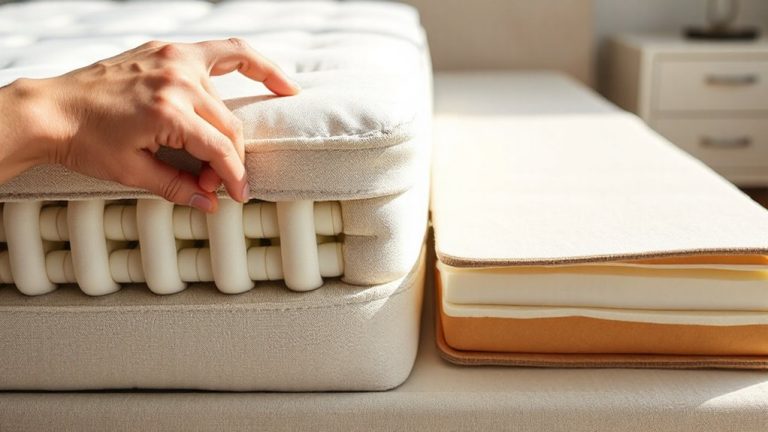
While spinal alignment is key for stomach sleepers, the type of mattress you choose plays a major role in supporting your sacrum and maintaining that balance night after night. Memory foam and hybrid models often provide the best sacral support, thanks to responsive mattress materials that cushion hips while keeping your spine neutral. A well-constructed mattress typically includes dense support layers beneath a softer top, giving you both comfort and structural stability. These deeper layers resist compression, which helps prevent sinking that can misalign your pelvis. Latex mattresses also offer durable support and slight springiness, conforming just enough without trapping heat. Look for models with at least 6 inches of high-quality support layers and a firmness between medium and medium-firm. Many brands offer sleep trials and solid warranties, so you can test the feel risk-free. Focus on construction, not just comfort-your sacrum depends on it.
Does Your Weight Change the Right Firmness Level?
A medium to medium-firm mattress often works best for stomach sleepers, but your weight can shift that ideal firmness level slightly. If your body weight is under 130 pounds, a softer mattress may provide enough cushion for your hips while still supporting spinal alignment. For those between 130 and 230 pounds, a medium-firm option usually balances support and comfort. Heavier than 230 pounds? You’ll likely need a firmer surface to prevent excessive sinkage and maintain sacral alignment. Your firmness preference should account for both comfort and long-term spinal health. High-density foams and reinforced innersprings perform better under heavier loads. Look for models with trial periods and strong warranties to test support over time. Matching your body weight to proper support helps you make a smarter, more lasting choice. For tailored options, consider exploring the best twin XL mattresses for back pain relief.
5 Warning Signs Your Mattress Hurts Your Lower Back
If you wake up with a stiff or aching lower back that eases as you move around during the day, your mattress may not be supporting your spine properly. This pattern often points to muscle stiffness from poor spinal alignment overnight. You might also feel numbness or tingling in your legs, a sign of nerve compression caused by an uneven sleep surface. If your mattress sags or feels too soft under your hips, it can tilt your pelvis and strain your lower back. A firmness that’s too high or too low worsens the issue. Look for pressure relief and balanced support-hybrid or medium-firm memory foam models often help. Check trial periods and warranties when buying; they let you test support quality risk-free. Pay attention to how your body feels in the first 30 minutes after waking-it’s a reliable clue your mattress may need replacing. Stomach sleepers may also benefit from a thin, soft pillow to minimize neck strain and maintain spinal alignment, such as those designed for best stomach sleeping pillows.
How Stomach Sleeping Misaligns Your Sacrum
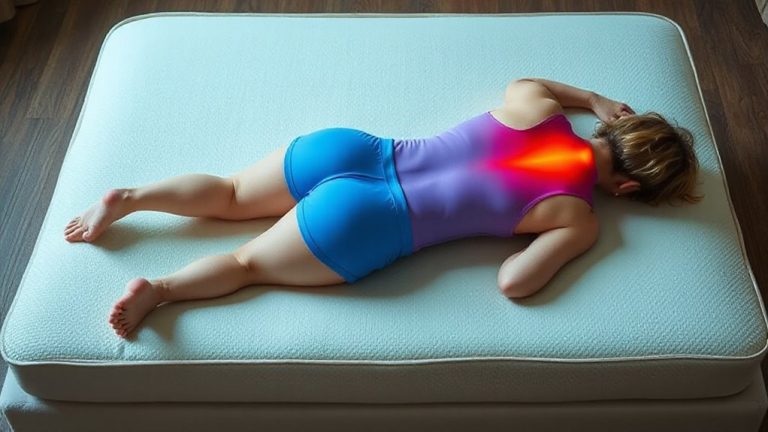
Because your bodyweight shifts forward when you sleep on your stomach, your pelvis can sink too deeply into the mattress, tilting the sacrum out of its natural position. This imbalance often causes sacral rotation, where the triangular bone at your spine’s base twists slightly, disrupting pelvic alignment. When unchecked, this creates spinal torque-the twisting force along your vertebrae that strains ligaments and discs. Over time, you might notice lower back stiffness or discomfort, especially upon waking. A mattress that’s too soft worsens sinking, while one with proper firmness helps distribute weight evenly, reducing both rotation and torque. Look for medium-firm options with supportive cores, like high-density foam or pocketed coils. These materials maintain spinal alignment without pressure buildup. Check trial periods and warranties to test comfort risk-free. Choosing the right support can make a difference in how aligned and rested your body feels each morning.
On a final note
You’ll want a firmer mattress if you sleep on your stomach, as it helps keep your spine aligned and reduces sacral misalignment. A medium-firm to firm feel typically works best, supporting your hips and preventing sinkage that strains your lower back. Your weight also matters-people over 230 lbs often need extra firmness. Look for hybrid or foam mattresses with strong edge support, at least a 10-year warranty, and a sleep trial of 100 nights to test comfort.