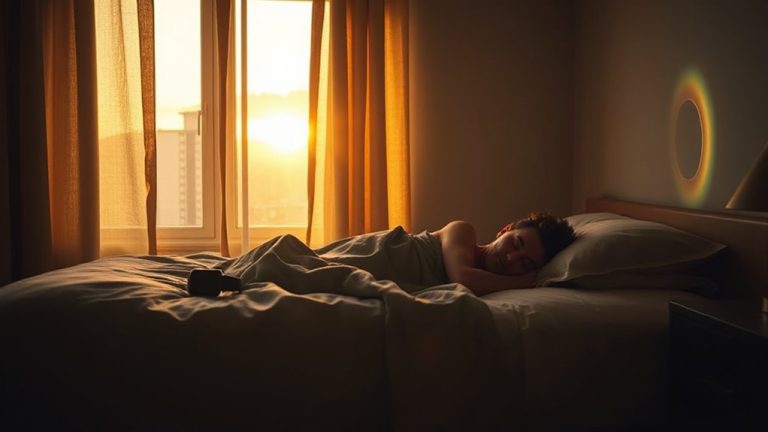
Managing Perimenopausal Hot Flashes Without Disrupting Core Body Cooling Needed for Deep Sleep
You’re more sensitive to heat now because hormonal shifts confuse your hypothalamus, disrupting the slight core temperature drop needed for deep sleep. Keep your bedroom between 60–67°F with a fan or smart thermostat to support natural cooling. Wear moisture-wicking pajamas made from bamboo or TENCEL™, and consider phase-change material (PCM) bedding for steady comfort. Try slow breathing at bedtime and avoid alcohol or spicy foods. Cooling solutions with trial periods let you test effectiveness, so you can find what truly works.
Notable Insights
- Use cooling blankets with phase-change materials to manage hot flashes without interfering with the body’s natural temperature drop for sleep.
- Wear moisture-wicking pajamas made from bamboo or TENCEL™ to stay dry and maintain optimal skin cooling during night sweats.
- Keep the bedroom between 60–67°F and use fans or smart thermostats to support core body cooling and reduce hot flash intensity.
- Practice slow inhale, long exhale breathwork before bed to calm nervous system sensitivity triggering hot flashes.
- Avoid alcohol, caffeine, and spicy foods in the evening to prevent thermal shifts that disrupt both temperature regulation and sleep onset.
Why Hot Flashes Ruin Sleep During Perimenopause
Why do hot flashes strike just as you’re trying to fall asleep? Because hormonal fluctuations during perimenopause confuse your hypothalamus, the part of your brain that regulates temperature. These shifts make your nervous system sensitivity higher, so small changes feel like overheating. Your body responds by dilating blood vessels, causing sudden warmth, sweating, and heart palpitations-especially at night. This disrupts sleep onset and reduces sleep quality. You might wake multiple times, struggling to return to deep sleep. Tracking patterns can help identify triggers like stress or caffeine. Cooling pillows or moisture-wicking pajamas may offer relief. Some find low-dose hormonal therapy or non-hormonal sleep aids effective, though side effects vary. Discuss options with your doctor, especially if sleep disruption affects daily function. Treatments differ in performance and trial periods-what works depends on your health history and symptom severity. A high-quality heated neck pillows can provide soothing warmth to calm the nervous system, potentially reducing the frequency of night-time temperature dysregulation.
How Lowering Your Body Temperature Helps You Sleep
If you’ve ever woken up drenched in sweat during a hot flash, you know how hard it is to fall back asleep when your body feels overheated. Your body temperature naturally drops to signal sleep onset, and when hot flashes interfere, that cooling process gets disrupted. Lowering your body temperature helps calm your nervous system and prepares your body for rest. Even a slight decrease-about 1–2°F-can make falling asleep easier and improve sleep quality. This drop supports deeper, more restorative stages of sleep, especially important during perimenopause. You don’t need extreme measures; small, consistent changes can help your body shift smoothly into sleep. Think of your body temperature as a natural cue-when it cools steadily, sleep onset becomes more reliable. Managing this shift well means less tossing and turning and better overall rest. Using a cooling blanket for hot flashes can enhance this natural cooling process and improve sleep comfort.
Cool Your Bedroom for Better Sleep
Though you can’t control your body’s sudden surges of heat during a hot flash, you can control the temperature of the room where you sleep. Keeping your bedroom cool, ideally between 60–67°F, supports your body’s natural drop in core temperature, which is essential for falling and staying asleep. Good bedroom ventilation-like opening a window or using a fan-helps regulate airflow and prevents heat from building up. You might also consider a smart thermostat to maintain a steady temperature throughout the night. A well-cooled sleep environment reduces the frequency and intensity of night sweats. Even small adjustments, like running a fan or using breathable bedding materials, can improve comfort without medical intervention. Test different cooling strategies over several nights to see what works best for your routine and comfort level. For continuous airflow and soothing sound, consider using a white noise fan designed specifically for sleep.
Wear Cooling Pajamas and Bedding for Night Sweats
You’ve already taken steps to cool your bedroom, but managing night sweats often means adjusting what’s in direct contact with your skin-your pajamas and bedding. Modern fabric technology helps regulate temperature by keeping you dry and comfortable. Look for moisture-wicking materials like bamboo, TENCEL™, or specialty performance blends that pull sweat away from your body. These fabrics breathe well and dry quickly, reducing dampness that can disrupt sleep. Cooling bedding, such as phase-change material (PCM) sheets or weighted blankets designed for temperature control, also supports stable core body cooling. Some brands offer trial periods, so you can test comfort and effectiveness. While these options aren’t a cure, they can improve sleep quality by reducing how often night sweats wake you. Choose machine-washable items built for durability. Start with one item-pajamas or sheets-to see how your body responds.
Try These Bedtime Habits to Prevent Hot Flashes
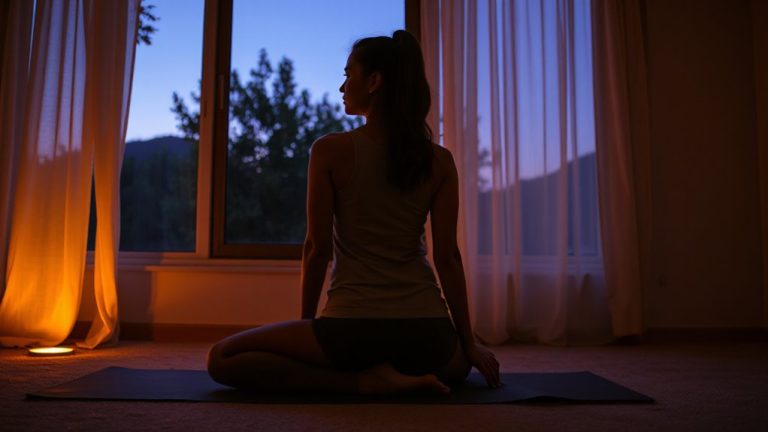
Why do some nights bring sudden waves of heat while others remain calm? Your bedtime habits play a bigger role than you might think. Practicing breathwork techniques before sleep-like slow, deep inhales followed by longer exhales-can help stabilize your nervous system and may reduce the frequency of hot flashes. Pair this with consistent hydration strategies: drink water throughout the day, but taper off an hour before bed to avoid disruptive awakenings. Avoid alcohol and large meals at night, as they can trigger thermal shifts. Keep your bedroom cool and invest in breathable bedding. These changes support your body’s natural cooling process and protect deep sleep cycles. While results vary, many women find relief after a few weeks of steady routine. Give each habit a two-week trial to assess its effect. Look for programs or apps that guide breathwork with clinical backing and hydration trackers that adjust for activity and climate.
Safe Medical Options for Night Sweat Relief
When lifestyle adjustments don’t fully ease your night sweats, medical options can offer additional support. Hormone therapy is one of the most effective treatments, especially for women without a history of breast cancer or blood clots. It works by stabilizing hormonal fluctuations that trigger overheating at night. Low-dose estrogen, delivered via patch, pill, or gel, often reduces both frequency and intensity of episodes. If you prefer a non-prescription route, some find relief with herbal supplements like black cohosh or red clover, though evidence varies and interactions with other medications are possible. Always talk to your doctor before starting any supplement. These options can impact sleep quality differently-hormone therapy tends to show noticeable results in a few weeks, while herbal supplements may take longer and require careful monitoring. Consider discussing trial periods and potential side effects to make a balanced choice.
Track Your Triggers to Stop Night Sweats
What’s sparking your night sweats might not be random-common triggers like caffeine, alcohol, spicy foods, and even stress can set off episodes without you realizing it. Your body’s stress response can amplify the effects of hormone fluctuations, making nighttime symptoms worse. Start tracking your daily habits in a simple journal: note what you eat, when you drink alcohol or coffee, and any stressful events. Over time, patterns will emerge linking specific behaviors to night sweats. This insight helps you make informed choices about sleep routines and possible lifestyle changes. Don’t assume supplements or sleep aids are needed right away-sometimes small adjustments, like cutting evening wine or lowering room temperature, reduce episodes. Tracking gives you data-backed control, letting you tweak habits to support deeper, cooler sleep without disrupting your body’s natural core temperature regulation.
On a final note
You can manage perimenopausal hot flashes without harming core cooling for deep sleep. Try cooling bedding, lightweight pajamas, and a bedroom at 65–68°F. These support natural heat release. Consistent bedtime routines may reduce flash frequency. Some find low-dose hormone therapy or non-hormonal options helpful, with medical guidance. Track triggers for patterns. Most solutions require a few weeks to assess. Choose options with clear trial periods or warranties when available.