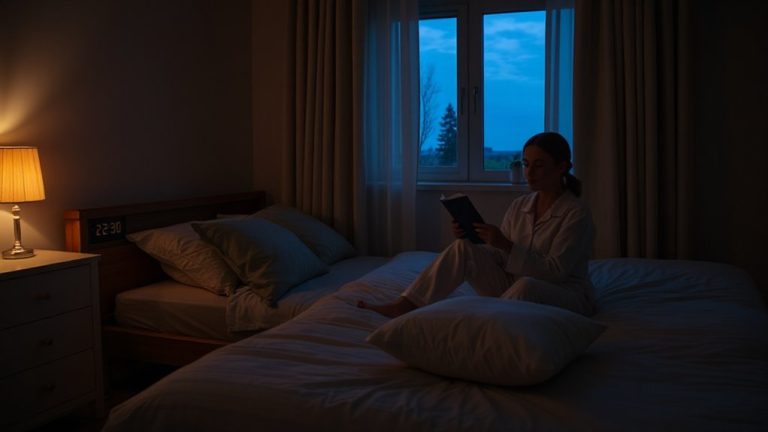
Why Evening Flexibility Training Promotes Relaxation and Sleep Onset
You can calm your nervous system by stretching in the evening, as it triggers a shift into rest-and-digest mode. Gentle movement slows your heart rate and reduces cortisol, helping your body relax. Increased flexibility eases muscle tension and supports natural recovery, making sleep more accessible. This routine enhances sleep onset without medication, offering a sustainable alternative. With consistent practice, you may also boost melatonin. Try this tonight for a calmer shift to sleep-there’s more to discover about optimizing your routine.
Notable Insights
- Evening stretching activates the parasympathetic nervous system, promoting rest and relaxation.
- Gentle muscle engagement slows heart rate and calms overactive brain signals.
- Reduced cortisol levels signal safety, helping the body transition into sleep mode.
- Improved flexibility enhances blood flow, aiding muscle recovery and reducing nighttime soreness.
- Consistent pre-sleep stretching supports circadian alignment and increases melatonin production.
How Does Evening Stretching Calm Your Nervous System?
Why do you feel more relaxed after a few minutes of evening stretching? It’s because gentle movement triggers parasympathetic activation, shifting your body into rest-and-digest mode. When you stretch, rhythmic muscle engagement slows your heart rate and supports neural quieting, calming overactive brain signals. This process reduces cortisol and signals safety, helping shift from daytime stress to nighttime calm. You don’t need intense effort-just consistent, mindful motions. Evening stretching is non-invasive, low-cost, and requires no equipment, making it a practical first step before considering sleep aids. Unlike medications, it carries no dependency risk and enhances bodily awareness. While results vary, most notice improved relaxation within days. If you struggle with sleep onset, trying two weeks of light stretching may offer insight into your nervous system’s response. It’s a reversible, low-risk approach worth testing alongside other healthy sleep habits.
The Science Behind Flexibility and Better Sleep
While your body unwinds each night, increasing flexibility through consistent stretching may quietly support deeper, more restful sleep. Your muscles loosen, tension fades, and your nervous system shifts toward calm-key for smooth circadian alignment. When you stretch regularly in the evening, you aid muscle recovery by boosting blood flow and reducing soreness, which can otherwise disrupt sleep. This kind of physical ease signals your body it’s time to rest, reinforcing natural sleep-wake cycles. You’re not just improving flexibility-you’re creating conditions where sleep can come more easily, without relying on sleep aids. Over time, this practice offers a sustainable way to support sleep quality. There’s no special equipment or cost involved, just consistent effort. If you struggle with tension or mild sleep onset issues, evening flexibility training could be a low-risk, effective addition to your routine.
Why Evening Is Best for Pre-Sleep Stretching
Since your body naturally begins to wind down in the evening, this is the ideal window to perform pre-sleep stretching that supports both physical and mental relaxation. Your core temperature drops and energy levels decline, creating circadian alignment that makes stretching more effective and calming. This timing enhances muscle recovery, especially if you’ve been active during the day, allowing tissues to release tension and repair more efficiently overnight. Gentle movement signals your nervous system to shift into rest mode, easing the shift to sleep without stimulating alertness. Unlike sleep aids, which may carry side effects or dependency risks, pre-sleep stretching is a natural, low-cost option you can adjust based on how your body responds. It works well for many people, even those with mild sleep difficulties, offering a sustainable routine with no trial period or warranty needed-just consistency and mindful practice.
5 Gentle Stretches to Do Before Bed
You can make the most of your body’s natural evening slowdown by choosing simple, low-effort stretches that fit easily into your bedtime routine. Try child’s pose to gently release tension in your back, hips, and shoulders-kneel, sit back on your heels, and extend your arms forward while lowering your forehead to the floor. Hold for 30 to 60 seconds, breathing deeply. This position supports spinal alignment and encourages calm. Then, shift to a seated forward bend: sit with legs extended, hinge at the hips, and reach for your toes. Keep your back straight and avoid forcing the movement-this stretch eases tight hamstrings and soothes the nervous system. Both moves require no equipment and can be done on a mat or carpeted floor. Practicing them nightly may improve flexibility over time and help signal your body it’s time to rest, without the need for sleep aids.
How Evening Stretching Lowers Stress Hormones
When you stretch at night, your body responds by dialing down cortisol, the stress hormone that can keep you awake if levels stay too high. This cortisol reduction helps shift your nervous system from alert mode to a calmer state, making it easier to unwind. As tension releases from your muscles, your brain picks up on these signals, supporting a natural shift toward rest. Over time, consistent evening stretching can also lead to a melatonin increase, aligning your internal clock with your sleep schedule. This hormonal balance-lower cortisol and higher melatonin-creates favorable conditions for falling asleep faster. You don’t need intense movement; gentle, sustained stretches work best. While it’s not a standalone fix for sleep disorders, it complements other strategies and may reduce reliance on sleep aids. Think of it as a low-risk, accessible tool you can test nightly, with no trial period or warranty needed-just mindful effort and patience.
How To Build a 10-Minute Bedtime Stretch Routine
What if just 10 minutes could ease your body into sleep-ready calm? Start your routine with gentle seated forward folds and shoulder rolls to encourage muscle release, spending 30 seconds on each movement. Follow with a supine spinal twist-hold each side for 45 seconds while practicing breath focus, inhaling deeply through the nose, exhaling slowly through the mouth. Add a seated spinal stretch by clasping hands behind your back, lifting the chest quietly. Finish with a figure-four stretch lying on your back, relaxing the hips. Perform each stretch slowly, avoiding strain. Use a yoga mat or soft surface, and keep the room dim. This routine supports natural relaxation without relying on sleep aids. Over time, consistent practice may improve sleep quality, particularly if stress or tension contributes to restlessness. Trial it nightly for a week to assess changes in ease of sleep onset.
Why Does Mindful Movement Speed Up Sleep Onset?
How does something as simple as mindful movement help you fall asleep faster? It works by calming your nervous system through breath awareness and body scanning. When you move slowly and focus on each stretch, you signal your body it’s time to wind down. Breath awareness slows your heart rate, reducing stress hormones that can delay sleep. Pairing this with body scanning-mentally checking in from head to toe-helps you notice and release tension. These techniques don’t require special tools or training, making them accessible for most people. They’re especially helpful if you struggle with racing thoughts at bedtime. Unlike sleep aids, mindful movement has no side effects or dependency risks. It’s a natural method that supports healthy sleep patterns over time. Try it consistently for a week to assess its effect on your sleep onset. Many find they drift off 10–20 minutes faster with regular practice.
On a final note
You can use evening flexibility training to support relaxation and ease into sleep. Gentle stretches lower stress hormones and signal your nervous system to wind down. A consistent 10-minute routine enhances sleep onset without relying on sleep aids. Try mindful movements nightly, observe changes in sleep quality, and adjust as needed. It’s a low-risk, accessible option worth testing for several weeks to see how it fits your needs.