The Effect of Indoor Lighting on Delayed Evening Sleep in Advanced Sleep Phase Disorder
You can use bright indoor lighting in the evening to delay your sleep schedule if you have advanced sleep phase disorder. Sitting under a bright light box or blue-rich overhead light for 30–60 minutes before your usual bedtime helps push your internal clock later. Keep lights at eye level, around 2,500 lux or more, without staring directly. Dim, warm lights after therapy support the shift. Consistency strengthens results-track changes over a week. Options vary, and finding the right setup takes small adjustments you can explore further.
Notable Insights
- Indoor bright light exposure in the evening can delay circadian timing in Advanced Sleep Phase Disorder.
- Blue-enriched light at night suppresses melatonin and shifts sleep onset to a later time.
- Using bright overhead lights or light therapy boxes is more effective than dim, warm lamps.
- Evening dim, warm lighting (2700K) minimizes circadian disruption when therapy is not in use.
- Consistent daily light therapy sessions of 30–60 minutes can gradually delay sleep onset.
What Is Advanced Sleep Phase Disorder?
Have you ever woken up in the early hours of the morning, unable to fall back asleep, or felt overwhelmingly tired long before most people are thinking about bed? You might be experiencing Advanced Sleep Phase Disorder (ASPD). This condition shifts your sleep schedule earlier than typical-sometimes falling asleep by 7 or 8 p.m. and waking up between 3 and 5 a.m. It’s not just habit; genetic factors play a key role, often running in families. Age onset usually happens in middle age, though some notice symptoms earlier. ASPD is recognized clinically and differs from normal early sleeping patterns due to its consistent timing and impact on daily life. While not dangerous, it can limit social or work flexibility. Diagnosis often involves sleep logs or actigraphy. Treatments exist, but understanding your body’s natural rhythm is the first step toward managing it effectively.
How Light Resets the ASPD Body Clock
Why does stepping outside in the evening light sometimes make it easier to stay awake later? Because light plays a key role in circadian entrainment, helping shift your internal clock. In ASPD, your body releases melatonin earlier than usual, making you sleepy by early evening. Evening light exposure delays that release through melatonin suppression, pushing your sleep window later. Your brain’s suprachiasmatic nucleus responds to light cues, gradually adjusting your rhythm when light is timed consistently. This doesn’t happen overnight-regular exposure over several days strengthens the shift. Indoor bright light therapy boxes can mimic this effect if natural light isn’t available. Look for devices with 10,000 lux output and a stable stand. Use them for 30–45 minutes in the early evening. With proper timing, light becomes a non-invasive tool to reset your body clock through natural biological pathways.
Why Nighttime Light Helps ASPD
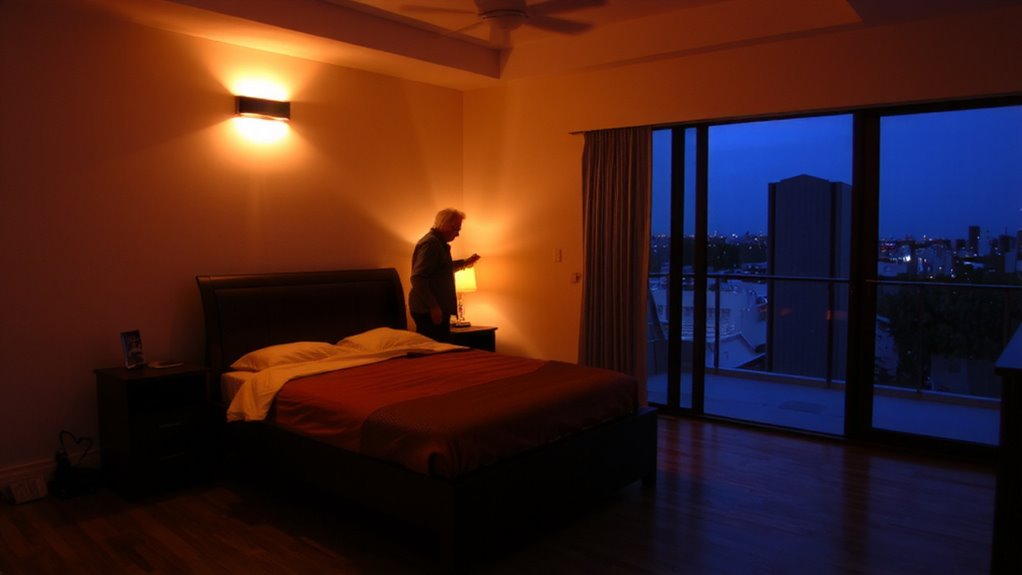
Though your body naturally starts winding down earlier with ASPD, getting exposure to bright light at night can help push your internal clock back into a more typical rhythm. Using light sources rich in blue light during the evening tricks your brain into thinking the day is longer, delaying melatonin release. This shift gradually resets your circadian timing, helping you stay awake later and wake up later. Consistent nighttime exposure-about 30 to 60 minutes-can extend your sleep duration by aligning bedtime with social and work schedules. Bright overhead lights or light therapy boxes work better than dim lamps because they deliver sufficient intensity. Choose fixtures with adjustable color temperature if possible, focusing on brighter, cooler tones in the evening. You’ll likely see changes after a few days of regular use. While results vary, many find this method effective, non-invasive, and easy to adjust based on response.
Try Dim, Warm Lights in the Evening
If you’re aiming to adjust your sleep schedule with more natural cues, switching to dim, warm lights in the evening can support a smoother shift. Lower color temperature lighting-around 2700K-mimics sunset and signals your body to prepare for sleep. Proper lamp placement also matters: position lights below eye level and use indirect lighting to reduce glare and melatonin suppression. For even better results, consider using sleep-inducing lights designed specifically to support circadian rhythm regulation.
| Feature | Warm, Dim Light | Cool, Bright Light |
|---|---|---|
| Color Temperature | ~2700K | ~5000K+ |
| Best Placement | Floor or table lamps | Overhead fixtures |
| Melatonin Impact | Minimal suppression | Significant suppression |
| Evening Use | Recommended | Not advised |
Choose bulbs labeled “warm white” and place lamps in corners or beside seating to create a relaxing atmosphere. Test this setup for at least one week to assess sleep onset changes.
Use Evening Bright Light for ASPD
Could evening light exposure actually help you stay alert longer and shift your early sleep pattern? Yes, using bright light in the evening can support circadian entrainment by delaying your internal clock. When you’re exposed to bright light later in the day, it helps suppress melatonin release, which usually kicks in early in ASPD. This melatonin suppression keeps you more awake at night and pushes your bedtime later over time. You’ll need a light box that emits at least 2,500 lux, placed within 1–2 feet of your face for about 30 to 60 minutes. Consistent timing enhances effectiveness, so aim for the same window each evening. Results may appear in 1–2 weeks, with most people noticing improved sleep timing. While rare, some report mild eye strain. Check warranty details and consider a return policy if testing a new device.
Build a Lighting Plan to Delay Sleep
How do you create a lighting plan that effectively delays your sleep schedule? Start by using bright light in the evening, especially blue lighting, which helps shift your internal clock later. You’ll want scheduled exposure for about 30 to 60 minutes, beginning 1–2 hours before your usual bedtime. Position the light box or lamp at about eye level, around 16 to 24 inches from your face, without staring directly at it. Consistency matters-use the light at the same time each night. Dim other lights in your home during this window to boost effectiveness. Results can appear within a few days, but it may take up to two weeks. If eye strain occurs, adjust distance or duration. Many devices come with a warranty and instructions for safe, long-term use. Track your sleep times to gauge progress and adjust as needed.
On a final note
You can use evening light to gently shift your sleep schedule later. Dim, warm lights in the early night help prepare your body, while brighter light later resets your internal clock. Try sitting near a bright lamp for 30–60 minutes in the evening, timing it based on your current bedtime. Results vary, so track changes over a few weeks. Most lights are simple to use and come with warranties-check features like brightness settings and color temperature to match your needs.