The Role of Cotton in Hypoallergenic Bed Canopy Linings
You’re less likely to wake up itchy or congested with a cotton-lined bed canopy, since cotton breathes better and resists chemical residues that irritants thrive on. Organic cotton, grown without harsh pesticides and processed to remove allergens, is especially gentle if you have sensitive skin. Tightly woven percale or sateen fabrics block dust mites while letting air flow, and certifications like GOTS or OEKO-TEX guarantee harmful substances are kept out. Choosing certified, breathable cotton means a drier, cleaner sleeping zone that supports uninterrupted rest. Better material choices could make a noticeable difference in how you feel each morning.
Notable Insights
- Cotton’s natural breathability promotes airflow, reducing moisture buildup that can foster allergens like dust mites and mold.
- Organic cotton is grown and processed without synthetic chemicals, minimizing skin irritation and allergen exposure.
- Tight weaves such as percale and sateen in cotton fabrics help block allergens while maintaining breathability.
- Cotton’s open fiber structure allows sweat and vapor to escape, supporting a dry, hypoallergenic sleep environment.
- GOTS and OEKO-TEX certifications ensure cotton canopy linings are free from harmful substances, enhancing safety for sensitive individuals.
The Problem With Synthetic Canopy Fabrics
Why do some canopy linings leave your skin irritated or your sleep restless? Many synthetic fabrics retain chemical residues from manufacturing, which can linger on the material and interact with your skin. You might notice synthetic odors, especially when the fabric is new or warmed by body heat-these smells signal volatile compounds that may disrupt sensitive sleepers. Unlike natural fibers, synthetics often trap moisture and lack airflow, creating an environment where irritation thrives. If you have allergies or skin sensitivities, these linings might worsen discomfort without immediate cause. Some products offer trial periods or warranties, letting you test comfort over time. Still, consistently reviewing fabric content and cleaning methods helps you make informed choices. Choosing materials with minimal processing reduces exposure to irritants. For long-term use, considering untreated, breathable options could support better sleep hygiene without relying on chemical treatments or fragranced finishes. Hypoallergenic mattress options often feature natural materials like organic cotton, which resist dust mites and complement allergen-reducing bedding strategies such as using cotton canopy linings. Best Mattresses for Dust Mite Allergies
How Breathability Reduces Dust Mites and Mold
You’re more likely to stay comfortable through the night when your canopy lining allows air to move freely, especially if you’ve struggled with skin irritation from synthetic fabrics. Cotton’s natural breathability supports consistent air circulation around your sleeping space, which helps prevent the warm, stagnant conditions dust mites love. These tiny allergens thrive in humidity, but with improved moisture evaporation, cotton keeps the environment less inviting for them. Mold spores also need trapped moisture to grow, so a fabric that promotes airflow reduces that risk markedly. Unlike tightly woven synthetics, cotton’s open fiber structure allows vapors from sweat and breath to escape, maintaining a drier microclimate. Over time, this breathability contributes to better air quality inside the canopy. Choosing a lining with proven air circulation helps minimize common allergens linked to respiratory irritation. Many cotton canopy linings come with trial periods, so you can assess their impact on your sleep environment without risk. A best breathable mattress protector can further enhance sleep hygiene by combining cotton-like breathability with full mattress coverage.
Why Organic Cotton Is Gentler on Sensitive Skin
For those with sensitive skin, organic cotton offers a softer, purer touch against the body throughout the night. Unlike conventional cotton, it’s grown and processed without synthetic pesticides or chemical residues, reducing the risk of irritation. Made from natural fibers, organic cotton maintains breathability while minimizing exposure to allergens. This makes it a practical choice for people managing skin sensitivities or sleep disruptions tied to discomfort.
| Feature | Organic Cotton | Conventional Cotton |
|---|---|---|
| Fiber Source | Natural fibers | Natural fibers |
| Pesticide Use | None | Common |
| Chemical Residues | Minimal to none | Often present |
| Skin Sensitivity | Low irritation risk | Higher irritation risk |
| Sleep Comfort | Consistent, gentle | May cause nighttime wake-ups |
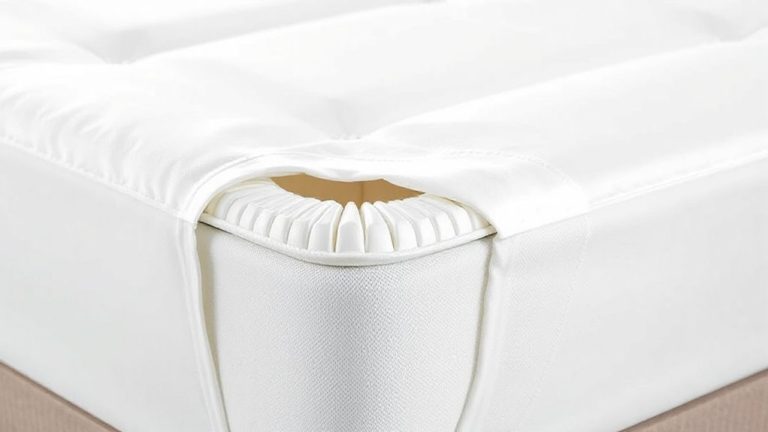
Choosing organic cotton supports quieter, more restful sleep-especially when sensitivity affects bedtime routine. Many brands offer trial periods, letting you test the difference. A well-designed bed canopy with foam mattress compatibility can further enhance overall comfort and allergen reduction.
Best Cotton Weaves for Hypoallergenic Canopies
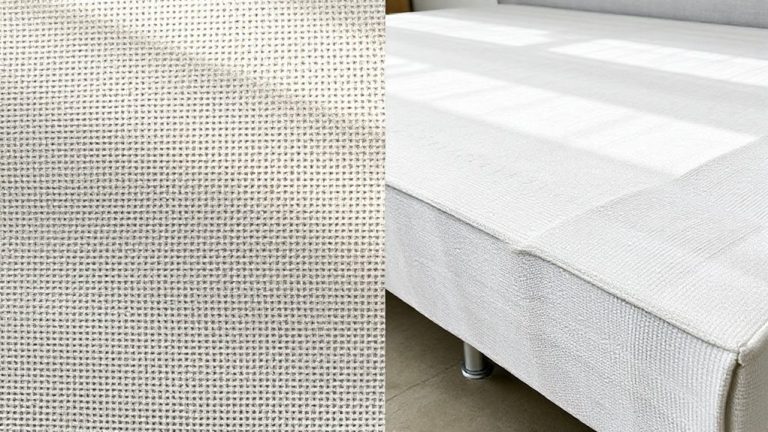
Thread count and weave type matter when choosing a cotton canopy lining that’s both comfortable and hypoallergenic. You’ll want a tight weave, like percale or sateen, to block allergens while letting your skin breathe. Percale, with its crisp feel, often has a thread count between 200 and 400, offering durability without trapping heat. Sateen, slightly smoother, may have a similar thread count but a denser weave, adding softness and better particle resistance. Fabric weight plays a role too-lighter weaves improve airflow, helping if you tend to overheat at night. Heavier fabric might feel cozy but could retain warmth, possibly disrupting sleep. A balanced fabric weight supports airflow and comfort. These weaves hold up well over time, especially with gentle washing. Many brands offer trial periods, so you can test how the material affects your sleep without risk.
Top Certifications for Hypoallergenic Cotton
A well-chosen weave sets the foundation for a clean, breathable sleep environment, but knowing how the cotton was processed and tested matters just as much. When you’re looking for truly hypoallergenic cotton, check for GOTS certification-it guarantees the entire supply chain meets strict environmental and social standards, including limits on harmful substances. This matters because fewer chemicals mean less chance of skin irritation or respiratory triggers during sleep. You’ll also want to take into account the OEKO TEX standard, which tests the final fabric for over 100 harmful substances, giving you added confidence in what touches your skin. Both certifications support healthier sleep, especially if you deal with allergies or sensitivities. Products with these labels often come with trial periods or warranties, letting you test comfort with less risk. Choosing certified cotton isn’t a guarantee, but it’s a meaningful step toward safer, more restful nights.
On a final note
You’ll find cotton canopy linings offer breathability that helps reduce dust mites and mold, especially if you choose organic cotton, which is gentler on sensitive skin. Tightly woven, certified options-like those with OEKO-TEX or GOTS labels-provide proven hypoallergenic benefits. These fabrics maintain airflow while minimizing irritants, supporting better sleep quality. Consider trying a cotton-lined canopy with a warranty, so you can assess comfort and performance in your own space.