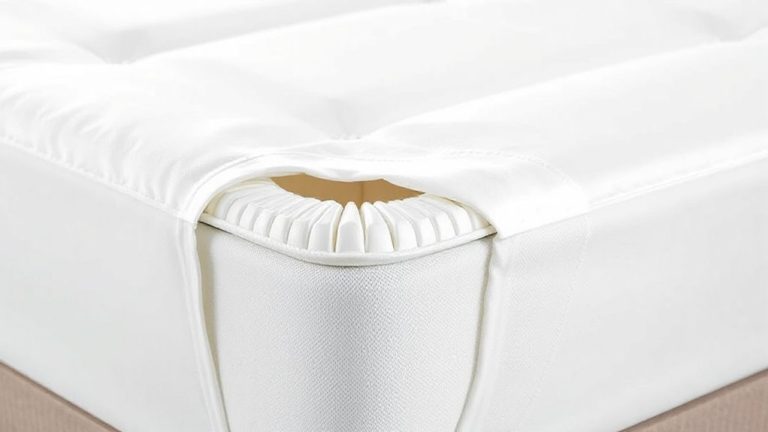
The Impact of Quilting on Innerspring Mattress Comfort Layers
You feel the difference right away-quilting keeps the top layers of your innerspring mattress in place, so the foam or fiberfill won’t shift and leave you with uneven softness. Tight stitching gives a firmer initial feel, while looser patterns add plushness. It helps spread your weight to ease pressure on hips and shoulders, especially if you toss at night. Materials like cotton, wool, or polyester blends affect breathability and durability. The stitch depth and pattern influence comfort and how well the mattress holds up over time, so consider your sleep position and preferred feel when comparing options-you’ll find details that match your needs just ahead.
Notable Insights
- Quilting stabilizes comfort layers by preventing shifting of foam, fiberfill, or cotton in innerspring mattresses.
- Tight quilting tension increases initial firmness, while looser tension enhances surface softness and compression.
- Proper stitch density improves durability and maintains consistent pressure distribution over time.
- Quilted layers provide early-stage pressure relief by conforming to body contours at contact points.
- Stitch pattern depth and material blends influence breathability, support, and suitability for sleep positions.
What Is Quilting in an Innerspring Mattress?
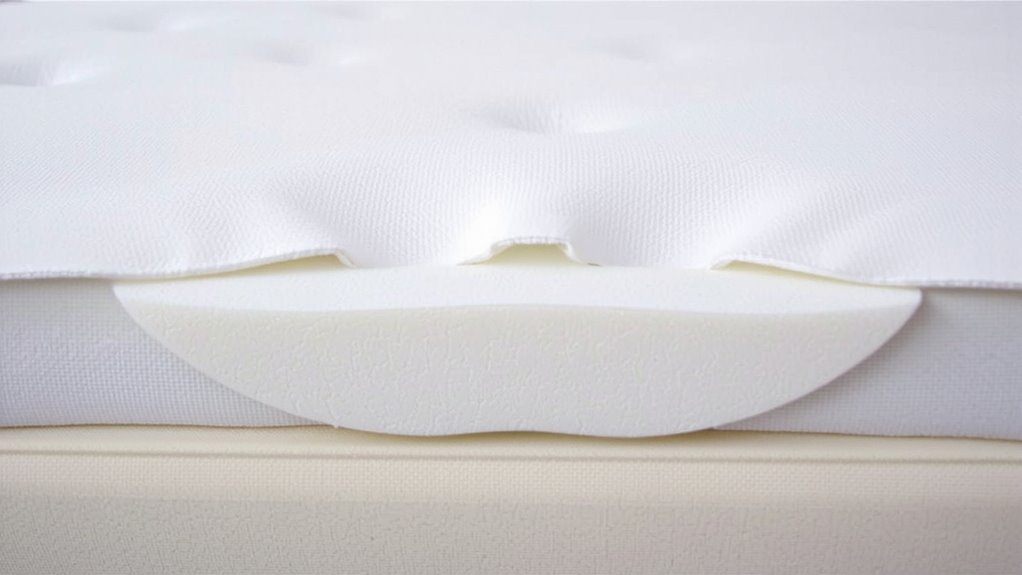
Comfort starts the moment you lie down, and quilting plays a key role in that first impression. In an innerspring mattress, quilting refers to the stitched pattern that binds the top fabric layers to the comfort materials just beneath. This process uses consistent thread tension to secure layers like foam, fiberfill, or cotton, preventing shifting over time. Proper tension keeps the surface smooth and supportive, while uneven stitching can lead to bunching or thin spots. The fabric layers aren’t just decorative-they shape how the mattress feels at first touch, offering a soft yet structured cradle. Quilting affects breathability and durability, too, since tightly woven patterns may trap heat but enhance longevity. When you’re comparing models, check the stitch density and material blend; many brands offer trial periods, so you can test the quilting’s real-world performance.
Does Quilting Make a Mattress Softer or Firmer?
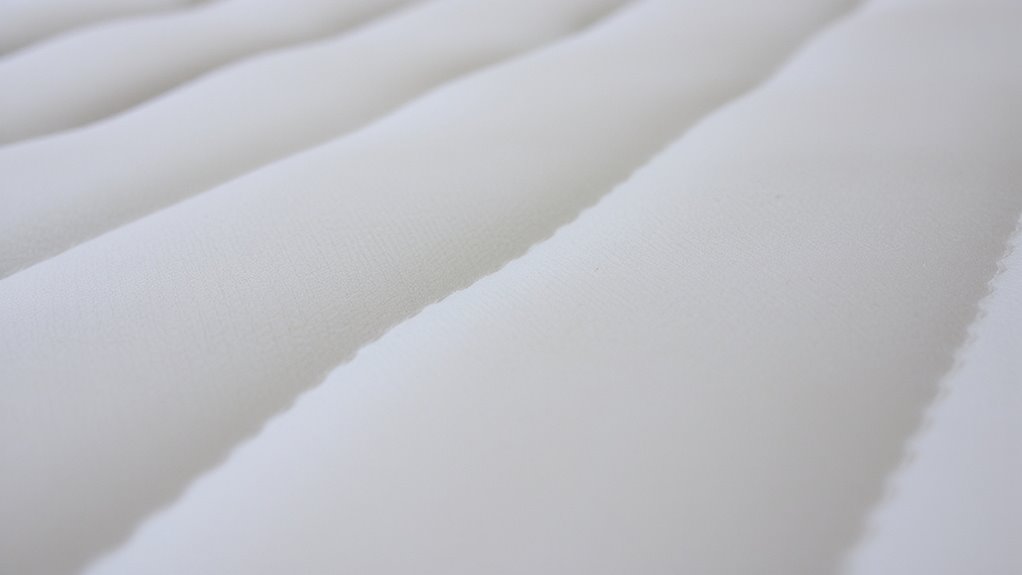
You might think quilting only adds a decorative touch, but it actually influences how firm or soft a mattress feels right from the first press of your hand. The way the top layer is stitched affects the surface give-tight fabric tension resists sinking, lending a slightly firmer initial feel. Looser tension allows more compression, enhancing softness. Thread density plays a role too; higher density stitching secures layers more firmly, reducing shift and maintaining consistent firmness over time. Lower thread density may feel plush at first but can compact faster, altering comfort. These details matter if you’re adjusting for back pain or pressure sensitivity. While quilting won’t change the core support, it shapes early comfort. Look for balanced construction and check warranty terms covering compression. A well-quilted mattress supports even wear, helping maintain your preferred sleep surface through hundreds of nights.
How Quilting Reduces Pressure Points
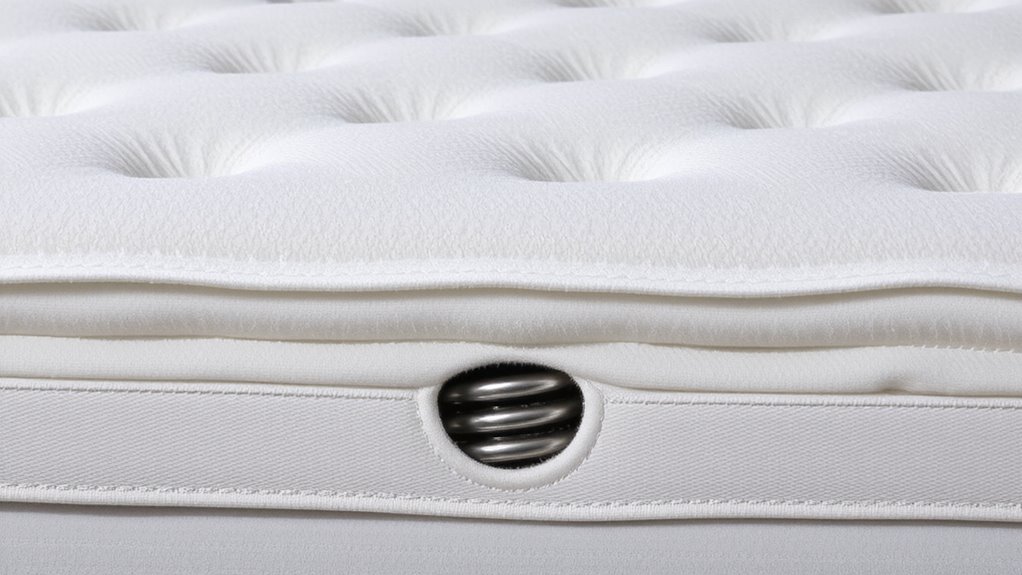
While the overall support of a mattress comes from its core layers, quilting plays a subtle yet important role in how pressure spreads across your body when you lie down. You experience less stress on hips, shoulders, and joints because the quilted layer conforms gently to your shape, promoting better pressure relief. This design helps distribute your weight more evenly, reducing the chance of waking from discomfort. The result? Noticeable comfort enhancement without sacrificing support. Quilting adds a responsive cradle that eases shift between lying and sleeping, benefiting those with mild sleep disturbances or achy pressure points. Since this layer isn’t meant to provide long-term structural support, its main job is early-stage cushioning where your body first contacts the mattress. If you’re considering a new mattress, check how deeply the quilting is stitched and whether it compresses too quickly-these affect durability and nightly comfort. A generous trial period lets you assess real-world pressure relief over time.
What Materials Are Used in Mattress Quilting?
A well-chosen quilting layer shapes how your mattress feels the moment you lie down.
| Material | Purpose and Performance |
|---|---|
| Cotton | Breathable, soft, works well in a fabric blend |
| Polyester | Adds durability and helps manage moisture |
| Wool | Naturally regulates temperature and resists allergens |
| Silk | Smooth texture, often used in high thread count covers |
You’ll find most covers use a fabric blend to balance comfort, airflow, and strength. A higher thread count usually means a softer, more resilient surface that resists pilling. These materials influence temperature control and pressure relief, which can affect sleep quality-especially if you’re managing discomfort or sleep disruptions. The quilting layer isn’t just cosmetic; it’s part of the mattress’s support system. While you can’t adjust it later, many brands offer a trial period, letting you test how it performs night after night. For individuals seeking relief from back pain, choosing a mattress with targeted twin XL support features can enhance spinal alignment and overall comfort.
Do Stitch Patterns Affect Comfort and Durability?
Stitch patterns in mattress quilting do more than add visual appeal-they shape how the surface feels under you night after night. The design of the stitching affects how evenly the comfort layers stay in place, which influences both support and longevity. Tight, dense patterns often resist shifting better, especially when thread tension is consistent-this helps prevent lumping over time. Looser patterns might feel softer initially but can wear faster. Needle gauge matters too; a finer needle creates smaller holes in fabric, reducing fiber migration, while a heavier gauge offers stronger seams for high-stress areas. Together, thread tension and needle gauge influence how well the quilted layer holds up through repeated use. If you move often during sleep or have joint pain, a well-stitched, durable pattern may help maintain comfort. Look for reinforced quilting if you want long-term performance, and check warranty terms covering seam integrity.
How Deep Should Quilting Be for My Sleep Style?
How deeply should your mattress be quilted to match the way you sleep? Your ideal quilting depth depends on your sleep position and comfort needs. Side sleepers usually benefit from deeper quilting, which offers cushioning for shoulders and hips, improving sleep position alignment. Back and stomach sleepers often prefer medium to shallow quilting for firmer support and less sink. Quilting depth customization allows manufacturers to tailor the top layer’s loft, balancing softness and structure. Too much depth may reduce support, while too little can feel harsh over time. Consider trying models with varying quilting levels, especially if you have pressure point concerns. Most quality innerspring mattresses include trial periods, letting you test comfort safely. Always check warranty terms about sagging or wear, as these can reflect long-term performance. Matching quilting depth to your sleep style helps maintain spinal alignment and overall rest quality.
Can Quilting Extend an Innerspring Mattress’s Lifespan?
While quilting alone won’t stop an innerspring mattress from wearing out, it can help slow down surface breakdown when designed well. You’ll notice longer-lasting comfort if the quilted layer uses durable fibers and tight stitching, which resist thinning over time. Good quilting also supports mattress breathability by allowing air to move through the cover, helping regulate temperature so you sleep more comfortably night after night. Some designs add reinforced edges to boost edge support, meaning you can sit or sleep near the perimeter without feeling like you’ll roll off. That added structure reduces strain on the innerspring core, potentially extending its performance. While materials and coil quality play bigger roles in overall lifespan, smart quilting complements them. Look for models with removable covers, trial periods, and solid warranties to make a choice that supports both comfort and durability over time.
On a final note
Quilting affects how soft or firm your innerspring mattress feels right away, shaping early comfort. It helps distribute your weight and reduce pressure points, especially with plush fillings like memory foam or fibers. Stitch patterns and depth matter-they influence durability and support. Shallow quilting lasts longer; deeper stitching feels softer but may compact faster. Check the warranty for guidance on expected performance, and consider a sleep trial to test comfort personally.