How to Choose Bedside Lighting That Supports Melatonin Production and Joint Relaxation
Choose warm, dimmable bedside lights with color temperatures below 3000K to support melatonin and ease eye strain that can affect joint tension. Use bulbs labeled “warm white” or “soft amber” and pair them with downward-facing, shielded fixtures to reduce glare. Look for dimmable LEDs compatible with your switches, ideally with smart timers for gradual dimming. Many quality options last 15,000+ hours and come with a 2- to 3-year warranty-testing a few styles helps find what works best for your nightly routine.
Notable Insights
- Choose warm light bulbs with color temperatures under 3000K to support melatonin production and circadian rhythm.
- Use dimmable lamps to gradually reduce brightness, enhancing evening relaxation and sleep readiness.
- Opt for downward-facing or shielded fixtures to minimize glare and reduce eye and joint strain.
- Select smart bulbs that automatically shift to warmer tones in the evening for seamless circadian alignment.
- Pair soft, indirect lighting with adjustable arms or sconces for comfortable, targeted illumination before bed.
Start With Warm Light to Support Natural Sleep Hormones
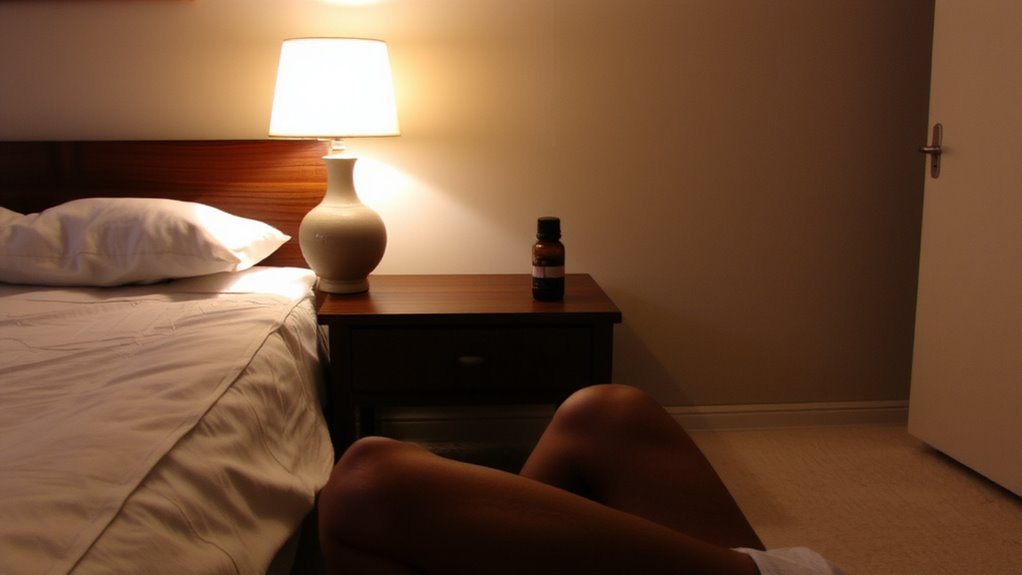
A good number of bedside lamps on the market today offer adjustable color temperatures, but starting your evening with warm light-around 2700 to 3000 Kelvin-can make a noticeable difference in how ready your body feels for sleep. This lower light temperature supports your circadian rhythm by signaling that daytime is ending, gently preparing your body for rest. Your brain responds to warmer hues by increasing melatonin production, an essential hormone for sleep onset. Lamps with dimmable settings and color tuning let you adjust brightness and warmth as bedtime nears, giving you control over your nightly routine. Models with timers or smart features can automatically shift to warmer tones, reinforcing consistent sleep patterns. When choosing a lamp, check for smooth shifts between settings and reliable build quality. Many come with trial periods, so you can test how well they fit your sleep environment without risk.
Choose Bedside Bulbs Below 3000K for Better Melatonin
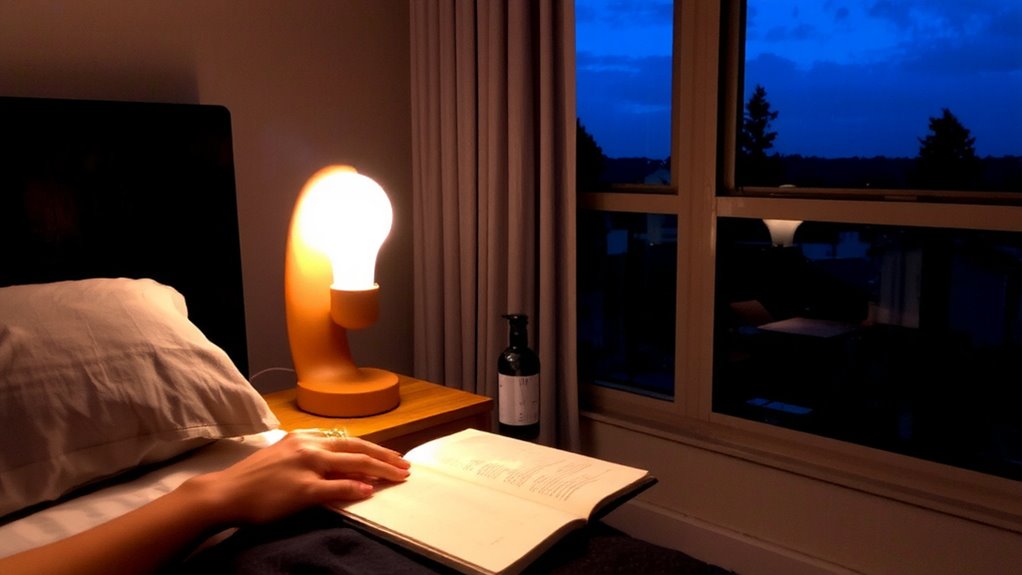
Look for bulbs labeled under 3000K to keep melatonin levels on track-they’re warm enough to mimic candlelight or a sunset, which helps your body wind down naturally. These bulbs emit amber lighting, reducing blue spectrum exposure that can interfere with sleep onset. Using them supports circadian alignment, helping your internal clock stay consistent night after night. You’ll find many LED options with this color temperature clearly marked on the packaging-aim for ones labeled “warm white” or “soft amber.” Most last 15,000 to 25,000 hours and come with a 2- to 3-year warranty. Check dimming compatibility if you plan to lower brightness later. Though slightly more expensive upfront, their long-term benefits for sleep quality are well-documented. Swapping bright, cool bulbs for ones under 3000K is a simple, effective step toward better rest.
Use Dimmable Lights for Evening Light Control
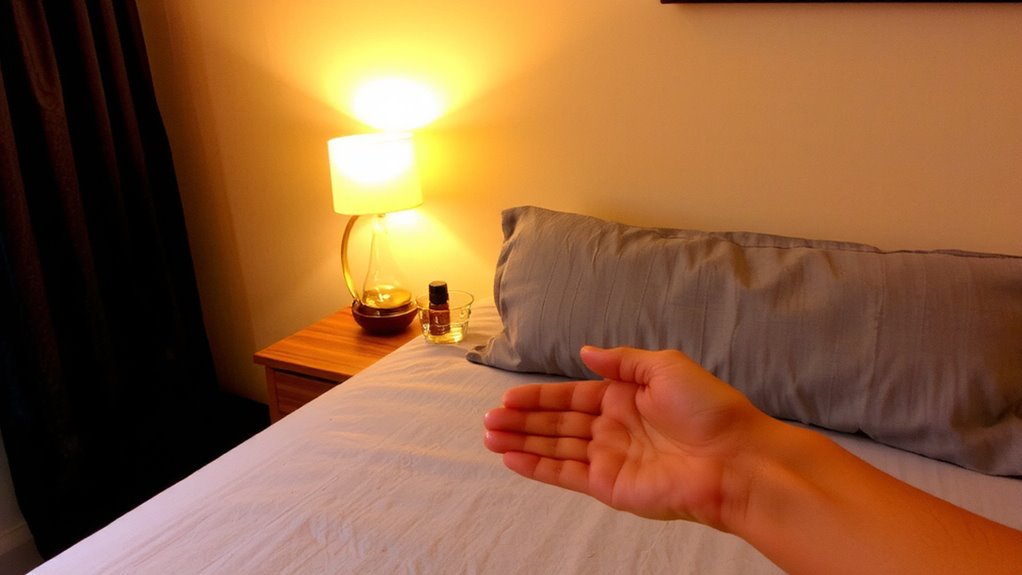
Since you can adjust brightness to match your nightly routine, dimmable lights give you control over how much light your body receives in the evening. Lowering the light intensity signals your brain that it’s time to wind down, supporting natural melatonin production. When paired with a color temperature below 3000K, dimmable options enhance relaxation by mimicking the soft glow of sunset. You’ll find many dimmable LEDs and smart bulbs allow smooth adjustments, some even syncing with apps to gradually reduce brightness. Check packaging for compatibility with dimmer switches, as not all bulbs work well together. Look for models offering a wide range of brightness and consistent performance at low settings. A good warranty guarantees you can test the bulb risk-free. Using dimmable lights gives you a practical, evidence-backed way to fine-tune your sleep environment without relying on sleep aids. For focused nighttime ambiance, consider trying one of the best dimmable night lights, which are specifically designed for a cozy glow in bedrooms or hallways.
Install Downward-Facing Lamps to Reduce Glare
One effective way to cut down on sleep-disrupting glare is by installing downward-facing lamps beside your bed. Proper fixture placement matters-positioning the lamp so light flows downward, not sideways or upward, helps direct brightness where you need it without shining into your eyes. This upward glare can suppress melatonin and strain your joints, making it harder to relax. The right light direction keeps illumination focused on reading or tasks, reducing eye fatigue. Wall-mounted sconces or adjustable swing-arm fixtures are good choices, offering controlled beams. Look for models with easily adjustable arms and secure positioning, so you can fine-tune angles during nightly use. Many come with trial periods, letting you test comfort before committing. Opting for these fixtures supports better sleep hygiene by minimizing disruptive brightness while improving bedside function. For even greater convenience and targeted lighting, consider using clip-on reading lights that attach securely to headboards or bed frames.
Shield Fixtures for a Calmer, Sleep-Friendly Glow
While the direction of your bedside light matters, so does how much of it you actually see-shielded fixtures help soften the glow and reduce harsh brightness that can interfere with melatonin. Fixture shielding works by enclosing the bulb or directing light away from your eyes, which supports natural sleep rhythms. You’ll get better glare reduction with materials like fabric, metal, or frosted glass that diffuse light evenly. Look for designs where the shade sits below the bulb, blocking direct line of sight. These fixtures often provide ambient, indirect lighting that’s easier on your eyes at night. When shopping, check product specs for terms like “full shielding” or “low-glare design.” Many quality options come with trial periods or warranties, so you can test how well they fit your nightly routine. Choosing the right one helps maintain a restful environment without overstimulating your system.
Combine Soft Lighting With Pre-Sleep Routines to Ease Tension
You’ve already considered how shielded fixtures can soften light and protect your melatonin levels, but pairing that gentle glow with consistent pre-sleep habits can further signal to your body that it’s time to unwind. Try combining soft lighting with activities that ease physical and mental tension. Gentle stretching improves joint mobility while calming your nervous system. Adding essential oils enhances relaxation through aromatherapy benefits. Use a diffuser with lavender or chamomile to support sleep onset. A steady routine reinforces circadian cues, boosting sleep quality. For even greater relaxation, consider incorporating best essential oils known for promoting restful sleep.
| Activity | Duration | Purpose |
|---|---|---|
| Gentle stretching | 5–10 min | Loosens tight muscles |
| Aromatherapy | 10 min | Supports calm breathing |
| Dim light reading | 15 min | Prepares mind for rest |
Consistency matters more than perfection-small, repeatable steps offer the best long-term results.
On a final note
Choose warm, dimmable lights below 3000K to support melatonin and ease your body into rest. Position lamps downward and shield bulbs to soften glare, reducing eye strain before bed. Pair this lighting with calming routines-like reading or stretching-to relax joints and signal sleep. Test fixtures with adjustable settings and check return policies, so you can find what works. Small changes in light quality and placement can make a measurable difference in sleep comfort and consistency over time.