The Role of Serotonin Reuptake Inhibitors in Triggering REM Sleep Behavior Disorder
You may not realize it, but serotonin reuptake inhibitors (SRIs) can weaken the muscle paralysis that normally keeps you still during REM sleep, raising your risk of acting out dreams. This can lead to movements like kicking, shouting, or thrashing. While these medications help manage depression, they may disrupt REM sleep stability, especially in older adults or those with existing sleep issues. Adjusting dosage or adding melatonin might help-options worth exploring further with your doctor.
Notable Insights
- Serotonin reuptake inhibitors (SRIs) can disrupt REM sleep by weakening muscle atonia, leading to dream enactment behaviors.
- SRIs alter neurotransmitter balance, particularly serotonin, acetylcholine, and dopamine, increasing the risk of REM without atonia.
- SRI-induced RBD often presents with vocalizations, thrashing, punching, or kicking during sleep due to lost paralysis.
- Not all SRI users develop RBD, but risk rises with higher doses, age, male sex, and preexisting neurological conditions.
- Diagnosis involves polysomnography to detect REM without atonia, and management may include dose adjustment or melatonin therapy.
What Is REM Sleep Behavior Disorder (RBD)?

What if your dreams were so vivid they led you to act out punching, kicking, or shouting while still asleep? That’s the reality of REM sleep behavior disorder (RBD), where your body doesn’t stay still during REM sleep like it should. Normally, you’re temporarily paralyzed during REM to prevent movement, but with RBD, that paralysis fails-leading to dream enactment. You might flail, yell, or even fall out of bed, unaware until you wake. Unlike sleep paralysis-which happens when you’re awake but can’t move-RBD occurs during sleep. It’s not just disruptive; it can be dangerous. Diagnosing RBD involves sleep studies to observe brain and muscle activity. Treatments focus on safety, medication, and monitoring. Early recognition helps protect you and your partner. Consider discussing symptoms with a sleep specialist if unusual nighttime behaviors occur.
How SRIs Disrupt REM Sleep and Trigger Acting-Out Dreams
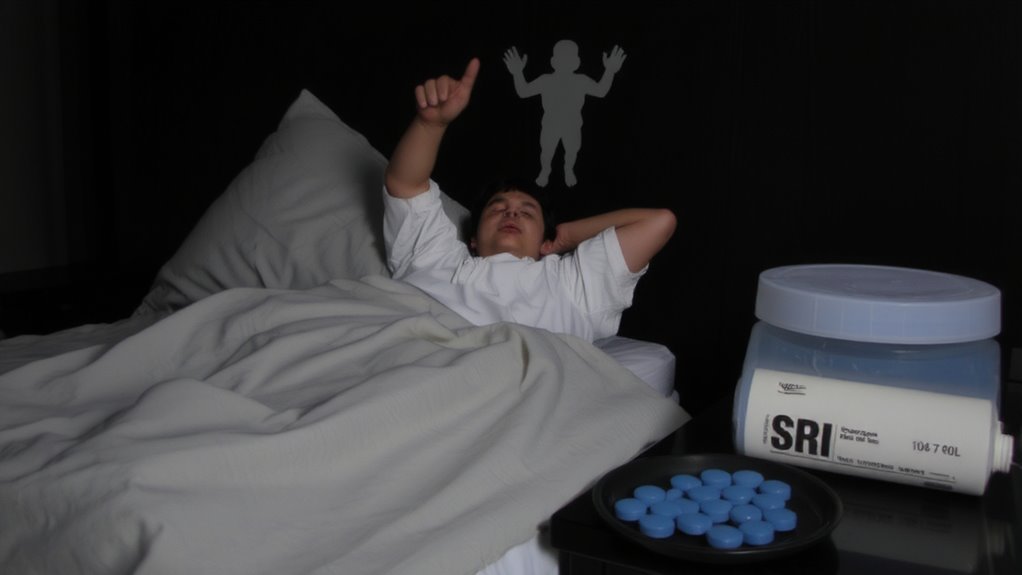
While you might expect antidepressants like serotonin reuptake inhibitors (SRIs) to improve sleep, they can actually interfere with normal REM sleep patterns and increase the risk of acting out dreams. SRIs alter brain chemistry, leading to neurotransmitter imbalance-especially in serotonin, acetylcholine, and dopamine-which can weaken the natural paralysis during REM sleep. This disruption contributes to sleep architecture fragmentation, where the usual cycle and depth of sleep stages become unstable. As a result, muscle tone may persist during dreaming, allowing dream content to physically manifest. You might notice increased restlessness, vocalizations, or limb movements at night. Though not everyone experiences these effects, those with underlying risks should monitor sleep quality closely. Consider discussing alternatives with your provider, reviewing sleep studies if symptoms arise, and evaluating the trade-offs between mood stabilization and sleep safety when managing treatment plans.
Can Antidepressants Cause REM Sleep Behavior Disorder?
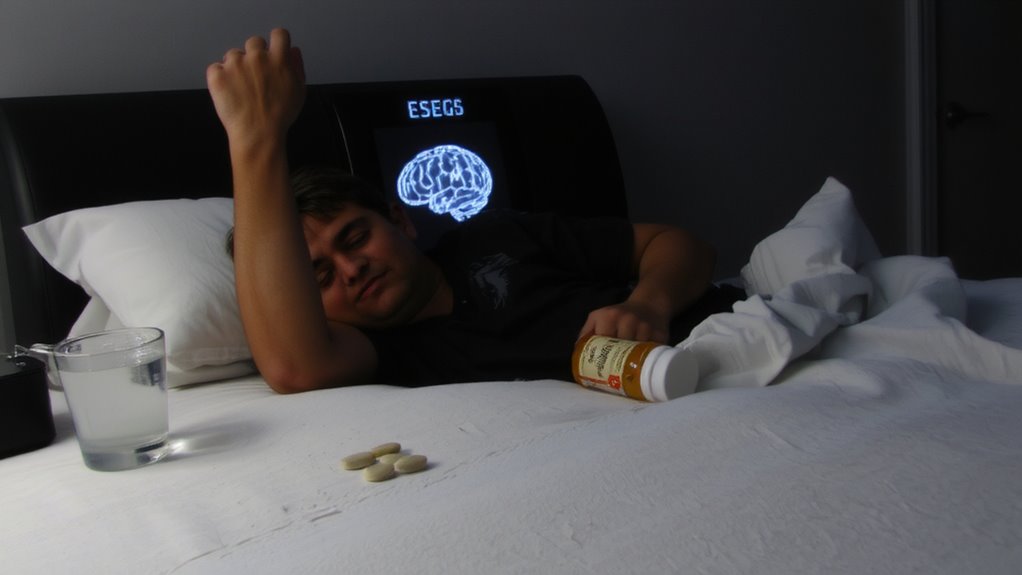
Since antidepressants like serotonin reuptake inhibitors (SRIs) can alter the brain’s control over muscle paralysis during REM sleep, they may increase the chance of developing REM sleep behavior disorder (RBD), especially in people already at risk. You might not realize it, but these medications can disrupt your sleep architecture, reducing the normal muscle atonia that keeps you still during dreams. This change, combined with a neurotransmitter imbalance from prolonged SRI use, may allow physical actions during REM sleep. While not everyone experiences this, those with underlying sleep conditions are more vulnerable. If you’re on SRIs and notice unusual nighttime movements, consider discussing sleep studies with your provider. Adjusting treatment early can help maintain healthy sleep patterns. Monitoring symptoms and understanding risks empowers smarter decisions about medication and sleep health-without rushing to conclusions or stopping prescribed therapy.
Symptoms of SRI-Induced REM Behavior Disorder
Movement during sleep might be more than restless habits-it could signal SRI-induced REM behavior disorder. You may notice yourself acting out dreams, often responding to vivid nightmares with thrashing, shouting, or punching. This dream enactment happens because the usual muscle paralysis during REM sleep doesn’t fully kick in. While you’re not awake, your body mirrors dream actions, which can lead to injuries or disrupted sleep for you or your partner. Symptoms usually begin gradually but can worsen over time. Episodes often align with peak SRI activity, so timing matters. Recognizing these signs early helps guide better choices about sleep safety and medication review. Consider discussing any unusual nighttime behaviors with your doctor. They might suggest a sleep study to confirm REM without atonia. Adjusting treatment early may reduce risks while maintaining mental health care.
Who’s Most at Risk for SRI-Linked RBD?
Why do some people develop REM sleep behavior disorder while taking serotonin reuptake inhibitors, while others don’t? You’re more likely to be affected if you have a genetic predisposition to sleep-related movement disorders. This means your family history might play a bigger role than you think. Also, medication dosage matters-higher doses of SRIs increase the risk, but some people react even at low levels. Men over 50 face higher odds, especially if they already have neurodegenerative conditions. You may not realize the connection at first, but tracking symptoms alongside your medication start date can help identify patterns. While not everyone with these factors will develop RBD, knowing your personal risk helps with early detection. Watching for unusual sleep behaviors is practical, especially when starting or adjusting treatment. Be mindful of how your body responds-it can guide better conversations with your healthcare provider.
How Doctors Diagnose and Treat Drug-Induced RBD?
You might notice strange sleep behaviors like acting out dreams or sudden movements during the night, especially if you’re on serotonin reuptake inhibitors. Doctors start by reviewing your full medication history, since a medication review helps identify drugs linked to REM sleep behavior disorder. You’ll likely undergo a sleep study to confirm abnormal brain activity during REM sleep. Guaranteeing a safe sleep environment is key-doctors suggest removing sharp objects, using bed rails, or sleeping apart from a partner to prevent injuries. Treatment often begins with adjusting or switching medications under medical supervision. Sometimes, melatonin is prescribed at low doses to reduce symptoms without major side effects. Your doctor might also check for underlying neurological conditions. Open communication about symptoms and changes helps guide treatment. Following up regularly guarantees your plan supports both mental health and safe sleep.
Balancing Depression Relief and REM Sleep Risks
While managing depression with serotonin reuptake inhibitors, you might face the challenge of protecting both your mood stability and sleep safety, since these medications can sometimes trigger REM sleep behavior disorder. You’ll need to weigh improved emotional regulation against possible disruptions in sleep quality. Though these drugs help balance brain chemistry, they may reduce muscle atonia during REM sleep, leading to acting out dreams. Watch for symptoms like yelling or thrashing at night. If they occur, your doctor might adjust your dose, switch medications, or add a sleep aid like melatonin or clonazepam, which can improve sleep quality without interfering with depression treatment. Regular sleep studies can monitor changes and guide decisions. Open communication with your healthcare provider guarantees both mental health and restful sleep are supported. You don’t have to choose one over the other-balancing both is possible with careful management.
On a final note
You may notice odd sleep behaviors if you’re taking serotonin reuptake inhibitors, as they can suppress normal REM sleep paralysis. Watch for dream enactment, like kicking or shouting during sleep. While treating depression is essential, discuss any symptoms with your doctor-they might adjust your medication or suggest a sleep study. Not everyone’s at risk, but monitoring sleep quality helps balance mental health care with restful, safe sleep over time.