Impact of Humidity on Viscoelastic Response Times and Resultant Sleep Posture Drift
High humidity softens memory foam by slowing its viscoelastic response, making it less springy and slower to cushion pressure points. This can cause small shifts in your posture all night, subtly throwing off spinal alignment. In dry air, the foam stiffens, reducing comfort and adaptability. Keeping bedroom humidity between 40–50% helps maintain consistent support. Using breathable covers or climate-controlled bedding improves performance. You’ll notice fewer aches and better sleep consistency with stable conditions.
Notable Insights
- High humidity softens memory foam by relaxing polymer chains, delaying viscoelastic response to body pressure.
- Moisture absorption reduces foam resilience, prolonging adaptation and increasing posture micro-shifts during sleep.
- Low humidity tightens foam structure, decreasing conformity and raising risk of spinal misalignment.
- Fluctuating humidity causes inconsistent support, promoting sleep posture drift over nightly cycles.
- Maintaining 40–50% humidity stabilizes foam performance, enhancing pressure relief and spinal alignment consistency.
How Humidity Makes Memory Foam Softer or Stiffer
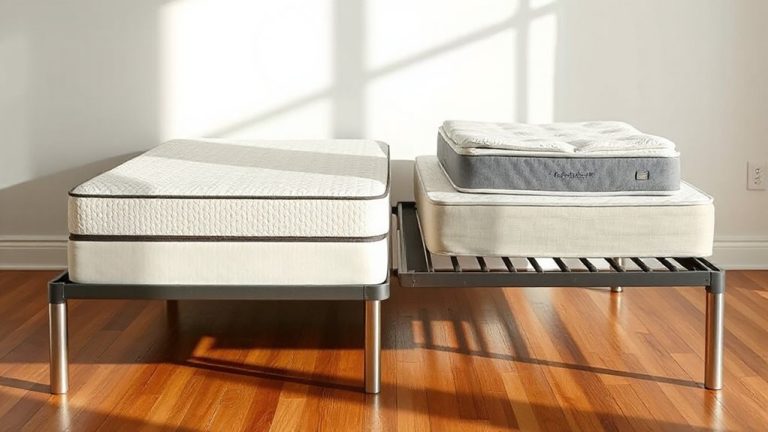
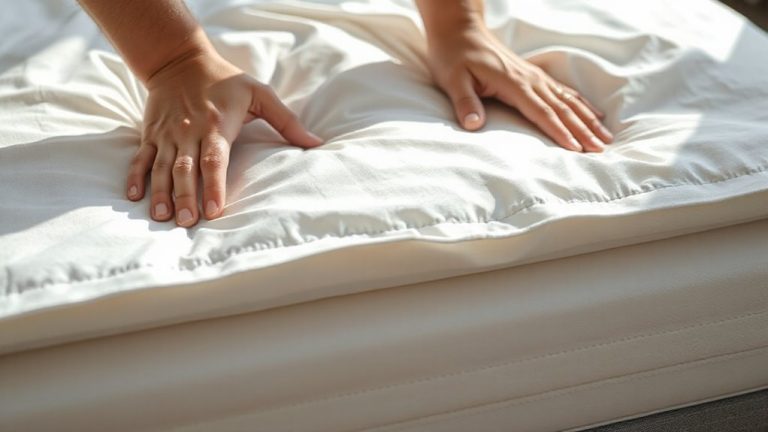
When humidity levels rise, your memory foam mattress may feel softer than usual because the foam absorbs moisture from the air, causing its open-cell structure to relax and respond more slowly to pressure. This shift happens due to polymer relaxation-water molecules seeping into the foam’s cellular structure and weakening intermolecular bonds. As a result, the material loses some resilience temporarily, conforming more deeply to your body. In drier conditions, the opposite occurs: less moisture means tighter polymer chains and a firmer feel. These changes affect comfort over time, especially in climates with wide humidity swings. Mattresses with sealed covers or moisture-resistant layers help stabilize performance. When testing a memory foam bed, consider your local humidity and how it may alter the foam’s behavior. Many brands offer sleep trials, so you can assess long-term feel under your typical indoor conditions.
Why Foam Changes Can Misalign Your Sleep Posture
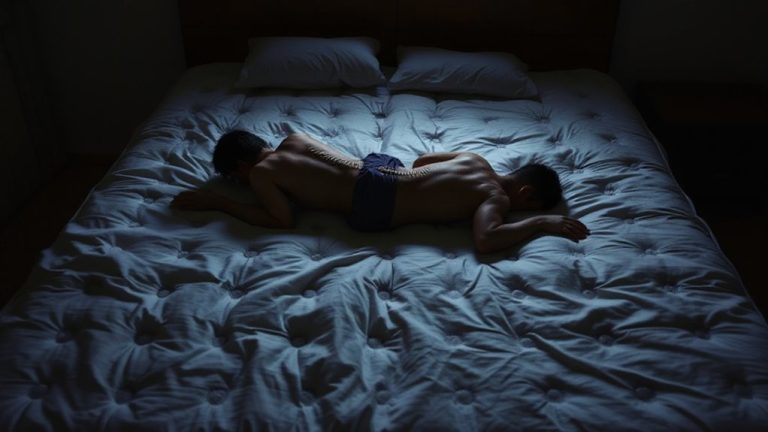
That shift in firmness you feel with changing humidity isn’t just about comfort-it can nudge your spine out of alignment while you sleep. When humidity rises, memory foam softens; when it drops, the material stiffens. These changes, driven by temperature fluctuations, alter how your body sinks into the mattress, possibly distorting your natural spinal curve. Over time, this repeated misalignment contributes to foam degradation, reducing its ability to recover and support properly. You might not notice it nightly, but consistent posture drift can affect sleep quality. Look for foams with open-cell structures or gel infusions-they resist humidity-driven changes better. Mattresses with longer trial periods let you test performance across seasons. A solid warranty can also protect against premature foam degradation. Choosing resilient materials helps maintain alignment, especially if your bedroom climate varies.
You Wake Up Stiff: Even With a Perfect Mattress
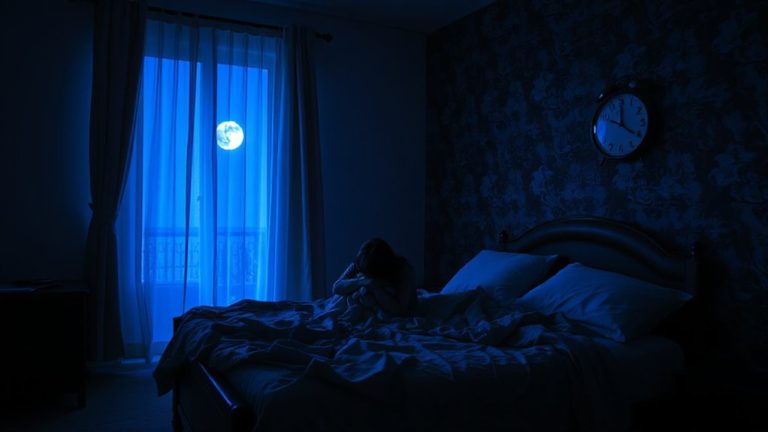
You might wake up stiff not because of poor support, but due to how humidity affects your sleep duration and body temperature regulation. High humidity slows foam’s viscoelastic response, delaying pressure relief and subtly shifting posture over hours. Even with excellent spinal alignment at bedtime, these micro-shifts accumulate, especially during longer sleep durations. Your body works harder to regulate temperature, increasing muscle tension. Cooler, drier air helps maintain consistent foam performance and stable body temperature, reducing strain. Consider mattresses with breathable covers or hybrid designs if airflow is limited. Look for models with trial periods-testing sleep quality over several nights in your own environment reveals how well a mattress adapts to your room’s conditions. Using a high-quality essential oil diffuser and humidifier can help balance indoor humidity levels while promoting relaxation for more restorative sleep.
Set the Right Bedroom Humidity for Spinal Support
Why does your lower back feel tighter on muggy mornings, even with a supportive mattress? High bedroom humidity alters how your body rests, subtly shifting pressure points and affecting spinal alignment. When the air’s too moist, your mattress may retain heat, raising the bedroom temperature and increasing stiffness. Cooler, drier air helps maintain consistent support, especially for foam-based surfaces that respond to thermal and moisture levels. Experts often recommend keeping bedroom humidity between 40–50% to balance comfort and structural support. This range minimizes swelling in bedding materials and helps your spine stay neutral through the night. Devices like hygrometers and smart humidifiers allow you to monitor and adjust conditions precisely. Many come with warranties and app-based controls for long-term use. Maintaining proper humidity isn’t a fix-all, but it’s a practical step toward better spinal alignment and fewer morning aches. You may notice improvements within a week. For consistent results, consider a misting humidifier that evenly distributes moisture without over-saturating the air.
Why Your Memory Foam Feels Different in Dry vs. Humid Air?
When humidity levels shift, your memory foam mattress responds by changing how it supports your body, because these foams are sensitive to both temperature and moisture in the air. In humid conditions, the foam absorbs moisture, which softens its cell structure and slows its response time, making it feel plusher. In dry air, the foam loses moisture, becoming firmer and less adaptive. These changes affect spinal alignment and may influence sleep posture over time. Humidity also plays a role in foam aging-consistent exposure to dry environments can make the material brittle, while excess moisture might encourage breakdown within the cell structure. You’ll notice differences in comfort, especially if you live in extreme climates. Consider a mattress with open-cell design or climate-responsive materials if you’re prone to discomfort. Check warranty terms covering material degradation, and try models with trial periods to assess real-world performance under your room’s humidity.
On a final note
You might wake up stiff even with a good mattress because humidity changes how memory foam responds. High moisture makes foam softer, while dry air makes it stiffer, shifting support during the night. These small changes can nudge your spine out of alignment. To stay properly supported, keep bedroom humidity between 40% and 60%. If your foam feels off, check your room climate before replacing the mattress. Many brands offer 100-night trials, so test under real conditions.