How Delayed Sleep Phase Disorder Affects Mental Health and Mood Disorders
You’re not lazy-your internal clock runs late, making it hard to sleep and wake at typical times. This delay disrupts melatonin and serotonin, raising risks for depression and anxiety. Chronic fatigue erodes mood stability, worsens stress, and can isolate you socially. Treatments like morning light therapy, timed melatonin, and consistent routines help reset your rhythm. Small, steady changes improve both sleep and emotional well-being over time-there’s more to discover.
Notable Insights
- Delayed Sleep Phase Disorder disrupts melatonin and serotonin rhythms, increasing vulnerability to depression.
- Chronic sleep deprivation from early obligations worsens emotional resilience and mental health stability.
- Misaligned circadian rhythms contribute to persistent fatigue, intensifying anxiety and mood swings.
- Social isolation occurs due to inverted sleep schedules, elevating feelings of loneliness and hopelessness.
- Untreated DSPD creates a cycle of insomnia and mood disturbances requiring targeted circadian interventions.
What Is Delayed Sleep Phase Disorder (DSPD)?
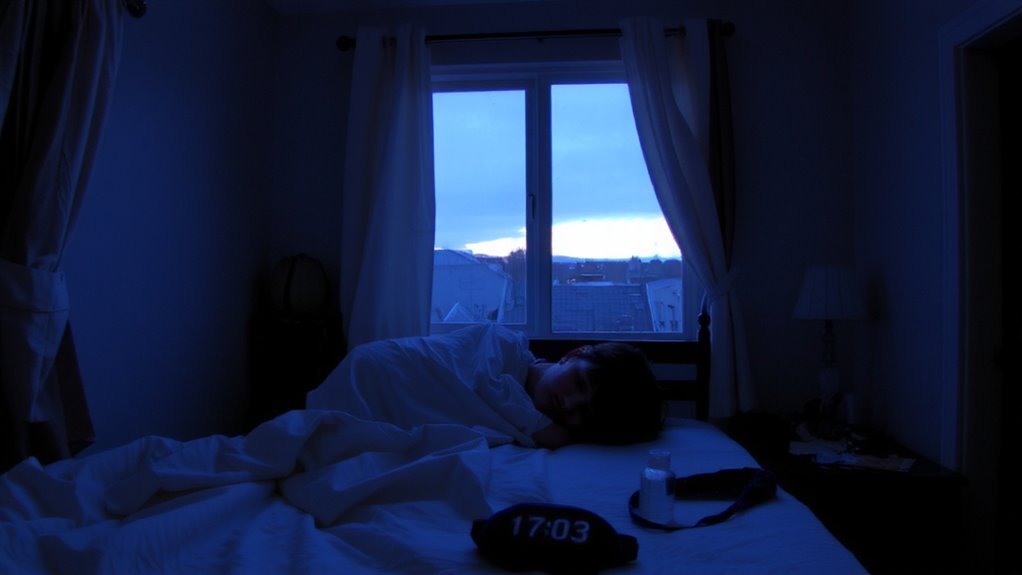
Although your body typically follows a 24-hour sleep-wake cycle, with delayed sleep phase disorder (DSPD), that rhythm shifts later than normal, making it hard to fall asleep and wake up at socially acceptable times. You might not feel sleepy until late at night, even if you’re tired, and struggle to wake up in the morning. This delay isn’t just poor habits-it’s a form of circadian misalignment, where your internal clock runs out of sync with the outside world. Over time, this pattern can lead to chronic insomnia, as your sleep schedule conflicts with work, school, or social demands. Unlike occasional sleep issues, DSPD persists for weeks or longer. Recognizing it early helps you consider solutions like light therapy, consistent sleep routines, or timed melatonin. These approaches target the timing of your sleep, not just the symptoms. It’s a manageable condition, especially when you align treatment with your body’s natural rhythm.
Why DSPD Pushes Your Sleep Schedule Late
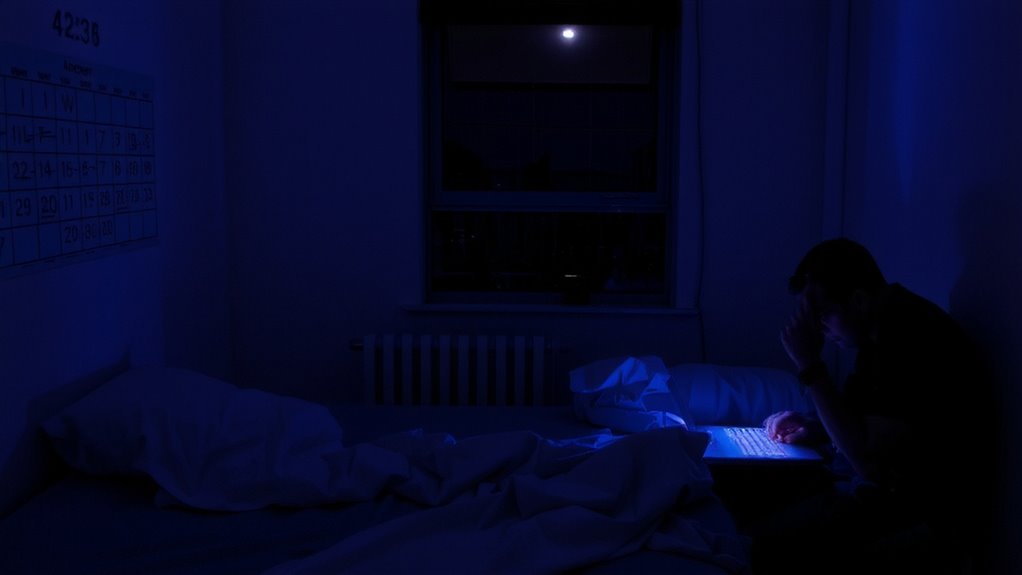
Because your internal body clock helps control when you feel alert or sleepy, a shift in that timing can push your sleep schedule later each night, making it tough to fall asleep at a conventional hour. This delay stems from a misaligned circadian rhythm, which regulates your sleep-wake cycle. In DSPD, your body’s natural cues-like melatonin timing-happen later than typical, signaling sleep onset much later in the night. Even if you try to sleep earlier, your brain isn’t ready, making it feel nearly impossible.
| Factor | Normal Timing | DSPD Timing |
|---|---|---|
| Circadian rhythm peak | 8 PM – 10 PM | 2 AM – 4 AM |
| Melatonin timing start | 9 PM | 1 AM+ |
| Sleep onset | 10 PM – 11 PM | 1 AM – 3 AM |
| Wake-up alertness | 6 AM – 7 AM | 9 AM – 11 AM |
Understanding these patterns helps when considering treatments like light therapy or melatonin supplements.
How DSPD Fuels Depression
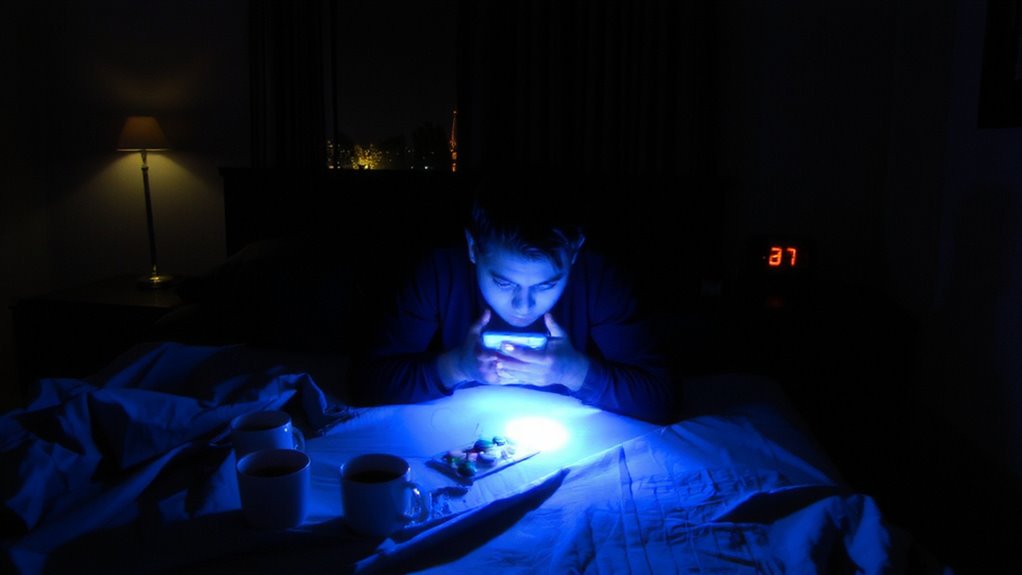
When your body clock runs hours behind everyone else’s, it’s not just sleep that suffers-your mood can take a hit, too. Circadian misalignment means your brain’s internal rhythm conflicts with daily demands, disrupting serotonin and melatonin production, both linked to depression. You’re likely facing chronic sleep deprivation because early work or school times force you awake before you’ve rested fully. This ongoing fatigue doesn’t just dull focus-it slowly wears down emotional resilience. Over time, the mismatch between your natural sleep pattern and social obligations can deepen feelings of isolation or hopelessness. Treating DSPD with light therapy, consistent sleep schedules, or melatonin supplements may help realign your rhythm. Some find prescription aids or cognitive behavioral therapy for insomnia (CBT-I) effective, often with free trial options or covered under insurance. Addressing sleep deprivation and circadian misalignment isn’t just about rest-it’s a step toward stabilizing mood.
How DSPD Fuels Anxiety and Mood Swings
If your internal clock runs much later than the rest of the world, you’re probably no stranger to racing thoughts or sudden mood shifts, especially when daily responsibilities clash with your natural rhythm. Chronic fatigue makes it harder to manage stress, leaving you more vulnerable to anxiety. When exhaustion builds up, even small changes in routine can feel overwhelming. Your body wants to sleep later, but alarms, jobs, and school demand early starts-this mismatch fuels emotional instability. Social isolation often follows, not by choice, but because you’re awake when others sleep. That loneliness can deepen mood swings over time. Treatments like light therapy, consistent sleep scheduling, or low-dose melatonin may help realign your cycle. Some find support in cognitive behavioral therapy for insomnia (CBT-I). Results vary, but gradual adjustments with medical guidance offer the most sustainable path forward.
When DSPD Pulls You Away From Others
How often do you wake up to a world already in motion, with friends and coworkers miles ahead in their day while you’re just beginning to stir? This delay can lead to missed plans, skipped gatherings, and fewer chances to connect. Over time, you might feel increasing social isolation, as though you’re always just outside the circle. You’re not choosing to pull away, but your rhythm makes consistent bonding hard, which can deepen emotional detachment. Relationships may grow distant, not from lack of care, but from mismatched timing. You might notice conversations feel shallow or forced because you’re too tired or out of sync. These patterns aren’t your fault, but recognizing them helps you make informed choices about your schedule, sleep habits, or when to seek support. Awareness is a practical first step toward better alignment with the people who matter.
Treatments That Improve Sleep and Mental Health
While your body’s internal clock may feel stubbornly out of sync, several proven treatments can help reset your rhythm and support both sleep and mental health. Light therapy works by exposing you to bright light, usually in the morning, which helps shift your sleep cycle earlier. You’ll need a light box that emits 10,000 lux, used for about 20–30 minutes daily, ideally soon after waking. It’s safe for most people, though eye strain or headaches can happen at first. Cognitive restructuring, a part of CBT-I, helps you replace negative thoughts about sleep with more balanced ones, reducing anxiety that worsens insomnia. This method requires practice but improves over time with guidance from a therapist or digital program. Combined, these treatments can adjust your schedule and ease mood symptoms linked to DSPD. Results vary, so a 4–8 week trial gives the best picture of what’s effective for you.
Daily Strategies for Managing DSPD Emotionally
Sticking to treatments like light therapy and cognitive restructuring can set the foundation for better sleep and improved mood, but daily habits play a big role in managing how DSPD affects your emotions. Creating a consistent daily structure helps your body expect sleep and wake times, even when your natural rhythm resists. Start by setting fixed times for meals, work, and relaxation-it builds predictability, which supports emotional regulation. Limit screen use an hour before bed, since blue light can delay melatonin release. Try journaling or quiet music to wind down. Small, repeatable routines-like a nightly tea ritual or stretching-signal your brain it’s time to shift gears. You might not fix your cycle overnight, but over time, these choices improve sleep quality and steady your mood. Track progress over a few weeks to see what’s working.
On a final note
You might feel stuck, but adjusting your sleep is possible with consistent routines and light exposure early in the day. Treatments like melatonin, light therapy, and behavioral support work best when tailored to your schedule. Consider speaking with a sleep specialist to explore options backed by evidence. Small, steady changes improve both sleep and mood over time. Give yourself room to try strategies, track progress, and adjust as needed.