How to Reduce Nighttime Heartburn With Strategic Pillow Elevation and Diet Adjustments
Propping up your upper body with bed risers or a wedge pillow helps keep stomach acid down by using gravity, while avoiding spicy foods, citrus, chocolate, and late meals reduces acid production. Finish eating at least 3 hours before bed to aid digestion. These changes can ease symptoms and support better sleep. You’ll find more strategies that pair well with these adjustments for lasting relief.
Notable Insights
- Elevate the head of your bed 6 to 8 inches using bed risers or a wedge pillow to prevent acid reflux at night.
- Avoid spicy, fatty, and acidic foods before bed, as they relax the esophageal sphincter and increase reflux risk.
- Stop eating 3–4 hours before sleep to allow digestion and reduce stomach pressure while lying down.
- Choose low-acid, mild snacks like bananas or oatmeal if hunger strikes before bedtime.
- Use a wedge pillow instead of stacked regular pillows for effective elevation and better neck support.
Why Nighttime Heartburn Gets Worse at Night

Even though you might feel fine during the day, your chances of experiencing heartburn can go up at night because lying down makes it easier for stomach acid to move into your esophagus. Your lying position reduces the effect of gravity, allowing acid to creep upward, especially if you’ve eaten close to bedtime. This shift can worsen symptoms even if you don’t have a diagnosed condition. Delayed digestion from high-fat or large meals further increases pressure in your stomach, raising the risk of reflux. Your body processes food more slowly at night, so eating late gives your stomach more time to produce acid while you’re inactive. Sleep disorders like insomnia or sleep apnea may also influence stomach function and acid control. While some sleep aids relax the lower esophageal sphincter, worsening reflux, others may help regulate sleep cycles. Consider timing, meal composition, and your body’s natural rhythm when planning dinner and bedtime. Using an elevated sleeping position with the best acid reflux pillows for side sleepers can help reduce nighttime symptoms by leveraging gravity to keep acid down, and acid reflux pillows are specifically designed to support this therapeutic incline.
Elevate Your Upper Body for Immediate Relief

If you’re dealing with nighttime heartburn, raising the head of your bed by 6 to 8 inches can help keep stomach acid where it belongs. Propping yourself up changes your sleep posture, reducing reflux. Don’t just stack pillows-the wrong pillow placement can strain your neck without helping acid flow. Instead, use bed risers or a wedge pillow designed for elevation. For shoulder surgery patients, a 45-degree wedge pillow can provide optimal support while also aiding in acid reflux prevention during recovery.
| Method | Effectiveness | Comfort Level |
|---|---|---|
| Bed risers | High | High |
| Wedge pillow | High | Medium-High |
| Stack of pillows | Low | Low-Medium |
| Flat sleeping | Low | High |
These tools support better sleep posture and minimize nighttime symptoms. Try a recommended elevation method for a few nights to assess improvement. Most quality wedges come with a trial period, so test one risk-free. Simple adjustments can make a real difference in how you feel.
Avoid These Foods Before Bed
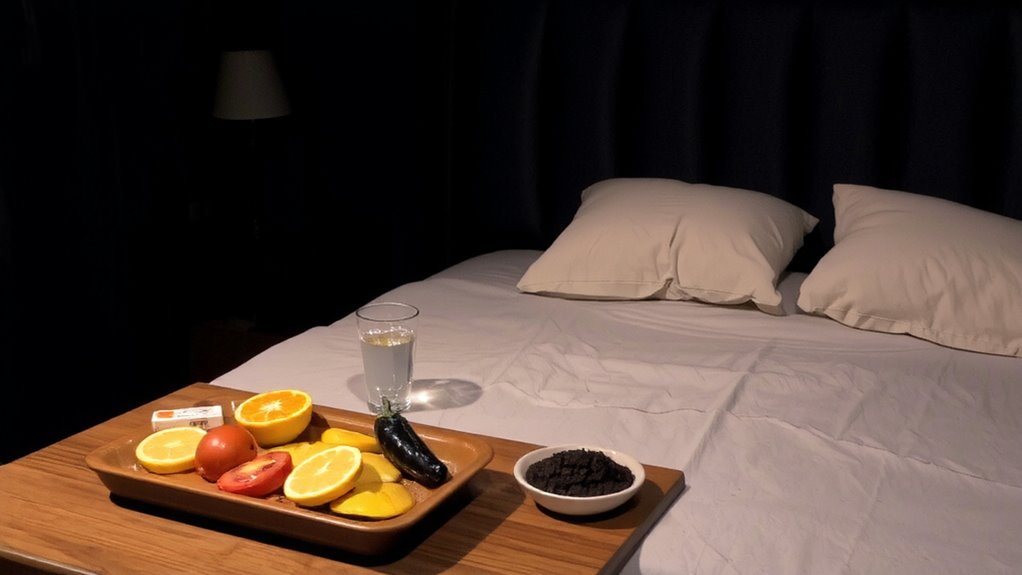
Many common foods can trigger nighttime heartburn, so what you eat in the hours before bed matters more than you might think. Spicy snacks may seem harmless, but they relax the lower esophageal sphincter, letting stomach acid rise more easily while you’re lying down. Citrus juices like orange or grapefruit are highly acidic and can irritate the esophagus, worsening symptoms. Chocolate, fried foods, and carbonated drinks also contribute to discomfort. You don’t need to eliminate them entirely, but limiting intake within three to four hours of sleep helps. Your body’s digestion slows at night, increasing the risk of reflux. Choosing milder, low-acid evening snacks-like oatmeal or bananas-supports better sleep quality. Paying attention to food triggers allows you to make informed decisions, reduce nighttime disruptions, and improve overall rest without relying on sleep aids.
Stop Eating Early to Prevent Reflux
Since your body’s ability to digest slows considerably at night, finishing meals earlier gives your stomach time to process food before lying down. Aim to stop eating at least three hours before bed-this simple meal timing shift supports natural acid suppression and reduces reflux risk. When you lie down soon after eating, stomach acid is more likely to flow back into the esophagus, especially if digestion isn’t complete. By spacing out your last meal, you allow gravity and digestion to work together effectively. This adjustment doesn’t require special tools or supplements, just consistent scheduling. Over time, earlier eating can improve sleep quality by minimizing nighttime discomfort. It’s a low-effort, evidence-backed strategy that complements other lifestyle changes. While it won’t cure chronic issues alone, it’s a practical step toward better overnight comfort and supports your body’s natural rhythm.
When to See a Doctor for Nighttime Heartburn
You’ve probably noticed less heartburn at night when you stop eating earlier, but even with smart timing, symptoms can persist or worsen over time. If you’re dealing with chronic symptoms-like heartburn more than twice a week-your esophagus may be getting damaged, even while you sleep. Severe pain that spreads to your chest, neck, or back can mimic more serious conditions, so it’s best not to ignore it. These signs may disrupt your sleep or contribute to sleep disorders like insomnia or sleep apnea. Over-the-counter antacids might help short-term, but they don’t fix underlying issues. A doctor can assess whether you need stronger medication, lifestyle adjustments, or tests like an endoscopy. Some sleep aids may worsen reflux, so always discuss options. When symptoms interfere with rest consistently, seeing a specialist guarantees safer, longer-term relief and better sleep quality.
On a final note
You might find relief by elevating your upper body with a wedge pillow designed for reflux, not just extra cushions, since proper angle and support matter. Pair this with avoiding late meals and trigger foods like spicy or fatty items. These changes often improve symptoms within days. If heartburn persists more than twice weekly, consider seeing a doctor to rule out chronic conditions. A strategic trial of these adjustments offers a practical first step.