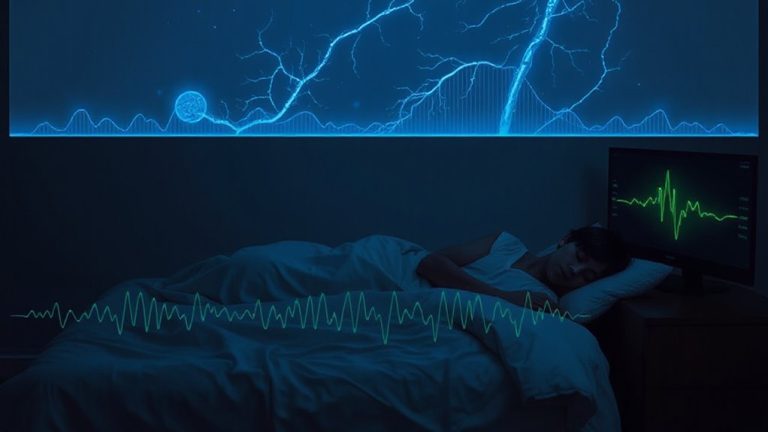
The Impact of Stroke on Sleep Spindle Generation and Sleep Quality
A stroke can damage your thalamus, disrupting sleep spindles-brief brainwave bursts essential for memory and restorative sleep. When spindles weaken, your sleep becomes lighter and more fragmented, reducing recovery quality. Poor spindle activity limits cognitive repair overnight, worsening fatigue. Treatments like sound stimulation or neural pulse devices may improve spindle density and sleep efficiency. Several are in trials, offering warranties and safety monitoring, with early results supporting better rest and brain function-options worth considering as part of your recovery plan.
Notable Insights
- Stroke disrupts sleep spindle generation by damaging thalamic regions responsible for neural synchronization during stage 2 sleep.
- Reduced spindle density after stroke impairs memory consolidation and weakens overnight brain repair processes.
- Thalamic injury from stroke leads to fragmented, lighter sleep with decreased deep restorative sleep phases.
- Impaired spindle activity correlates with poor sleep continuity, lower efficiency, and increased cognitive fatigue post-stroke.
- Emerging therapies like neural stimulation show promise in enhancing spindle activity and improving post-stroke sleep quality.
What Are Sleep Spindles and Why They Matter After Stroke
Why do some stroke survivors struggle more with memory and recovery during sleep? It’s because stroke can disrupt sleep spindles-brief bursts of neural oscillations during stage 2 sleep. These spindles help transfer memories from short- to long-term storage. When damaged, your sleep architecture loses critical coordination, weakening overnight brain repair. You may not reach or sustain the deep, restorative phases needed for recovery. Sleep spindles are part of a larger network of neural oscillations that stabilize cognitive function. Poor spindle activity often means fragmented sleep, which hampers healing. Monitoring sleep patterns can reveal spindle disruptions early. Some sleep aids and therapies support spindle generation, though results vary. Consider discussing EEG-based assessments with your provider. Devices with clinical backing and trial periods let you test effectiveness safely. Good sleep hygiene remains essential, but targeted support could improve outcomes over time.
How Stroke Damages the Brain’s Sleep Spindles
A stroke can throw off your brain’s delicate rhythm, especially when it comes to sleep spindles-those quick bursts of activity in stage 2 sleep that help lock in memories and support recovery. When a stroke occurs, it can cause thalamic disruption, damaging the brain region key to generating spindles. Since the thalamus helps coordinate neural synchronization between brain areas during sleep, this disruption slows spindle production. Without regular spindles, your brain struggles to maintain stable sleep patterns. You may notice lighter, more fragmented rest, especially in the recovery phase. These changes aren’t permanent for everyone, but they do affect how well your brain repairs itself overnight. Monitoring your sleep with a trusted sleep study can reveal spindle irregularities early. Some find mild improvements using sound-based stimulation devices, though results vary. Always consult your care team before trying new sleep aids.
Why Broken Spindles Cause Poor Sleep After Stroke
You’ve probably noticed your sleep isn’t as deep or rejuvenating as it once was, especially since the stroke affected your brain’s ability to produce normal sleep spindles. These broken spindles disrupt key sleep stages, reducing sleep quality and limiting restorative rest. Without consistent spindles, your brain struggles with memory consolidation and neural plasticity, both essential for recovery. This often leads to persistent cognitive fatigue, making daily tasks more challenging.
| Sleep Issue | Impact on Recovery |
|---|---|
| Reduced spindle density | Slower neural plasticity |
| Fragmented deep sleep | Increased cognitive fatigue |
| Poor sleep continuity | Weaker memory processing |
| Lower sleep efficiency | Reduced daytime alertness |
Improving spindle activity may support better sleep architecture, but current aids vary in effectiveness. Consider discussing sleep solutions that target slow-wave sleep, as they may indirectly support spindle function. Always review trial options and warranties when exploring devices or therapies.
Can Fixing Spindles Help Stroke Recovery?
Could better sleep spindles actually help your brain heal after a stroke? Research suggests yes-improving spindle plasticity may support recovery by strengthening neural networks. During deep sleep, sleep spindles help organize neural reactivation, replaying daily experiences to consolidate learning and memory. After a stroke, disrupted spindles can impair this process, slowing rehabilitation. Enhancing spindle activity might boost your brain’s ability to rewire itself. You don’t need drugs to see benefits-consistent sleep schedules and minimizing nighttime disruptions can naturally support spindle production. Some trials using sound stimulation during sleep have shown promise in safely increasing spindle density. Though these methods are still under study, early results imply that protecting and improving spindle function could be a low-risk, high-reward addition to recovery plans. Maintaining good sleep hygiene now could build a foundation for better outcomes later.
New Treatments That Restore Healthy Sleep Spindles
While researchers continue exploring how sleep shapes recovery after a stroke, new treatments are emerging that specifically target the restoration of healthy sleep spindles. You may benefit from neural stimulation, which gently boosts spindle activity during sleep by sending timed pulses to key brain areas. It’s non-invasive, often used at home, and early trials show improved sleep quality and cognitive recovery. Gene therapy is still experimental but aims to repair damaged circuits that generate spindles. Though not widely available, it holds long-term potential for restoring natural sleep patterns. Both options are being tested under strict protocols, with warranties on devices and monitored safety in clinical settings. You should discuss these with your doctor, weighing effectiveness, access, and risks. While results vary, these treatments offer a science-based path to better sleep and recovery after stroke.
On a final note
You’ll notice better sleep when spindles recover, and your brain heals. Monitor sleep quality with wearable trackers or lab studies, which show how spindles return over time. Some aids, like sound stimulation or medications, may support spindle repair, but results vary. Discuss options with your doctor, especially if using devices under clinical trial. Look for treatments with trial periods and clear data. Small, steady improvements help recovery, so track changes carefully and adjust based on evidence, not hopes.