How to Position Your Bed to Maximize Air Quality and Minimize Allergen Exposure
Keep your bed away from windows and exterior walls to cut down on allergens and temperature shifts. Avoid placing it near air vents or doors that let in drafts, which can stir up dust and disrupt sleep. Position the head of your bed against an interior wall for better airflow control. Elevate the frame slightly to reduce dust buildup, and keep the area clutter-free. Choose sealed storage over fabric bins to limit allergen traps. You’ll find more helpful tips that can fine-tune your sleep environment just ahead.
Notable Insights
- Place your bed away from exterior walls and windows to reduce exposure to drafts, pollen, and temperature fluctuations.
- Keep the bed several feet from air vents to minimize circulation of dust, dander, and allergens during sleep.
- Position the head of the bed against an interior wall to avoid drafts from doors and maintain thermal stability.
- Avoid damp or mold-prone areas like basements or cold exterior walls to prevent allergen exposure from mildew.
- Elevate the bed frame 2–4 inches and use sealed under-bed storage to improve airflow and reduce dust accumulation.
Keep Your Bed Away From Windows and Exterior Walls
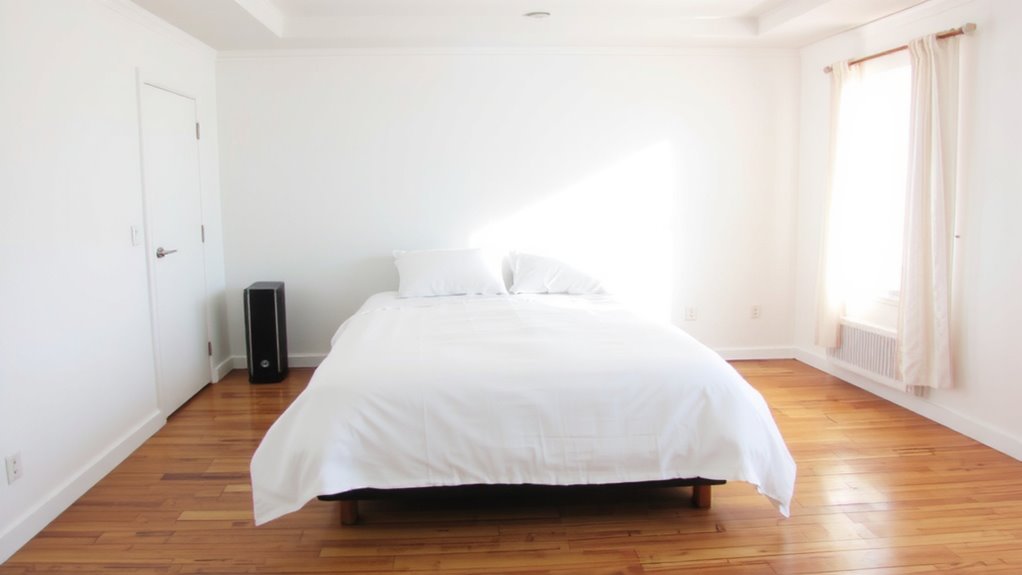
While you might enjoy the natural light or view, placing your bed directly against a window or exterior wall can expose you to more outdoor allergens and temperature shifts that disrupt sleep. Your bed proximity to these openings matters because poor window insulation often allows drafts, moisture, and pollen to seep in-especially in older homes. Cool air leaking at night may not only wake you but also encourage mold growth nearby, worsening indoor air quality. Even double-paned windows can struggle to fully block allergens if seals degrade over time. By moving your bed a few feet inward, you reduce exposure and maintain a more stable sleeping climate. This small adjustment supports deeper, less interrupted rest and benefits those with allergies or sleep disorders. Consider testing different placements during seasonal changes to see what improves comfort. Many find better sleep comes not from high-tech aids, but from thoughtful positioning.
Avoid Placing Your Bed Near Air Vents
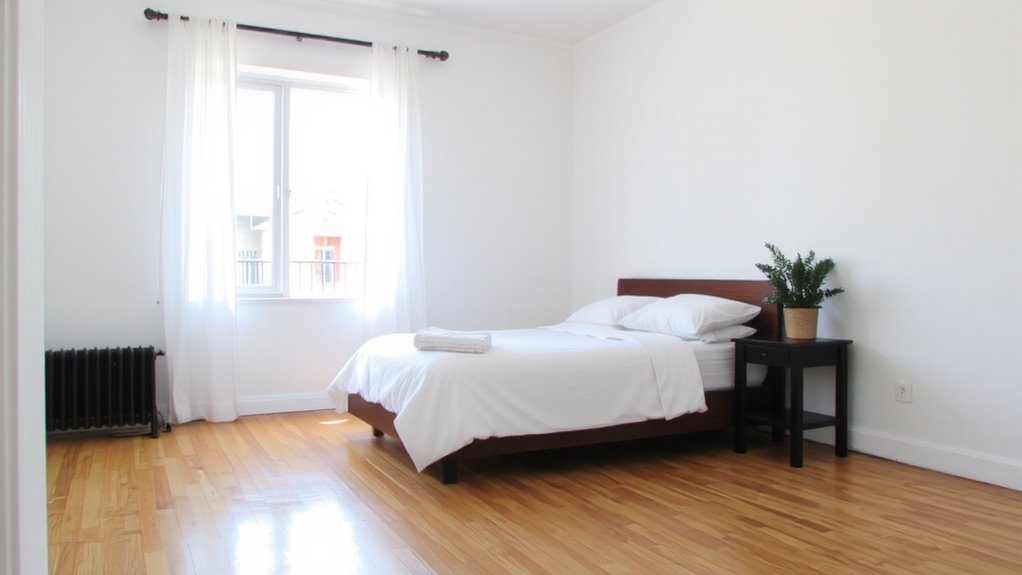
Placing your bed near air vents might seem like a neutral choice, but it can quietly affect your sleep quality and indoor air cleanliness. Direct airflow from vents stirs up dust, pet dander, and other allergens, circulating them right where you breathe all night. This disrupts healthy airflow patterns, increasing your exposure and potentially worsening allergy symptoms or sleep disturbances. You may also experience uneven temperature consistency, as cold or hot blasts can make it harder to stay comfortably warm or cool. That fluctuation can interrupt your sleep cycle and reduce restfulness. Keeping your bed a few feet from vents helps maintain stable airflow patterns and promotes better temperature consistency throughout the night. It’s a simple adjustment that supports cleaner air and more stable sleep conditions-important if you’re managing sensitivities or using sleep aids that rely on a calm, controlled environment. Choosing a bed designed with dust mite-resistant materials can further minimize allergen accumulation and improve overall sleep quality.
Position Your Head Away From Doors and Drafts

If you’re trying to minimize nighttime allergens and support steady breathing, keeping your head away from doors and drafts can make a noticeable difference. Direct exposure to airflow direction from open doors or windows may disrupt thermal comfort, triggering stuffiness or dry air symptoms that affect sleep quality. Drafts often carry dust, pollen, and cooler air, which can worsen nasal congestion or irritate airways, especially if you’re sensitive. Positioning your head toward an interior wall helps maintain stable warmth and reduces sudden cool gusts. This setup supports consistent thermal comfort, letting your body regulate temperature more efficiently through the night. While some airflow is necessary, uncontrolled drafts may interfere with restful sleep patterns. Adjusting your bed’s placement can reduce these effects without needing special sleep aids. Try repositioning your bed and observe changes over a few nights-you might find improved breathing and fewer nighttime disruptions simply by managing airflow direction and shielding your head from drafts.
Stay Clear of Damp Walls and Mold-Prone Areas
Since damp walls can harbor hidden mold and mildew, positioning your bed against them might expose you to allergens that disrupt sleep over time. You’re better off placing your bed on a drier interior wall to limit bed moisture and support effective mold prevention. Cold spots and poor airflow behind exterior walls often lead to condensation, creating a breeding ground for allergens. If you notice musty smells or visible staining, consider using a hygrometer to check humidity levels-ideally, keep them between 30% and 50%. Dehumidifiers or improved ventilation can help, especially in basements or older homes. Choosing breathable bedding and checking wall temperature seasonally also supports long-term air quality. Simple changes in placement and monitoring go a long way in reducing allergen exposure and supporting restful sleep over time.
Elevate Your Bed Frame to Reduce Dust Buildup
Raising your bed frame even a few inches can make a noticeable difference in how much dust accumulates underneath. Increased bed elevation allows for better airflow and easier cleaning, reducing the amount of dust mites and allergens trapped near your sleeping area. A higher frame height also discourages debris from settling and being stirred into the air you breathe at night. Many modern bed frames offer adjustable legs or risers, letting you customize the height based on room layout and flooring. Opt for solid, stable designs that support your mattress without wobbling. When selecting a frame, check product specs for recommended height and weight limits. Even a small increase-just 2 to 4 inches-can improve air quality markedly. This simple change supports better breathing during sleep, especially if you’re sensitive to allergens. Consider testing a temporary riser before buying a new frame to assess comfort and effectiveness. For metal frames, using compatible bed risers for metal frames ensures both stability and proper elevation.
Remove Clutter That Traps Allergens Under and Around Bed
Under your bed and around its frame, clutter collects dust, pet dander, and allergens that can quietly affect your breathing while you sleep. Old clothes, books, or unused items trap particles and reduce airflow, worsening air quality. To minimize exposure, remove unnecessary objects and keep the space clear. If you need extra storage, choose smooth, sealed under bed bins with lids-they’re easy to wipe down and limit dust buildup. Avoid fabric drawers, which absorb allergens. Effective bed storage solutions elevate items off the floor, helping you maintain cleanliness. Regularly vacuum under the bed and wipe bins to prevent accumulation. This simple habit improves air quality and supports more restful sleep, especially if you have allergies or asthma. A tidy space means fewer irritants, letting your body recover more efficiently through the night.
Optimize Bed Placement for Cleaner Nighttime Air
Though you might not think about it, where you place your bed in the bedroom can make a real difference in the air you breathe at night. Positioning your bed away from walls and corners improves airflow, reducing stuffiness and helping you stay comfortable. Elevated bed frames support better bed elevation, allowing air to circulate underneath and minimizing moisture buildup that can attract dust mites. Pair this with consistent clutter reduction-removing bins, clothes, or furniture from beneath the bed-to cut down on surfaces where allergens collect. Keep your bed at least a few inches from the wall to prevent dust accumulation and improve ventilation. A well-placed bed also supports quieter, more consistent sleep, especially when combined with hypoallergenic bedding and regular cleaning. These small adjustments enhance nighttime air quality without major changes.
On a final note
Keep your bed positioned away from windows, vents, and damp walls to reduce allergen exposure and improve air quality. Elevating the frame and minimizing clutter helps limit dust buildup. Aim for a draft-free zone with steady airflow, avoiding direct door currents. These adjustments support better breathing at night, which may ease sleep disturbances. Small changes in placement can make a measurable difference in comfort and respiratory health over time.