How to Choose a Sleep Mask That Doesn’t Compress the Temples or Eyes
Choose a sleep mask with a 3D contoured shape so it hovers over your eyes and doesn’t press on your eyelids or temples. Look for soft, breathable fabrics like silk or bamboo to reduce irritation and prevent overheating. Position straps above your ears to ease pressure and avoid headaches. Use an adjustable nose wire to seal out light without squeezing. Test the fit if you sleep on your side or stomach to guarantee it stays in place. Better designs balance comfort and darkness-there’s more to ponder for long-term use.
Notable Insights
- Choose a 3D contoured design that creates space over the eyes to prevent pressure on eyelids and allow blinking.
- Opt for soft, breathable fabrics like silk or bamboo to reduce irritation and avoid trapping heat.
- Select masks with adjustable straps positioned above the ears to minimize temple compression and prevent headaches.
- Ensure the mask has a non-contact structure with molded cups or padded chambers to protect lashes and reduce puffiness.
- Look for adjustable features like bendable nose wires and light-blocking seals for a secure, pressure-free fit.
Why Pressure-Free Sleep Masks Prevent Discomfort
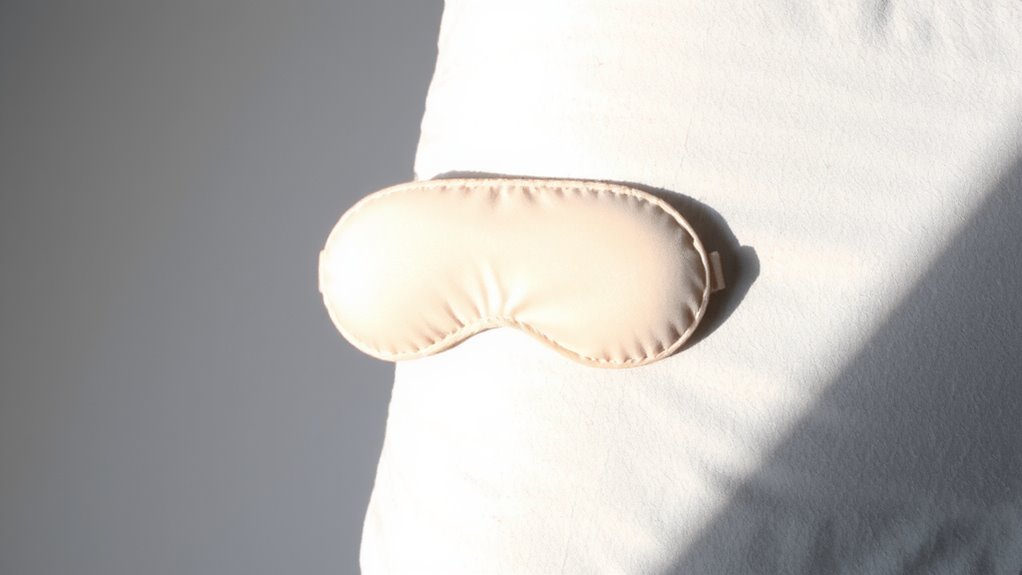
While many sleep masks help block light, pressure-free designs stand out by reducing physical discomfort that can interfere with rest. You might not realize it, but tight or poorly shaped masks can cause eye strain and even nerve compression over time, especially if worn nightly. These issues often stem from fabric pressing too hard on your temples or eyelids, restricting blood flow and irritating sensitive facial nerves. Pressure-free models use contoured shapes and soft, flexible materials to hover slightly over the eyes, eliminating direct contact. That means less chance of waking up with soreness or tingling around your face. Many top-rated options also feature adjustable straps to guarantee a snug yet gentle fit. Brands often offer trials or warranties, so you can test comfort without risk. If you have sensitive skin or existing sleep disruptions, trying a pressure-free mask could support better rest by removing physical stressors that hinder relaxation. For those seeking maximum comfort and darkness, exploring the best eye masks for ultimate comfort and darkness can help identify models designed with contoured shapes.
Pick 3D Shapes That Don’t Touch Your Eyes
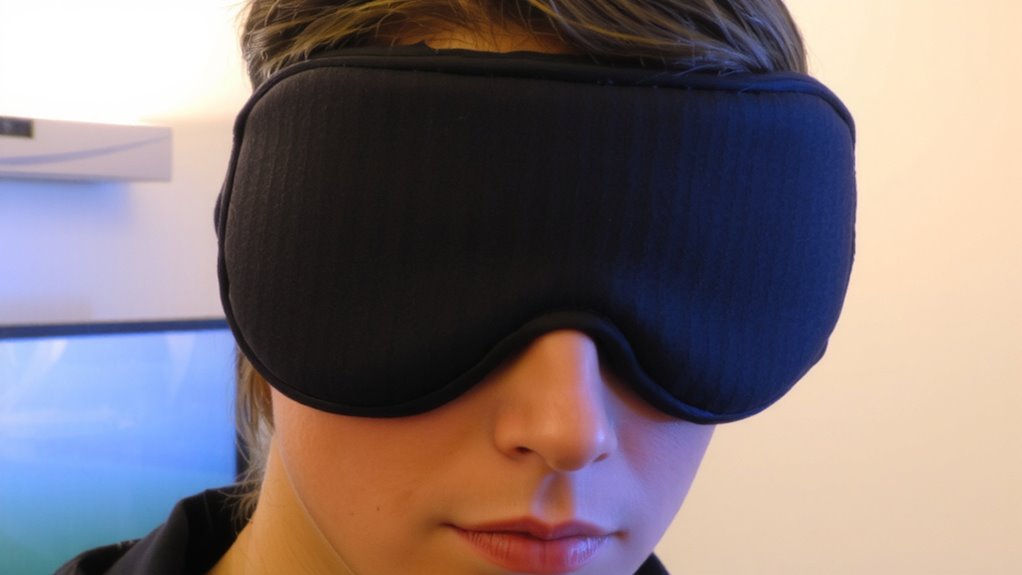
A pressure-free fit starts with the right shape, and that’s where 3D-designed sleep masks make a real difference. You need enough eye clearance so your lashes don’t brush against the fabric and your eyelids aren’t compressed. Masks with a tented structural design create space over your eyes, letting you blink freely even while asleep. This shape also helps prevent pressure that can contribute to discomfort or morning puffiness. Look for models specifically labeled as “3D” or “non-contact,” as they’re built to hover slightly above the face. Their structural design often includes molded cups or padded chambers that maintain shape without squishing your temples. Some brands offer trial periods, so you can test the fit risk-free. Proper eye clearance isn’t just about comfort-it supports healthier sleep by reducing irritation. Check product specs for depth measurements and user feedback on fit. For those also monitoring sleep quality, consider pairing your mask with a non-wearable sleep tracker to gain insights without added facial pressure.
Use Soft, Breathable Fabrics for All-Night Comfort
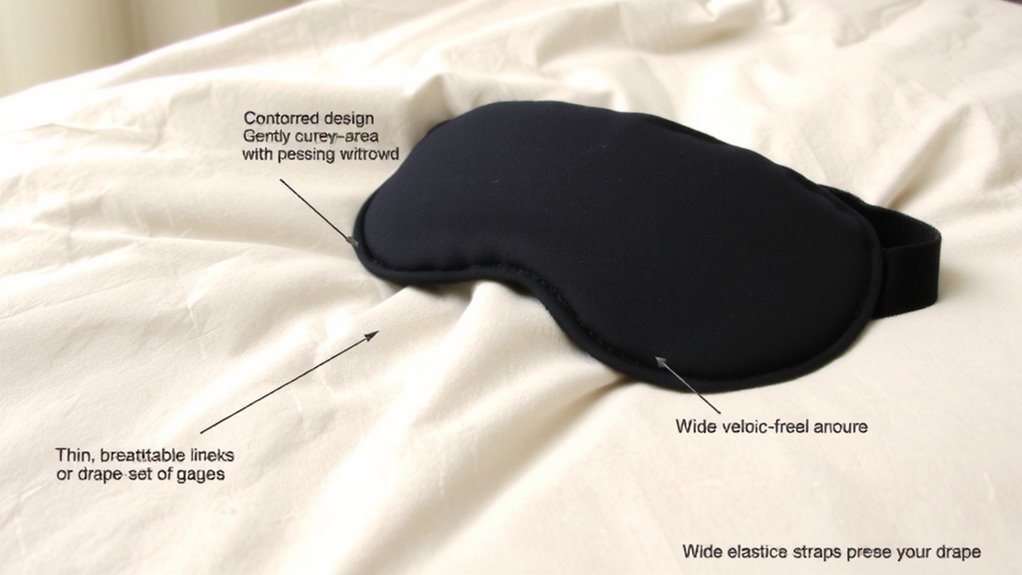
Comfort starts with fabric you can trust all night long, so choose a sleep mask made from soft, breathable materials like silk, bamboo, or high-thread-count cotton. The right fabric texture helps prevent irritation, especially if you move a lot or have sensitive skin. A smooth finish glides easily against your face without tugging, reducing the chance of waking up with marks or discomfort. Your mask’s breathability level also matters-materials like bamboo wick moisture and allow airflow, which keeps you from overheating. This is important if you tend to sweat at night or live in a warmer climate. Synthetic fabrics might feel soft at first but often trap heat and moisture, lowering comfort over time. Look for masks with certifications for natural fibers or hypoallergenic properties. Many quality brands offer trial periods, so you can test the fabric texture and breathability level in your actual sleep routine before committing.
Position Straps Above the Ears to Ease Temple Pressure
For a more comfortable fit, position the sleep mask’s straps just above your ears instead of directly over them. This small adjustment reduces pressure on the temples and helps prevent headaches or discomfort during long sleep sessions. Proper strap placement is key to achieving an ergonomic design that follows the natural shape of your head. Masks designed with this in mind distribute tension evenly, minimizing strain and allowing you to wear them nightly without irritation. Look for models with wider, flexible bands that stay securely in place without tightening too much. Some brands even offer contoured straps specifically shaped to route over the ears cleanly. If you’re unsure, choose masks with a trial period so you can test the fit risk-free. Good strap placement makes a noticeable difference in comfort and effectiveness over time.
Choose Masks With Adjustable Nose Wires for a Snug Fit
You’ve already thought about where the straps sit, but how the mask seals around your nose matters just as much. A proper nose wire fit helps block light without pressing on your eyes or temples. Masks with bendable nose wires let you shape the seal to your facial contours, reducing gaps and external light. This adjustable seal is key if you move during sleep or have a narrower or broader nose bridge. Look for masks where the wire is covered with soft fabric to prevent discomfort. Some models allow fine-tuning the fit, which can improve comfort over long use. Masks without this feature may slip or let in light, disrupting sleep. An adjustable seal doesn’t guarantee perfection, but it increases the chance of a secure, gentle fit. Try models with a satisfaction guarantee so you can test the nose wire fit risk-free. For those also seeking support for neck alignment during sleep, consider pairing your mask with best water pillows for neck pain.
Test Your Mask in Side and Stomach Sleeping Positions
Even if a sleep mask feels fine when you’re lying on your back, it might shift or dig in once you roll onto your side or stomach, so testing it in your usual sleep positions is a smart move. Your sleep posture heavily influences how well the mask stays in place and whether it maintains proper mask alignment. Side sleepers, in particular, need a mask that won’t press into the temple or eye area when compressed against the pillow. Try wearing it while lying on your side for at least ten minutes to see if it slides or creates pressure points. Stomach sleepers should check if the nose bridge flattens uncomfortably or lets light leak in. If the mask shifts easily, look for one with better grip or a contoured fit. Many brands offer trial periods, so use that time to test across different positions. This helps you make a practical choice based on real use.
Avoid Thick Frames That Press on Your Face
If you wear a sleep mask with thick frames, you might find it pressing uncomfortably against your eyes or temples, especially when lying on your side or moving during sleep. Thick frames often limit flexibility and add pressure points that disrupt comfort. To avoid this, look for designs with minimal padding and flexible materials, which contour gently to your face without forcing your eyelids open. Masks made from soft neoprene, spandex, or microfiber tend to offer better give and reduce tension across the brow. Flexible materials also help maintain a light seal around the eyes without squeezing. Some brands use adjustable straps or 3D shaping to enhance fit without bulky framing. When trying a mask, check for any indentations on your skin after removal-this signals too much pressure. Models with trial periods or money-back guarantees let you test comfort risk-free. Prioritizing low-profile structure improves both fit and sleep quality.
On a final note
Choose a 3D-shaped mask with soft, breathable fabric so it won’t press on your eyes or temples. Position straps above your ears to reduce pressure, and pick models with adjustable nose wires for a secure fit. Test the mask lying on your side or stomach to guarantee comfort. Avoid thick frames that dig into your face. Look for brands offering trials or warranties so you can return it if it doesn’t work.