How to Use Holy Basil to Support Sleep in People With Hypothyroidism
You can use holy basil to support sleep if you have hypothyroidism by taking 300–600 mg of capsules or 1–2 grams in tea about 30–60 minutes before bed. It helps lower cortisol, reduce inflammation, and may improve thyroid function over time. Pair it with consistent sleep habits, like a screen curfew and cool room temperature. Watch for interactions with thyroid meds, and consider split dosing for better results. There’s more to explore about optimizing your routine.
Notable Insights
- Holy basil helps improve sleep in hypothyroidism by reducing cortisol and supporting thyroid function.
- Take 300–600 mg of holy basil capsules or 1–2 grams as tea 30–60 minutes before bed for best results.
- Its anti-inflammatory and blood sugar-stabilizing effects may reduce nighttime awakenings and discomfort.
- Combine holy basil with consistent sleep habits, like a screen curfew and cool sleeping environment, for enhanced benefits.
- Consult a doctor before use, as holy basil may interact with levothyroxine and other thyroid or diabetes medications.
How Holy Basil Improves Sleep in Hypothyroidism

While hypothyroidism can disrupt your sleep by slowing metabolism and increasing fatigue, holy basil may help balance your body’s stress response, making rest easier to achieve. You might notice improved sleep quality because holy basil supports blood sugar regulation, reducing nighttime crashes that can wake you. Its anti-inflammatory effects may also ease bodily discomfort that interferes with falling or staying asleep. Since poor sleep often ties to hormonal imbalances and inflammation, these traits make holy basil a practical option to contemplate. It won’t replace prescribed sleep aids, but it could complement your routine, especially if stress or metabolic swings affect your rest. Try it as a tea or supplement 30–60 minutes before bed, keeping consistent timing for best results. Watch how your energy and sleep patterns shift over two to three weeks. Always check with your provider, particularly if you take other medications.
How Holy Basil Lowers Cortisol and Supports Thyroid Function
Because your body’s stress response can affect both cortisol and thyroid hormones, managing it may help your sleep and metabolism. Holy basil supports cortisol regulation by modulating your adrenal glands’ activity, helping keep stress hormone levels balanced throughout the day. When cortisol stays high, it can disrupt sleep and worsen fatigue in hypothyroidism. By promoting steadier cortisol patterns, holy basil may help you fall asleep easier and stay asleep longer. It also contains compounds that reduce thyroid inflammation, which can improve thyroid function over time. Lower inflammation supports better hormone production and conversion, especially of T4 to T3. This means your body may use thyroid hormones more efficiently, aiding metabolism and energy. You’ll likely notice improvements in sleep quality and daytime alertness after consistent use. While results vary, most people see benefits within a few weeks. Holy basil doesn’t fix thyroid issues but helps create conditions for better function.
How to Take Holy Basil for Sleep (Tea, Capsules & Timing)
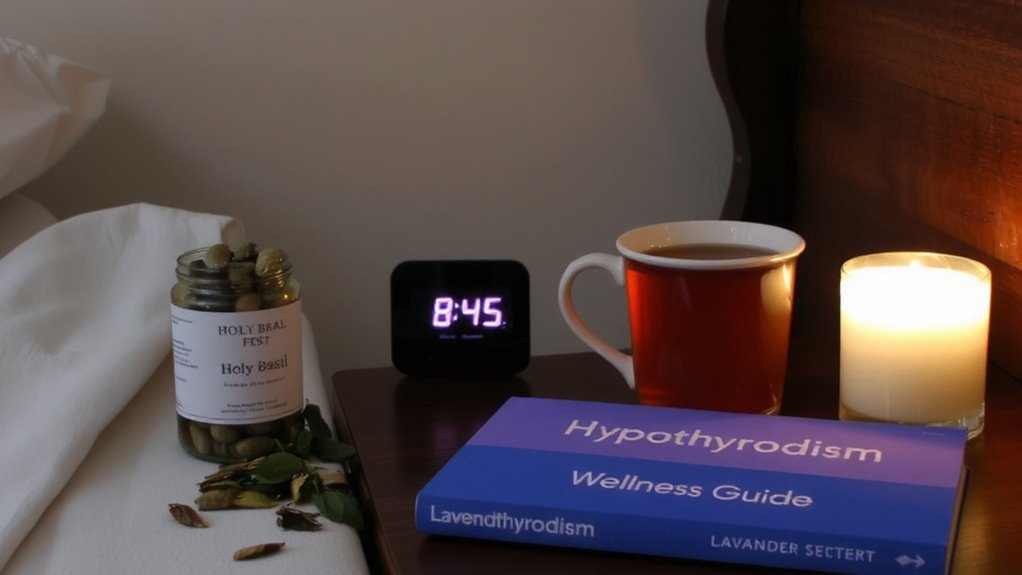
How should you take holy basil for better sleep, especially when managing hypothyroidism? You can choose from several dosage forms, including tea, capsules, and tinctures, depending on your preference and routine. Tea offers a calming ritual and mild effect, typically using 1 to 2 grams of dried herb per cup, steeped for 10 minutes. Capsules provide consistent potency and convenience, with common doses ranging from 300 to 600 mg. For ideal timing, take holy basil 30 to 60 minutes before bed to support relaxation and cortisol balance. Some people also split the dose-half in the morning, half at night-to maintain adaptogenic effects throughout the day. Start with a low amount to assess tolerance, then adjust as needed. Always check product labels for standardization and quality markers.
Pair Holy Basil With These Hypothyroid-Friendly Sleep Habits
What if your nightly routine could do more than just help you fall asleep-what if it also supported your thyroid? Pairing holy basil with hypothyroid-friendly sleep habits boosts both rest and hormone balance. A consistent routine signals your body it’s time to wind down, improving sleep quality over time. Try adding mindful breathing for 5–10 minutes before bed to calm your nervous system. Avoid screens and bright lights, and keep your bedroom cool and dark. These steps work well with holy basil’s calming effects.
| Habit | Benefit | How to Start |
|---|---|---|
| Mindful breathing | Reduces stress hormones | 4-7-8 method nightly |
| Consistent routine | Regulates circadian rhythm | Bed/wake same time daily |
| Screen curfew | Improves melatonin release | No devices 1 hour before bed |
| Cool room | Supports metabolic function | Set to 65–68°F (18–20°C) |
| Herbal support | Enhances relaxation | Take holy basil 30–60 min before bed |
Holy Basil Safety: Side Effects and Thyroid Medication Interactions
While holy basil is generally safe for most people when used short-term, it’s important to take into account how it might affect your thyroid function and interact with medication. If you’re managing hypothyroidism, holy basil could influence hormonal imbalance by altering thyroid hormone levels, potentially reducing the effectiveness of your medication. It may also support blood sugar regulation, which is helpful but requires caution if you’re on diabetes drugs. Some people report mild side effects like upset stomach or drowsiness, especially at higher doses. Since it can affect liver enzymes, it might change how your body processes certain medications. Always talk to your doctor before starting holy basil, particularly if you’re on levothyroxine or other prescriptions. Starting with a low dose and monitoring your symptoms can help you assess tolerance and effectiveness safely.
On a final note
You can try holy basil to support sleep if you have hypothyroidism, since it may lower cortisol and ease stress-related sleep issues. Use tea or capsules 30–60 minutes before bed, and take it consistently for best results. Pair it with good sleep habits like a regular schedule and reduced screen time. Monitor how you feel, and check with your doctor, especially if you’re on thyroid medication, to avoid interactions.