How to Combine Ashwagandha With Breathing Exercises for Sleep
Take ashwagandha 30 to 60 minutes before bed, using a standard 300–600 mg dose to help lower cortisol and ease mental tension. Then, 15 to 20 minutes before sleep, practice box breathing or alternate nostril breathing for five minutes to activate your parasympathetic nervous system. This combo supports both hormonal balance and physical relaxation. Consistency matters most-try this nightly for best results. You’ll find deeper insights into timing and technique just ahead.
Notable Insights
- Take 300–600 mg of ashwagandha 30 to 60 minutes before bed to support cortisol regulation and relaxation.
- Practice box breathing or alternate nostril breathing 15–20 minutes before sleep to activate the parasympathetic nervous system.
- Combine ashwagandha and breathing exercises at consistent times nightly to align with your body’s natural wind-down rhythm.
- Enhance the routine with dim lighting, gentle stretching, and focused attention on breath for deeper relaxation.
- Use both methods synergistically to target mental and physiological restlessness, especially for stress-related sleep issues.
How Ashwagandha Helps You Fall Asleep
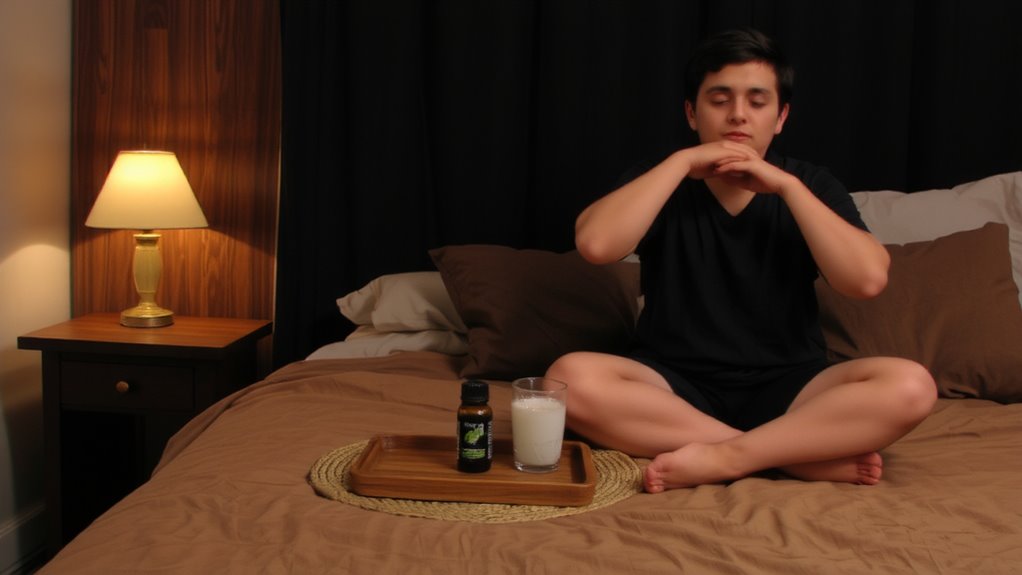
Sleep starts with balance-something ashwagandha may help support. You might struggle to fall asleep because of stress, but this adaptogenic herb is known for stress reduction, helping your body respond more calmly to daily pressures. When stress stays high, your cortisol levels can remain elevated, making it harder to relax at night. Ashwagandha supports cortisol regulation, which means it may help bring those levels down to a range that encourages sleep. Studies suggest regular use can improve sleep onset and quality, especially if stress is a key factor. It’s typically taken in capsule or powder form, with doses ranging from 300 to 600 mg daily. Results often appear after a few weeks, so consistent use matters. While not a sedative, ashwagandha works gently, supporting your body’s natural balance-making it a practical option worth trying alongside good sleep habits. For best results, consider choosing a high-quality supplement such as one of the top-rated organic ashwagandha supplements.
The Best Breathing Exercises to Pair With Ashwagandha
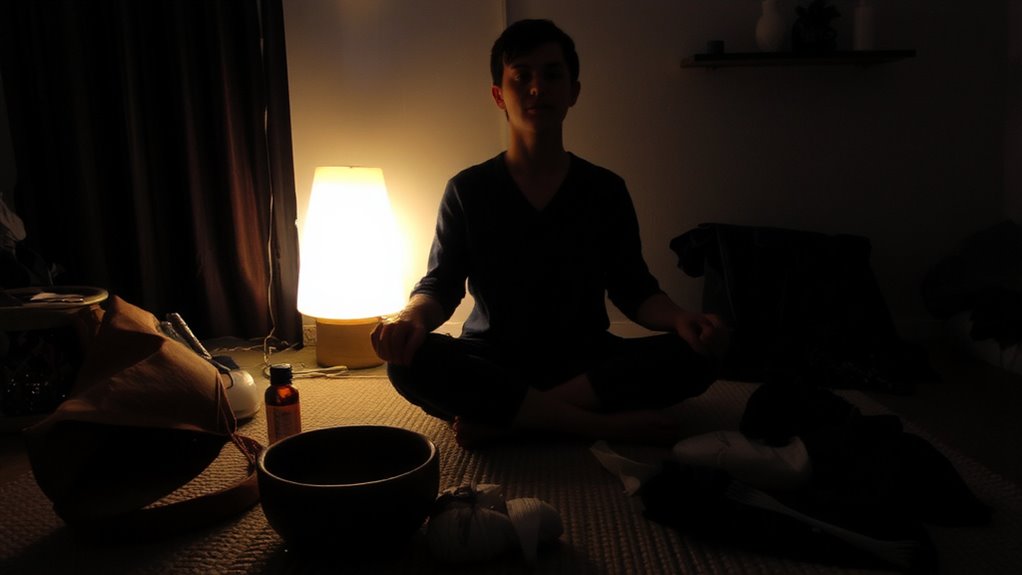
What if you could calm your mind in minutes using just your breath? You can, and pairing these techniques with ashwagandha enhances their effect. Try box breathing: inhale for four counts, hold for four, exhale for four, then pause for four before repeating. This structured pattern stabilizes your nervous system, making it easier to unwind. Another effective method is alternate nostril breathing-close your right nostril, inhale through the left, then switch and exhale through the right. Repeat on both sides. This balances brain activity and reduces mental chatter. Both exercises are free, require no equipment, and can be done in bed. While results vary, consistent practice over a few nights often improves sleep onset and quality. You might prefer box breathing for urgency and control, or alternate nostril for deeper relaxation. Test each for several nights to see what works best with your ashwagandha routine.
When to Take Ashwagandha and Breathe for Better Sleep
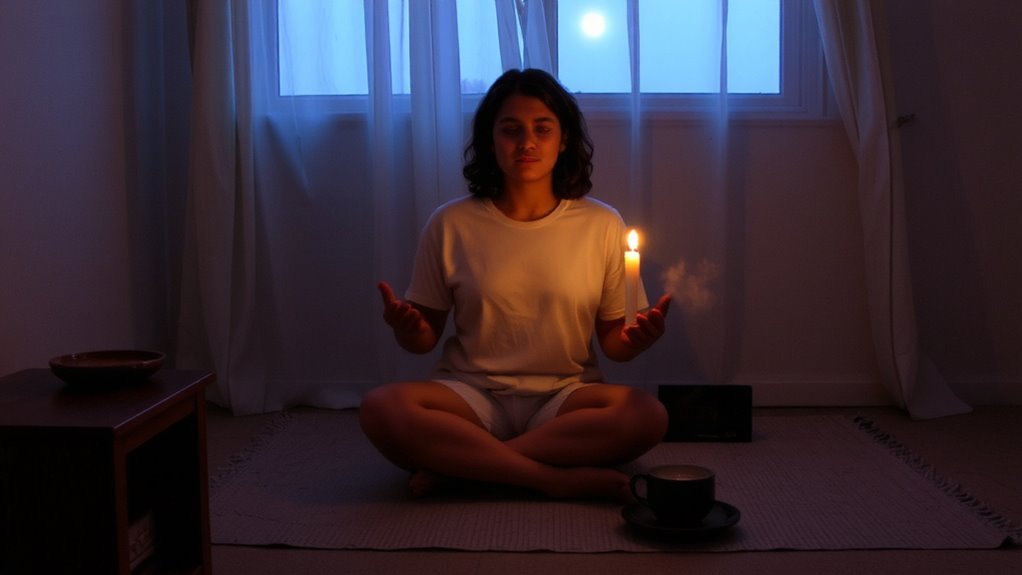
How soon before bed should you take ashwagandha and start breathing exercises for the best results? Taking ashwagandha about 30 to 60 minutes before sleep allows it to take effect when your body begins winding down. This mindful timing supports steady relaxation rather than sudden drowsiness. Pairing it with breathing exercises 15 to 20 minutes before bed enhances the evening synergy between herb and habit. The rhythmic breath work signals your nervous system to shift into rest mode, while ashwagandha helps regulate cortisol and supports calm. You don’t need perfect conditions-just consistency. Try it nightly for a week to assess subtle changes in sleep onset or quality. If you feel groggy, adjust the timing earlier. This gentle, combined approach works with your natural rhythms, offering a sustainable option among sleep aids.
Create a Simple Routine for Deeper Sleep
You’ve already looked at when to take ashwagandha and start breathing exercises-timing them to support your body’s shift into rest. Now, build a simple routine: take your ashwagandha 30 minutes before bed, then dim the lights. Begin with five minutes of gentle stretching-focus on your neck, shoulders, and lower back-to release tension. Move into seated breathing: inhale for four counts, hold for four, exhale for six. Pair each breath with mindful listening-tune into the soft sounds around you or the rhythm of your breath. This isn’t about forcing sleep but guiding your system toward calm. Keep the room cool and consistent. Over a week, track how you feel. If you wake unrested, adjust timing or dosage, but don’t rush changes. Small, consistent steps support deeper, more reliable sleep without dependency.
Why Ashwagandha and Breathwork Work Better Together
While each method supports relaxation on its own, combining ashwagandha and breathwork creates a more effective pathway to sleep by targeting both the physiological and mental sides of restlessness. You get synergistic effects that boost calmness and help prepare your body for rest. Ashwagandha helps regulate stress hormones, while breathwork slows your heart rate and quiets mental chatter. Together, they deliver enhanced relaxation that’s hard to achieve separately.
| Method | Benefit |
|---|---|
| Ashwagandha | Supports cortisol balance and nervous system regulation |
| Breathwork | Activates the parasympathetic response for calm |
| Combined Use | Produces synergistic effects for deeper, faster sleep onset |
This pairing works well if you struggle with stress-related sleep issues. Give it a few nights to assess results.
On a final note
You can improve sleep by combining ashwagandha with breathing exercises. Take the supplement about 30 minutes before bed, then practice slow, deep breathing to activate your parasympathetic system. The herb helps regulate stress hormones, while breathwork calms your mind. Together, they offer a gentle, non-habit-forming option. Start with low doses and simple techniques like 4-7-8 breathing. Monitor results over a few weeks.