How Sleep Cycle Depth Affects Next-Day Pain Sensitivity
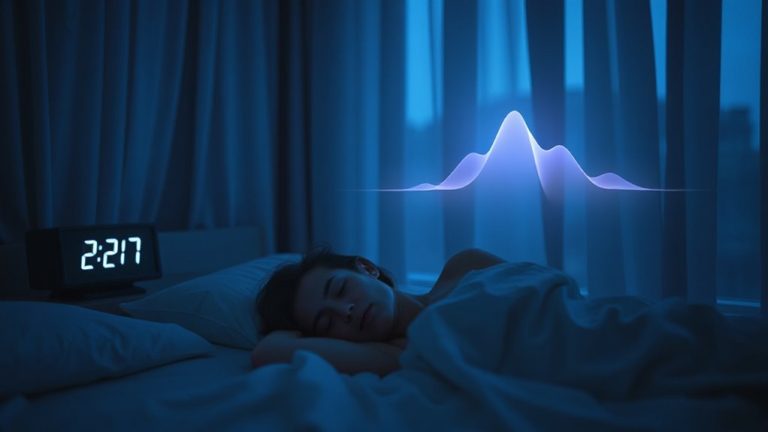
Your sleep depth直接影响 next-day pain levels. Deep sleep, with its slow delta waves, boosts your pain threshold and supports physical recovery overnight. Too much light sleep, though, reduces nervous system repair and can heighten sensitivity. REM sleep affects emotional processing, and losing it may increase discomfort. Waking during deep or REM stages can worsen pain temporarily due to sleep inertia. Prioritize consistent, uninterrupted sleep - and consider tracking your cycles to spot imbalances that might be affecting your well-being.
Notable Insights
- Deep sleep raises pain threshold through delta waves, reducing next-day pain sensitivity.
- Light sleep dominance reduces physical recovery, increasing pain sensitivity upon waking.
- REM sleep supports emotional regulation but slightly lowers pain threshold the following day.
- Waking during deep or REM sleep causes sleep inertia, temporarily heightening pain sensitivity.
- Consistent 7–9 hours of sleep maximizes deep sleep cycles, lowering reliance on pain medication.
How Sleep Stages Affect Pain Sensitivity
While you’re asleep, your body cycles through different stages that each play a role in how sensitive you are to pain. Light sleep helps regulate inflammation, while REM sleep influences emotional processing, affecting pain perception. When you lack REM, your brain may trigger REM rebound, pushing more intense dreaming later in the night or during naps. This can disrupt sleep quality, increasing discomfort the next day. Waking during REM or deep stages often causes sleep inertia, that groggy, disoriented feeling that heightens pain sensitivity temporarily. Using sleep trackers can help identify disrupted cycles. Some sleep aids may suppress REM, so check with a doctor before long-term use. Treating sleep apnea or insomnia can restore balance and improve tolerance. Consider devices with a solid warranty and proven performance in clinical trials. Prioritize consistent sleep schedules to reduce negative effects and support recovery. A high-quality sleep tracking device can provide detailed insights into sleep cycle patterns and help optimize restorative sleep.
Deep Sleep Cuts Pain Sensitivity Overnight
Deep sleep acts like a natural reset button for your body’s pain response. During this stage, slow brain waves help rebuild your pain threshold, so you wake up less sensitive to discomfort. You’re not just resting-you’re actively recovering. If you struggle with chronic pain, prioritizing deep sleep may reduce reliance on painkillers over time.
| Sleep Stage | Brain Waves | Effect on Pain Threshold |
|---|---|---|
| Light Sleep | Theta waves | Minimal change |
| Deep Sleep | Delta waves | Markedly raised |
| REM Sleep | Mixed activity | Slight decrease |
Aim for 7–9 hours to maximize deep sleep cycles. Sleep trackers can monitor brain waves and help detect disruptions. Some sleep aids target deep sleep, but check with your doctor-results vary. Devices with proven effectiveness often include a trial period and focus on improving sleep architecture without side effects. A reliable travel alarm clock can help maintain consistent sleep schedules, especially when waking up at the same time each day supports deeper sleep cycles.
Too Much Light Sleep Makes You Hurt More
If you’re getting plenty of sleep but still feel achy by morning, the problem might not be sleep length-it could be too much light sleep. Light sleep doesn’t offer the body’s nervous system the same recovery as deeper stages, and overspending time here may raise next-day pain sensitivity. Poor sleep quality, often tied to too much light exposure before bed-like screens or bright room lights-can keep you stuck in lighter cycles. Reducing evening light exposure helps shift your body toward deeper, more restorative sleep. While sleep aids might seem useful, some can increase light sleep instead of deep, worsening discomfort. Check product details on how they affect sleep architecture. Track your sleep stages with devices that measure depth to spot imbalances. If pain persists, consider consulting a specialist in sleep disorders. Better balance in cycles often means less pain-not just more sleep.
Natural Fixes to Reduce Pain Through Deep Sleep
You can start shifting toward deeper, more restorative sleep with a few natural adjustments that support your body’s internal rhythms. Optimizing sleep nutrition and consistent bedtime routines helps your brain shift smoothly into deep sleep stages. Key changes include limiting screens before bed, keeping your room cool, and avoiding caffeine after noon. Drinking a soothing cup of chamomile or valerian root tea before bed can also enhance relaxation, thanks to their well-documented sleep-inducing teas properties. Below are natural strategies and their impacts:
| Strategy | How It Helps | Expected Result |
|---|---|---|
| Warm herbal tea | Calms nervous system | Easier sleep onset |
| Protein-rich evening snack | Supports melatonin production | Improved sleep nutrition |
| Regular bedtime | Stabilizes circadian rhythm | More deep sleep cycles |
| Dimmed lights at night | Triggers natural melatonin release | Reduced light sleep dominance |
| Digital detox 60 min before bed | Lowers mental stimulation | Better bedtime routines |
Signs Your Sleep-Pain Cycle Needs Medical Help
When should you seek help for sleep issues that might be making your pain worse? If you’ve tried lifestyle changes and still struggle nightly, it might be time to consult a specialist. Persistent sleep disruption linked to ongoing pain could signal chronic insomnia, especially if you’re staying awake for days or waking up exhausted most nights. When pain and poor sleep keep feeding each other, professional intervention can break the cycle. Also, consider help if you suspect unresolved trauma, since emotional stress often disrupts deep sleep stages and heightens pain sensitivity. Sleep studies can identify underlying disorders, while cognitive behavioral therapy addresses both chronic insomnia and trauma-related sleep problems. Medications or targeted sleep aids may be options, but they’re best used alongside therapy and under medical supervision. A provider can guide you through treatments backed by evidence, often with trial periods or follow-up plans to track progress.
On a final note
You’ll likely feel better equipped to handle pain when you get enough deep sleep, since it helps regulate your body’s sensitivity. Light sleep alone won’t offer the same relief. If poor sleep patterns persist, consider tracking your rest or talking to a doctor, especially if pain worsens. Some find relief with sleep aids or adjustments in routine, though results vary. Trial periods on devices or treatments can help gauge effectiveness without long-term commitment.