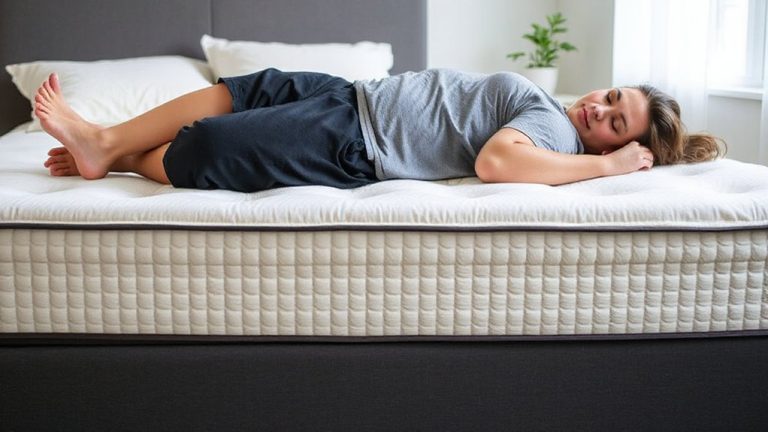
How a Medium-Firm Mattress Promotes Proper Lumbar Support During Side Sleeping
When you sleep on your side, a medium-firm mattress supports your lower back by keeping your spine neutral and aligned. It cushions your hips and shoulders just enough to relieve pressure without letting you sink too deeply. This balance helps distribute weight evenly and reduces strain on joints and muscles. If you weigh between 130 and 230 pounds, you’re likely to get the right mix of support and comfort. Testing the mattress over several nights can show how well it holds up. More details on finding your ideal fit follow.
Notable Insights
- A medium-firm mattress supports the natural spine curvature by maintaining neutral alignment during side sleeping.
- It cushions the hips and shoulders while preventing excessive sinkage, reducing lower back strain.
- The balanced firmness fills the gap between the waist and mattress to stabilize the lumbar region.
- Proper spinal alignment is achieved by evenly distributing body weight across the support surface.
- Layered foams or responsive coils provide targeted support, enhancing lumbar stability for side sleepers.
Why Side Sleepers Need Lumbar Support
While you’re lying on your side, your spine naturally curves, and without proper support, that curve can lead to lower back pain over time. Proper lumbar support helps maintain spinal alignment, keeping your back in a neutral position throughout the night. When your spine is misaligned, pressure points form around your hips and shoulders, increasing discomfort and disrupting sleep. A supportive surface cushions these areas while filling the gap between your waist and the mattress, balancing your weight more evenly. This reduces strain on muscles and joints, which is especially important if you have chronic pain or mobility concerns. You’ll want to test different materials-memory foam responds closely to body shape, while latex offers responsive support. Look for designs that highlight balanced contouring and edge support. Many brands offer sleep trials and warranties, so you can assess long-term comfort without risk. Regular maintenance with a best mattress cleaner helps ensure a hygienic sleep environment that complements spinal support.
How a Medium-Firm Mattress Aligns Your Spine
Because your spine curves naturally when you sleep on your side, a medium-firm mattress can help keep it properly aligned by balancing support and cushioning. You get just enough give to encourage proper spinal alignment without sinking too deeply. This balance supports your lower back while keeping your spine in a neutral position, which is key for long-term comfort. A medium-firm mattress also promotes even pressure distribution, reducing strain on your joints and soft tissues. You won’t feel pressure building up in your midsection or upper body, which helps you stay comfortable all night. These mattresses often use layers of memory foam or responsive latex over a supportive base, combining contouring with stability. Most come with a sleep trial and warranty, so you can test the spinal alignment and pressure distribution for yourself. It’s a practical choice for consistent, restorative sleep. For side sleepers, models like the best Tempur-Pedic mattresses are specifically designed to offer this ideal balance of support and comfort.
Relieve Hip and Shoulder Pressure
A medium-firm mattress can make a real difference in relieving pressure on your hips and shoulders, the two areas that take the most impact when you sleep on your side. It provides balanced pressure relief by cushioning these key zones without letting your body sink too deeply. This support helps maintain proper joint alignment, reducing strain on muscles and connective tissues. When your hips and shoulders are properly cradled, you’re less likely to wake from discomfort or shift frequently at night. Many medium-firm models use layered foams or responsive coils to offer targeted give where needed, enhancing comfort and spinal positioning. These features contribute to more consistent rest, especially for those with mild joint sensitivity. Look for models with trial periods and warranties so you can test the pressure relief and alignment performance over time. It’s a practical way to assess long-term comfort without risk. Heavier individuals benefit significantly from designs tested for durability and support, such as those highlighted in reviews of the best mattresses for heavy individuals.
Is Medium-Firm Right for Your Body Type?
You’ve likely noticed how a medium-firm mattress supports your hips and shoulders when you sleep on your side, but the real question is whether this firmness level suits your body type. Your body weight and sleep position play key roles in how well the mattress performs. If you weigh under 130 pounds, a medium-firm surface might feel too firm, limiting sink for proper spinal alignment. Those between 130–230 pounds often benefit most-your hips sink just enough while your spine stays level. If you’re over 230, a medium-firm mattress could lack the deeper support you need. Sleep position also affects this: side sleepers in this mid-weight range usually find it ideal. Consider your build and typical posture when lying down. The right balance depends on how your body weight interacts with the mattress’s responsiveness and support layers.
How to Test a Medium-Firm Mattress
How do you really know if a medium-firm mattress suits your side-sleeping needs? Test it by lying on your side in your usual sleep position. Check if your spine stays aligned and pressure eases at shoulders and hips. Pay attention to how it feels after 10–15 minutes-initial comfort doesn’t always mean long-term support. Use sleep trials to your advantage; most brands offer at least 90 nights, letting you assess comfort, spinal alignment, and mattress durability over time.
| Factor | What to Look For | Why It Matters |
|---|---|---|
| Edge Support | Minimal sink when sitting or lying near edge | Enhances usable surface and long-term durability |
| Responsiveness | Quick rebound when shifting positions | Supports easy movement during sleep |
| Trial Length | Minimum 90-night sleep trial | Allows realistic assessment of comfort and support |
Review warranty terms too-many cover sagging or indentations, key signs of reduced mattress durability.
On a final note
You’ll find a medium-firm mattress supports your lower back while cushioning hips and shoulders during side sleep. Its balanced firmness aligns your spine without sinking too much. If you weigh between 130 and 230 pounds, this firmness often works well, though body shape and sleep preferences matter. Look for models with at least a 100-night trial and solid warranty to test comfort and durability over time.