How to Optimize Bedroom Airflow to Reduce Sinus Pressure and Improve Sleep Posture
Use a tower or ceiling fan with adjustable speeds and oscillation to circulate air evenly, placing it opposite the door or near a vent for better airflow. Run an air purifier with a HEPA filter and quiet operation to reduce allergens overnight. Keep humidity between 40–60% using a humidifier or dehumidifier with a built-in hygrometer. Choose breathable cotton or linen bedding with a thread count under 400 to avoid heat retention. Most units and bedding come with trial periods and at least a one-year warranty, so you can test what works best while improving comfort and air quality in your sleep space.
Notable Insights
- Use a tower fan with oscillation to distribute cool air evenly and reduce sinus pressure caused by stagnant, dry air.
- Position the fan opposite the bedroom door to maximize cross-ventilation and improve airflow around the sleeping area.
- Pair an air purifier with a HEPA filter to remove allergens that exacerbate sinus issues and disrupt sleep quality.
- Maintain bedroom humidity between 40–60% using a humidifier with a built-in hygrometer for optimal respiratory comfort.
- Choose breathable cotton or linen bedding to enhance airflow, regulate temperature, and support better sleep posture.
Use the Right Fan to Boost Bedroom Airflow
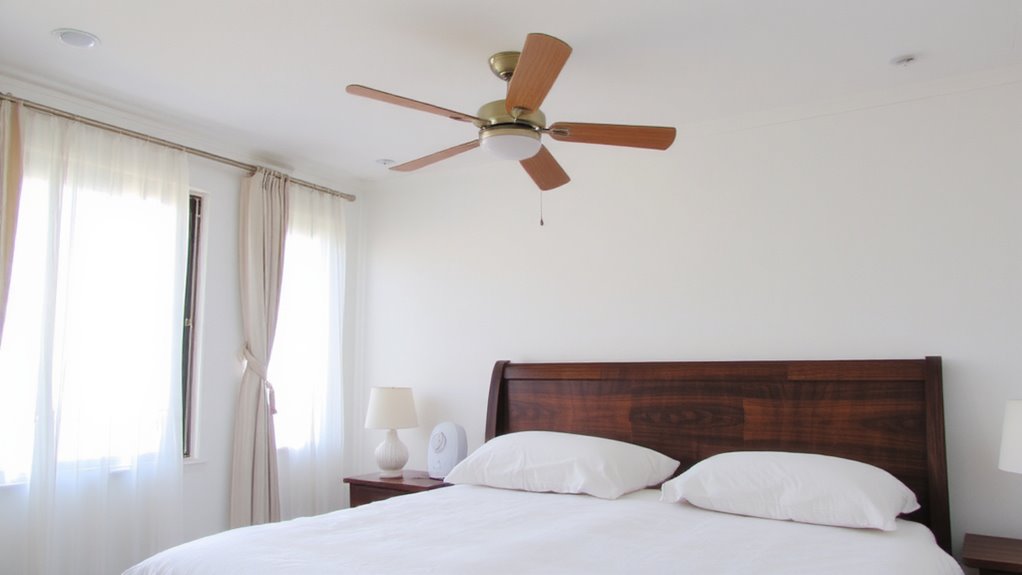
A well-chosen fan can make a noticeable difference in how comfortably you sleep, especially if you’re sensitive to temperature or humidity. You’ll want to take into account fan types-like tower, box, or ceiling models-since each delivers airflow differently and fits distinct room layouts. Tower fans often provide smooth, oscillating airflow direction, helping distribute air more evenly across your space. Box fans are typically louder but move more air quickly, which may help if you’re dealing with stuffiness. Ceiling fans affect airflow direction too, especially when set to rotate counter-clockwise in summer, pushing cool air down. When choosing, look for adjustable speeds and oscillation features, as they let you fine-tune comfort. Many come with 1-year warranties, so test models to see what supports your breathing and sleep posture best. For targeted relief, consider a best bed fan to maintain steady, cool airflow directly around your sleeping area.
Place It Where Air Circulates Best
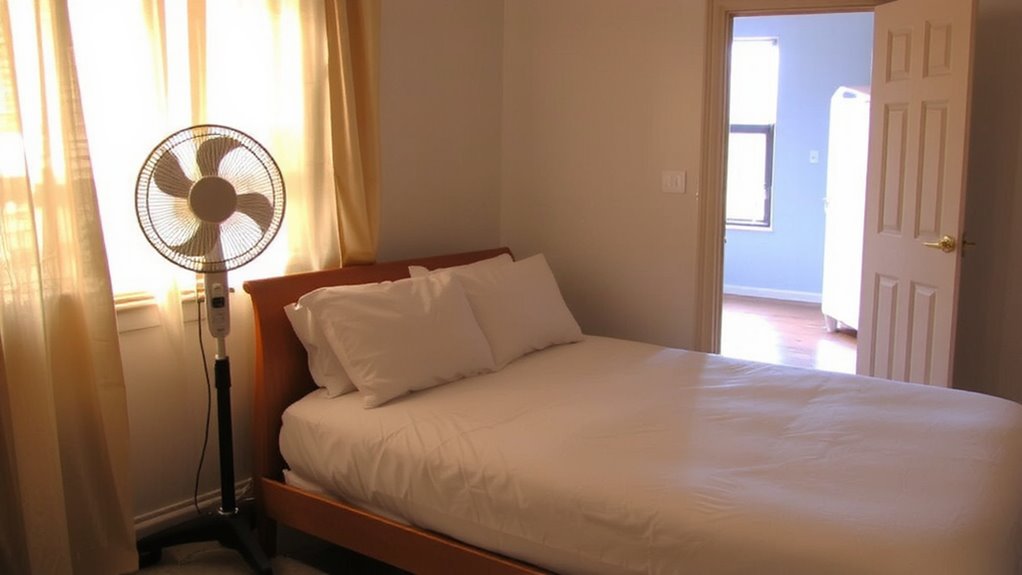
Positioning your fan for maximum airflow means thinking about more than just where it fits in the room-it’s about how air moves around you while you sleep. You’ll want to align it with air vents and consider door positioning to avoid dead zones. Proper fan placement can gently circulate air without creating drafts that disrupt sleep posture or irritate sinus passages. For quieter operation that supports restful sleep, consider models designed as quiet picks for sleep.
| Location | Airflow Benefit | Consideration |
|---|---|---|
| Near air vents | Boosts distribution of cooled air | Avoid blocking vent output |
| Opposite the door | Encourages cross-airflow | Improves circulation efficiency |
| Corner of room | Covers wide range with oscillation | May leave near-bed zones still |
| Between bed and wall | Reduces pressure imbalances | Keep 18–24 inches of clearance |
Adjust based on your room’s layout, and test settings over a few nights.
Clean the Air With an Overnight Air Purifier
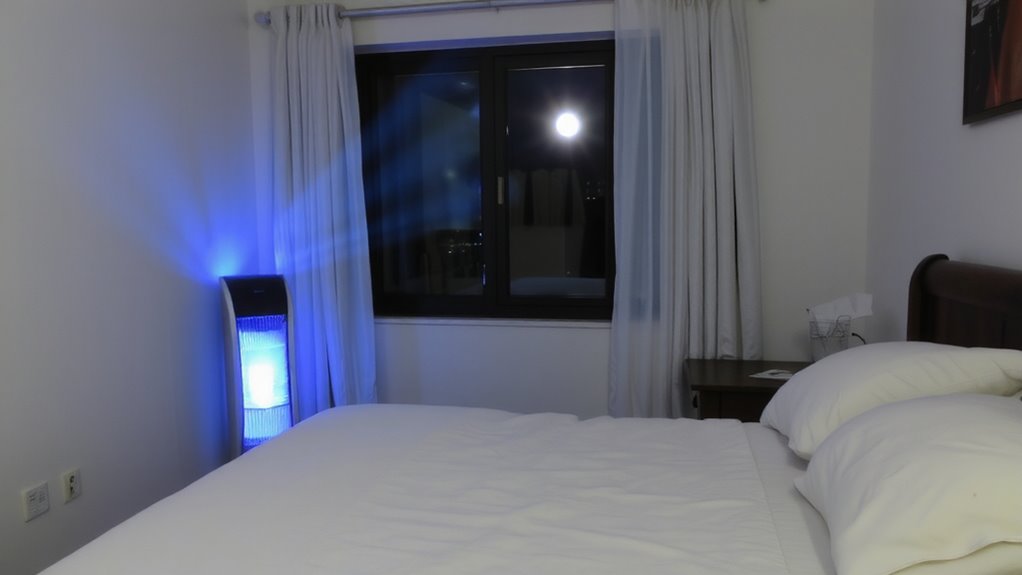
While you sleep, an air purifier can quietly work to reduce allergens, dust, and airborne particles that might otherwise disrupt your breathing or sleep quality. Overnight air filtration helps support clearer nasal passages and less sinus irritation, especially if you’re sensitive to airborne triggers. Many models offer targeted nighttime purification with low-noise operation, so they won’t disturb your rest. Look for units with HEPA filters, which capture at least 99.97% of particles as small as 0.3 microns. Check the CADR rating to match the purifier’s output to your bedroom size. Energy-efficient settings and automatic sensors can adjust fan speed based on air quality. Most come with a 30-day trial and at least a one-year warranty, letting you test performance risk-free. While not a cure, consistent air filtration may improve comfort and support better breathing patterns during sleep. For optimal results, choose one of the best air purifiers for dust that are specifically designed to handle high particulate loads in bedrooms.
Set Humidity Between 40–60% for Easy Breathing
Keeping humidity between 40–60% in your bedroom helps you breathe easier and sleep more comfortably, especially if you’re prone to dry throat, congestion, or allergies. This range offers ideal humidity for respiratory comfort, easing sinus pressure and reducing irritation. Too dry, and your airways can become inflamed; too damp, and mold or dust mites may grow, worsening allergies. A quality humidifier or dehumidifier can maintain balance automatically, often with built-in hygrometers and adjustable settings. Most units include filters, run quietly, and offer timers or smart controls. Look for models with a warranty of at least one year.
| Humidity Level | Effect on Respiratory Comfort |
|---|---|
| Below 40% | Dry air, irritated nasal passages |
| 40–60% | Ideal humidity, easy breathing |
| Above 60% | Damp air, allergen growth risk |
| Consistent | Stable respiratory comfort |
Choose Breathable Bedding to Prevent Stale Air
You’ve already set the humidity in your bedroom to stay between 40–60%, which helps keep your airways clear and comfortable overnight. Now, choose breathable bedding to prevent stale air from trapping around you. Look for sheets and blankets made from natural fibers like cotton, linen, or bamboo-they allow air to circulate and help regulate temperature. These materials are often moisture wicking, meaning they pull sweat away from your skin and let it evaporate, reducing dampness that can worsen sinus pressure. Synthetic fabrics, like polyester, tend to trap heat and moisture, which might disrupt sleep. When shopping, check product details for breathability ratings, thread counts under 400 for lighter fabrics, and moisture-wicking claims backed by testing. Many brands offer trial periods, so you can test comfort and performance. A lighter, breathable setup supports consistent airflow and may improve sleep quality over time.
On a final note
You’ll sleep better when airflow supports clear breathing and proper posture. Use a quiet fan near your feet, not blowing directly on you, to keep air moving. Pair it with an air purifier to reduce irritants overnight. Maintain humidity between 40–60% with a humidifier or dehumidifier as needed. Choose moisture-wicking, breathable bedding to prevent stuffiness. Try adjustments gradually, track how you feel, and check warranty terms when buying new devices.