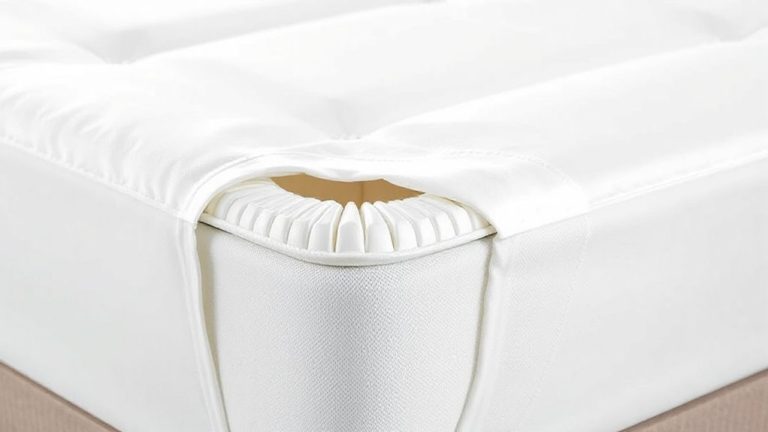
How Innerspring Mattress Toppers Improve Pressure Relief
An innerspring mattress topper improves pressure relief by adding a soft, supportive layer that cushions your hips and shoulders while keeping your spine aligned. It balances firm coil support with comfort, especially if you sleep on your side or have pressure points. Materials like memory foam or gel-infused foam contour to your body and reduce heat buildup. Most toppers come with trial periods and warranties, so you can test comfort risk-free-options that suit your weight and sleep style make a real difference.
Notable Insights
- Innerspring toppers add cushioning layers that relieve pressure on hips, shoulders, and joints.
- Memory foam or gel-infused foam conforms to the body for even pressure distribution.
- They maintain the supportive coil structure while enhancing surface softness for comfort.
- Proper thickness (up to 3 inches) ensures adequate padding for lasting pressure relief.
- Combining support and cushioning helps align the spine and reduce pressure points.
What Is an Innerspring Mattress Topper?
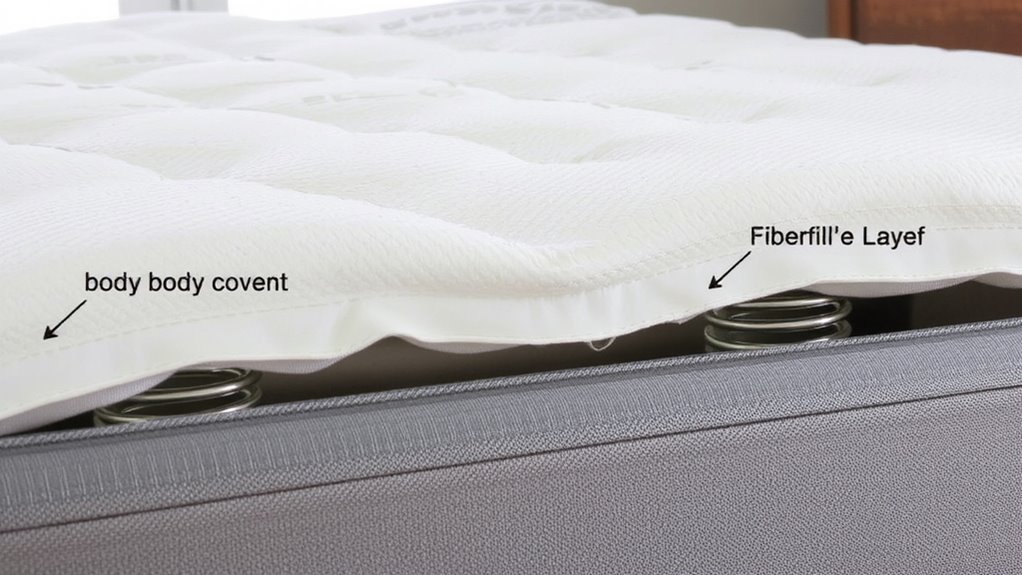
An innerspring mattress topper brings a layer of coil support to your existing bed, enhancing both comfort and spinal alignment. You’ll find its construction design centers on tempered steel coils, often arranged in a grid or continuous pattern for balanced support. This structure helps distribute your weight evenly, reducing strain on pressure points. Material durability is key-it’s built to resist sagging and maintain shape over time, outlasting many foam alternatives. Most models include a breathable cover to aid airflow, helping you stay cool. These toppers typically weigh more than other types, so consider ease of movement and bed frame support. Many come with trial periods and warranties ranging from one to five years, allowing you to test performance. While they add firmness, they may not soften your bed enough if you prefer plush comfort. Choose based on your support needs and how long you expect it to last.
Why Innerspring Mattresses Need a Topper for Comfort
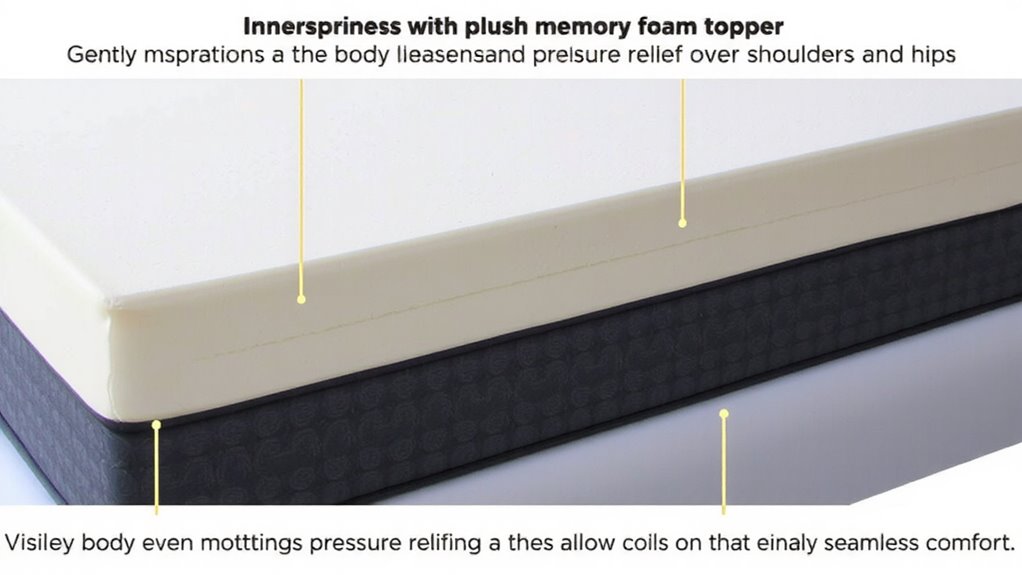
While innerspring mattresses offer solid support, they often lack the cushioning needed for pressure relief, especially if the coils feel too firm or dig into your body. You might notice discomfort along your hips, shoulders, or lower back-common pressure points. A topper adds softness without sacrificing the firm support the innerspring provides. It also enhances edge durability, helping the mattress stay stable when you sit or sleep near the sides.
| Feature | Innerspring Alone | With Topper |
|---|---|---|
| Pressure Relief | Low | Improved |
| Firm Support | High | Maintained |
| Edge Durability | Moderate | Enhanced |
Adding a topper helps balance comfort and structure, making your sleep surface more adaptable to your body’s needs.
Best Innerspring Mattress Topper Materials for Pressure Relief
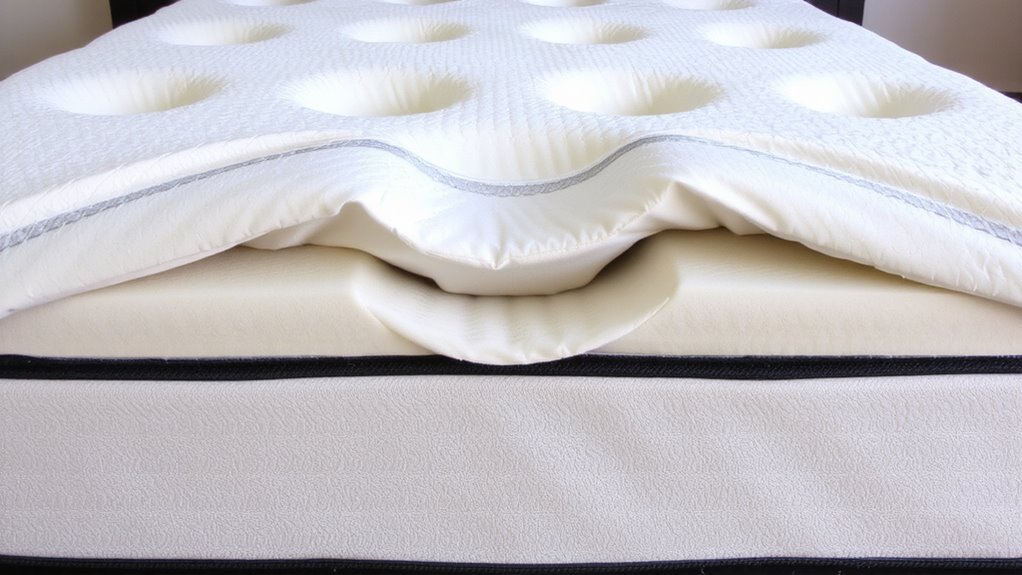
You’ve already seen how a topper can fix the firmness and pressure issues common in innerspring mattresses, but now it’s time to figure out which materials actually deliver real relief. Memory foam is one of the best choices because it contours closely to your body, evenly distributing weight and reducing pressure on joints. If you tend to sleep hot, look for models with gel infusion-this feature helps draw heat away, keeping you cooler through the night. High-density memory foam offers better durability and support, especially if you need consistent spinal alignment. Some toppers combine gel-infused memory foam with a supportive base layer for improved resilience. Most quality options come with a trial period and a warranty, so you can test comfort risk-free. Choose based on material performance, breathability, and return policies to make a confident, informed decision.
Match Your Sleep Position to the Right Topper
How well does your current mattress support your spine when you sleep on your side, back, or stomach? Proper sleep alignment depends on your position, and the right innerspring mattress topper can help. Side sleepers need more cushioning at the hips and shoulders for effective body contouring, while back sleepers benefit from balanced support to maintain natural spine curvature. Stomach sleepers require a firmer feel to prevent lower back strain.
| Sleep Position | Topper Support Need | Key Benefit |
|---|---|---|
| Side | Medium-soft | Enhances body contouring |
| Back | Medium | Supports sleep alignment |
| Stomach | Medium-firm | Reduces spinal misalignment |
| Combination | Medium | Adapts to shifting positions |
Choosing based on your sleep position improves pressure relief and overall sleep alignment.
Choose the Right Topper Thickness
A good match between your sleep position and a topper’s firmness sets the foundation for better spinal alignment, but thickness plays an equally important role in how well the topper performs. Topper thickness typically ranges from 1 to 3 inches, and your ideal pick depends on your weight and support needs. Lighter sleepers often do well with a 1- to 2-inch topper, while those over 150 pounds may need 3 inches for enough cushioning. Material density influences durability and comfort-higher density foams resist sagging longer. A lower-density topper might feel soft at first but lose shape quickly. Pairing appropriate topper thickness with suitable material density guarantees consistent pressure relief, especially over the hips and shoulders. Most quality toppers come with trial periods, so test firmness and support. Check warranty length as a sign of expected lifespan. For personalized recommendations, consider exploring the best mattress toppers based on comfort, value, and performance.
How an Innerspring Topper Improves Sleep Quality
An innerspring topper brings targeted support and subtle contouring to your sleep surface, blending responsive coil systems with comfort layers for balanced pressure relief. You’ll notice better sleep alignment, as the coils adapt to your body’s shape while maintaining structural support. Improved motion isolation means your partner’s movements won’t disrupt your rest, making it ideal for couples. Below is how key features affect your sleep experience:
| Feature | Benefit | Impact on Sleep |
|---|---|---|
| Pocketed coils | Reduces motion transfer | Enhanced motion isolation |
| Supportive core | Promotes spinal alignment | Better sleep alignment |
| Thin comfort layer | Adds softness without sinking | Balanced firmness and relief |
| Breathable cover | Improves airflow | Cooler, more comfortable rest |
These qualities help address common sleep issues without overhauling your current mattress.
Keep Your Innerspring Topper Supporting You Longer
With proper care, your innerspring topper can deliver consistent support and pressure relief for years, maintaining its performance without losing shape. Durability maintenance starts with simple care routines like rotating the topper every three to six months to prevent uneven wear. Use a protective cover to guard against moisture and spills, which can weaken internal coils over time. Avoid folding or standing on the topper, as this may bend or damage springs. Most models are designed with reinforced edges and high-tensile coils to resist sagging, but their longevity depends on how well you treat them. Check manufacturer guidelines for cleaning-most only require spot treatment. Many brands offer trial periods and warranties, so you can assess performance risk-free. Following these steps helps preserve structural integrity, so your topper continues supporting healthy spinal alignment night after night.
On a final note
You might find that an innerspring mattress topper enhances pressure relief by adding a cushioned layer without sacrificing support. Memory foam or latex toppers conform to your body, reducing point pressure, while thickness affects both comfort and durability-typically 2 to 3 inches works best. Look for models with trial periods and warranties to test suitability. Proper care extends performance. Matching material and thickness to your sleep position helps improve alignment and rest quality over time.