Understanding the Role of Cognitive Behavioral Therapy in Treating Chronic Insomnia
You’re not alone in struggling with chronic insomnia, and CBT-I can help by changing the thoughts and habits that keep you awake. It focuses on consistent sleep schedules, reducing screen time, and using your bed only for sleep and sex. Unlike sleep meds, it’s drug-free, with lasting results. Most notice improvements in 4–6 weeks. You’ll track progress nightly and build better patterns over time-long-term relief begins with small, steady changes. There’s more to discover about making them work for you.
Notable Insights
- CBT-I is a structured, evidence-based therapy targeting thoughts and behaviors that perpetuate chronic insomnia.
- It improves sleep by aligning time in bed with actual sleep, enhancing sleep efficiency through sleep restriction.
- Stimulus control strengthens the mental association between bed and sleep by limiting bed use to sleep and sex.
- CBT-I addresses negative sleep beliefs and replaces them with healthier, more adaptive thinking patterns.
- Unlike medications, CBT-I offers lasting results without dependency, with most improvements seen within 6–8 weeks.
What Is CBT-I and How Can It Help With Insomnia?

Think of CBT-I as a structured, science-backed plan designed to tackle the thoughts and habits that keep you from sleeping well. It’s not a quick fix, but it’s proven effective for many dealing with insomnia. You’ll learn to strengthen sleep hygiene by adjusting routines-like setting consistent bed and wake times, reducing screen use at night, and avoiding caffeine late in the day. A key part, stimulus control, helps you link your bed only with sleep and sex, not with worry or scrolling. If you’re lying awake more than 20 minutes, you’ll get guidance to get up and return when sleepy. This retrains your brain over time. CBT-I doesn’t rely on pills, letting you avoid dependency risks. Treatment typically lasts 6–8 weeks, often through telehealth or in-person sessions. Many find it improves sleep long-term without ongoing costs.
How Does CBT-I Break the Cycle of Chronic Sleeplessness?
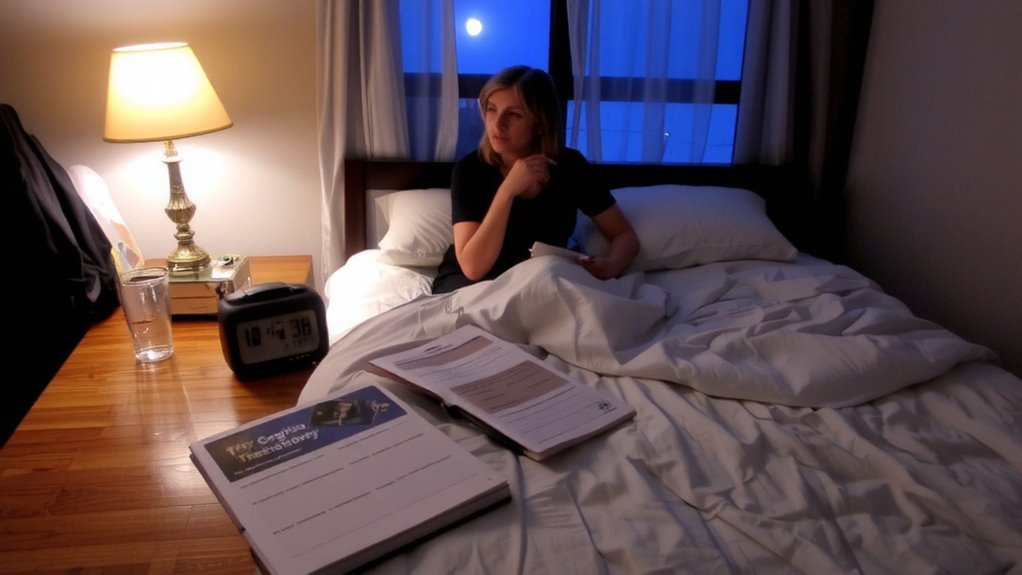
You’ve likely tried adjusting your bedtime or cutting out coffee in the evening, and while those steps help some, they don’t always stop the ongoing pattern of lying awake night after night. CBT-I targets the habits fueling that cycle. Sleep restriction helps by narrowing your time in bed to match actual sleep, increasing sleep drive and efficiency over time. It may feel tough at first, but consistency strengthens sleep patterns. Stimulus control relearns the link between bed and sleep-using the bed only for sleep and sex, not for scrolling or worrying. If you can’t sleep within 20 minutes, you get up and return only when sleepy. Together, these methods reduce time spent awake in bed, rebuild sleep confidence, and reset your body’s expectations. They’re structured, evidence-based, and built on repetition. Most people see changes in 4–6 weeks, with lasting results when practiced correctly.
Is CBT-I More Effective Than Sleep Medications?

While sleep medications might offer quick relief, they often come with drawbacks that don’t make them the best long-term solution. You may develop medication dependency, and concerns about long term safety can arise with extended use. In contrast, CBT-I builds skills that improve sleep naturally over time. Consider these key differences:
| Factor | Sleep Medications | CBT-I |
|---|---|---|
| Dependency Risk | Higher | None |
| Long Term Safety | Limited evidence | Well-supported |
CBT-I doesn’t rely on chemicals, so you avoid potential side effects and tolerance issues. Studies show that for lasting results, CBT-I often performs better after treatment ends. Medications might help short term, but CBT-I offers sustainable strategies tailored to your habits and thoughts. If you’re weighing options, think about both immediate needs and long-term outcomes.
What Actually Happens in CBT-I Therapy Sessions?
When you begin CBT-I, the first step is usually a detailed assessment of your sleep patterns, daily routines, and any thoughts or worries that might be interfering with rest. You’ll start tracking your sleep each night using sleep diaries, which help you and your therapist spot habits affecting your rest. These records reveal patterns like irregular bedtimes or time spent lying awake. A core technique you’ll learn is stimulus control, designed to strengthen the link between bed and sleep. That means using the bed only for sleep and sex, not for watching TV or worrying. If you can’t sleep, you’ll get up until you feel drowsy. Over time, this reconditions your brain to associate bed with rest. You’ll also work on improving sleep hygiene and adjusting unhelpful thoughts about sleep, building skills that last longer than temporary fixes.
How Long Does It Take to See Results From CBT-I?
How soon can you expect to sleep better after starting CBT-I? Most people begin noticing improvements in sleep quality and time to fall asleep within three to four weeks of consistent treatment. You’ll likely track progress using sleep diaries, which help you and your therapist identify patterns and adjust strategies. These records offer clear data on how long you’re sleeping and how well. Many find that practicing relaxation techniques-like controlled breathing or muscle relaxation-reduces nighttime anxiety and supports faster sleep onset. Full benefits, including more stable sleep cycles and reduced reliance on sleep aids, often emerge by week eight. Results vary based on commitment, but regular effort tends to yield lasting change. CBT-I isn’t instant, but its structured approach builds skills that support long-term improvement without medication dependence.
How to Find a CBT-I Therapist Near You
You’ve likely learned that CBT-I takes a few weeks to show results, and now it’s time to find the right therapist to guide that process. Start by checking professional directories like the Society of Behavioral Sleep Medicine, where you can filter by location and certification. Make sure the therapist specializes in insomnia, not just general CBT. Next, verify your insurance coverage-some plans cover CBT-I, but you’ll need to confirm copays, deductibles, and whether referrals are required. Also, consider session availability; weekly meetings are common, so find a schedule that fits your routine, whether in-person or online. Telehealth expands your options and may offer better availability. Don’t hesitate to call clinics for a brief consultation-many offer a short trial or initial assessment to see if the fit works. A good match in expertise, coverage, and timing improves your chance of progress.
On a final note
You can break free from chronic insomnia with CBT-I, a structured, evidence-backed method that targets sleep habits and thoughts. Unlike medications, it offers lasting results without dependency risks. Therapy includes sleep restriction, stimulus control, and cognitive restructuring-tools you can practice long term. Most see improvement in 6–8 weeks. Check with your doctor or use behavioral sleep medicine directories to find certified providers. Consider a trial, often covered by insurance.