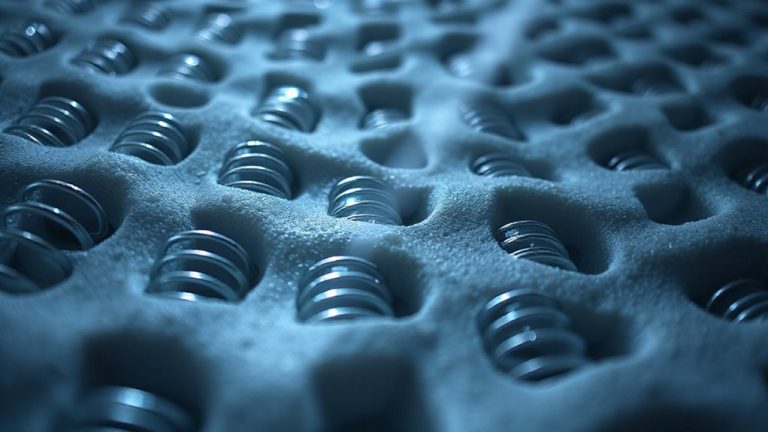
Edge Support Design & Spinal Posture: What Mattress Coils Do
When you sit on a bed’s edge with weak support, your hips sink and your spine twists, straining your lower back. A well-designed edge uses dense foam or reinforced coils to keep the perimeter firm, so your posture stays aligned. This stability reduces joint compression and muscle fatigue over time. Look for hybrid or innerspring models with strong encasements-they handle weight better and resist sagging. Mattresses with solid edge construction feel more secure and last longer, especially if you often sit on the side. Choosing one with a good trial period lets you test how well it supports your spine in real use.
Notable Insights
- Weak edge support causes the pelvis to drop, misaligning the spine and straining lower back muscles.
- Reinforced edges with dense foam or coils prevent sagging, maintaining even hip and spinal alignment.
- Poor edge design leads to spinal twisting when sitting, increasing long-term risk of postural imbalance.
- High-density foam encasements and sturdy coil systems enhance edge stability for safer, supported sitting.
- Using the bed’s reinforced edge section with proper posture reduces joint compression and back fatigue.
Why Sitting on the Bed’s Edge Hurts Your Back
Why does sitting on the edge of your bed sometimes leave your back aching? You’re likely feeling the effects of muscle fatigue and joint compression from poor edge support. When the bed’s perimeter sags, your pelvis drops, forcing your spine into an uneven alignment. This position makes your lower back muscles work harder, leading to fatigue over time. At the same time, the uneven load increases joint compression in your hips and lumbar area, contributing to discomfort. A well-constructed edge with reinforced coils or dense foam reduces this issue by keeping your body level. Look for models that specify strong perimeter support in product details and offer trial periods to test sitting comfort. Warranties covering structural integrity also provide peace of mind. Choosing a bed with reliable edge design helps maintain spinal posture, supporting both sleep quality and daily sitting habits.
How a Weak Bed Edge Causes Posture Problems
Because the edge of your bed plays a key role in how your body aligns when sitting or lying down, a weak perimeter can gradually affect your posture over time. When you sit on a bed with poor edge support, you’re likely to experience poor alignment as the frame or foam caves inward. This unstable base forces your spine to twist or slant, especially if you frequently dress or rest there. Over time, those small shifts add up, potentially leading to discomfort or long-term spinal stress. A strong perimeter helps maintain level seating, supporting natural spinal curves. Look for beds with reinforced edges or dense foam rails-these offer better durability and alignment. Check manufacturer details on construction and consider trying models with longer trial periods so you can assess how each affects your daily comfort and posture.
Design Features That Make Bed Edges Spine-Safe
Even if you don’t sleep near the edge, a well-built perimeter still matters for how your spine stays aligned during daily use. Bed edges with strong edge contouring help keep your hips and lower back supported when you sit, preventing slouching or awkward shifts. This design feature uses reinforced borders or denser foam along the sides to maintain a stable seating surface. Equally important is material resilience-the ability of the edge to spring back after pressure, which guarantees long-term support. Look for models that highlight high-density edge cores or flexible yet firm encasements, as these combine durability with comfort. Many brands offer trial periods, so you can test how well the edge support feels during real use. A mattress with solid edge construction doesn’t just last longer-it supports healthier posture every time you sit down and stand up.
Best Mattresses and Frames for Spine Support
When you’re looking for a mattress and frame that truly support your spine, focus on models designed with both structural integrity and proper alignment in mind. Opt for hybrid or innerspring mattresses-they often deliver better edge support, minimizing edge bounce and helping you sit or sleep near the perimeter without sagging. Memory foam models with reinforced edges also work well, especially if you share the bed, since they reduce motion transfer. Look for dense foam encasements or coil systems that extend to the edges for added stability. Pair your mattress with a sturdy foundation or platform frame that offers even support-avoid slatted frames with wide gaps. Most quality brands offer at least a 10-year warranty and sleep trials, so you can test spine alignment and edge performance risk-free. Choose based on how well the mattress maintains posture and limits motion transfer during movement.
Daily Habits to Avoid Back Pain When Sitting on the Bed
A strong daily habit to prevent back pain while sitting on the bed starts with how you position your body and support your spine. Keep your feet flat on the floor, ensuring proper foot placement so your knees align comfortably with your hips. This reduces muscle tension and helps maintain natural spinal alignment. Avoid slouching or leaning forward for long periods, as poor posture increases strain on your lower back. Sit close to the edge without perching too far, letting your weight remain supported by the mattress’s reinforced edge design. Use a firm pillow behind your lower back if needed. Limit prolonged sitting, especially before sleep, to minimize stiffness. These choices support better spinal health, improve comfort, and reduce risks of developing chronic discomfort-important considerations when evaluating sleep setups, support features, and long-term mattress performance, including trial periods and warranty coverage for structural integrity.
On a final note
Sitting on the bed’s edge strains your spine if the support is weak or uneven. A well-built frame with reinforced edges and a supportive mattress helps maintain alignment. Look for high-density foam or pocketed coils along the perimeter-they resist sagging. Test the edge firmness in-store and check the warranty for durability coverage. Choosing the right design reduces back strain, especially if you sit there daily. Prioritize construction that balances comfort and stability for long-term spinal health.