Scheduled Awakenings for Night Terrors: 15-30 Minute Timing Guide
You can prevent night terrors by waking your child 15–30 minutes before episodes usually happen. Keep the awakening brief-just 2–5 minutes-with soft speech and low light to avoid full arousal. This resets unstable deep sleep cycles over time. Stick to a consistent bedtime and track patterns to time interventions right. Do this nightly for 2–4 weeks. Shared wake-up duties help you stay consistent. More details follow on recognizing when professional guidance may be needed.
Notable Insights
- Identify the typical timing of night terrors by tracking episodes for several nights.
- Wake the child gently 15–30 minutes before the usual terror occurrence.
- Keep the awakening brief-2–5 minutes-with minimal light and soft speech.
- Maintain consistent sleep schedules to stabilize the child’s sleep cycle.
- Continue the routine nightly for 2–4 weeks or until terrors stop.
What Causes Night Terrors in School-Aged Kids
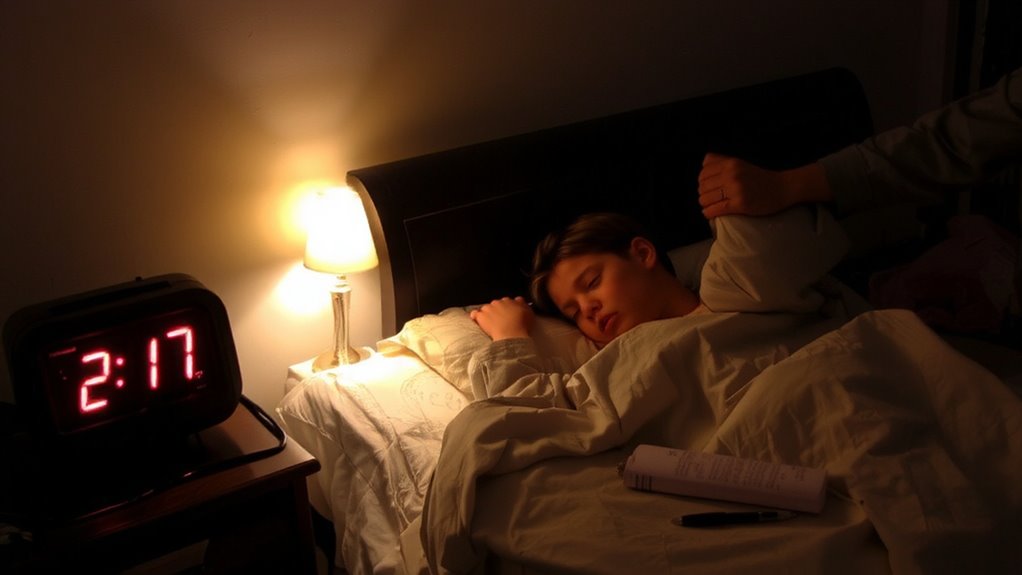
Why do night terrors strike some school-aged kids but not others? It often comes down to brain chemistry and sleep cycles. Your child’s developing brain may briefly misfire during shifts between deep sleep and lighter stages, triggering intense fear, screaming, or thrashing. Unlike nightmares, which happen during REM sleep, night terrors occur in non-REM sleep, usually in the first few hours of the night. Differences in brain chemistry can make some children more sensitive to these shifts. Sleep cycles that are irregular or cut short increase the likelihood. Factors like fatigue, stress, or fever often contribute. You can’t change brain chemistry, but supporting consistent, high-quality sleep improves cycle stability. Watch timing, guarantee restful environments, and monitor patterns. Though no device or supplement fixes the root cause, informed choices about sleep habits offer practical control. Prevention starts with understanding these internal rhythms.
How Scheduled Awakenings Stop Night Terrors
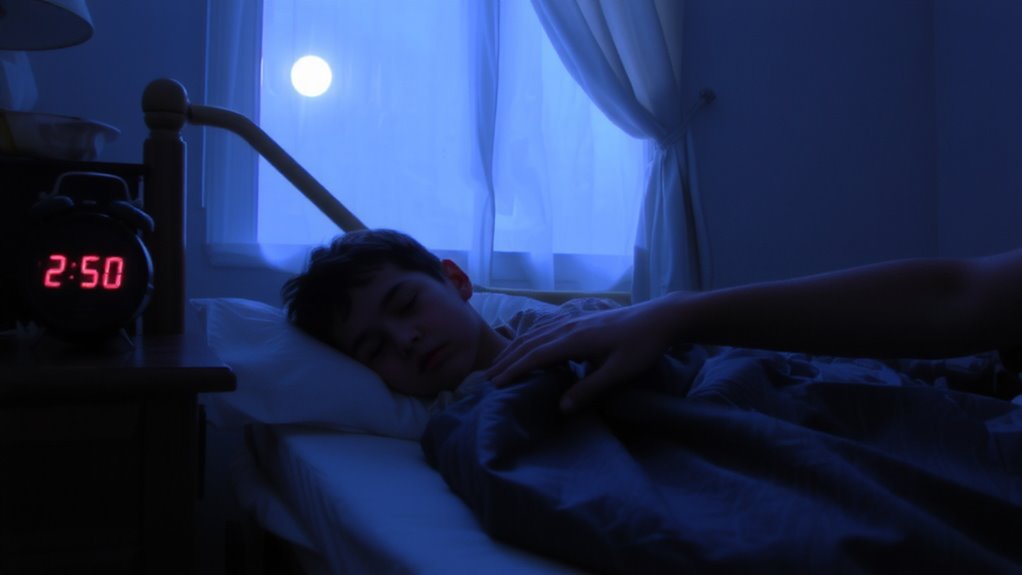
You can’t control your child’s brain chemistry, but you can work with their sleep patterns to reduce night terrors. Scheduled awakenings help by gently interrupting the sleep architecture before terrors typically occur. This method doesn’t alter brain chemistry directly, but it shifts the timing of deep sleep phases, making night terrors less likely. By waking your child briefly during predictable cycles, you reset their internal rhythm. Over time, this can lead to fewer episodes.
| Sleep Stage | Typical Time of Terror | Effect of Scheduled Awakening |
|---|---|---|
| Deep NREM | 1–3 hours after bedtime | Prevents full descent into unstable phase |
| REM | Later in night | Less impacted, but overall stability improves |
| Light NREM | Throughout | Easier shifts between cycles |
| Full cycle | Nightly pattern | Gradual normalization of sleep architecture |
When to Wake Your Child (And for How Long)
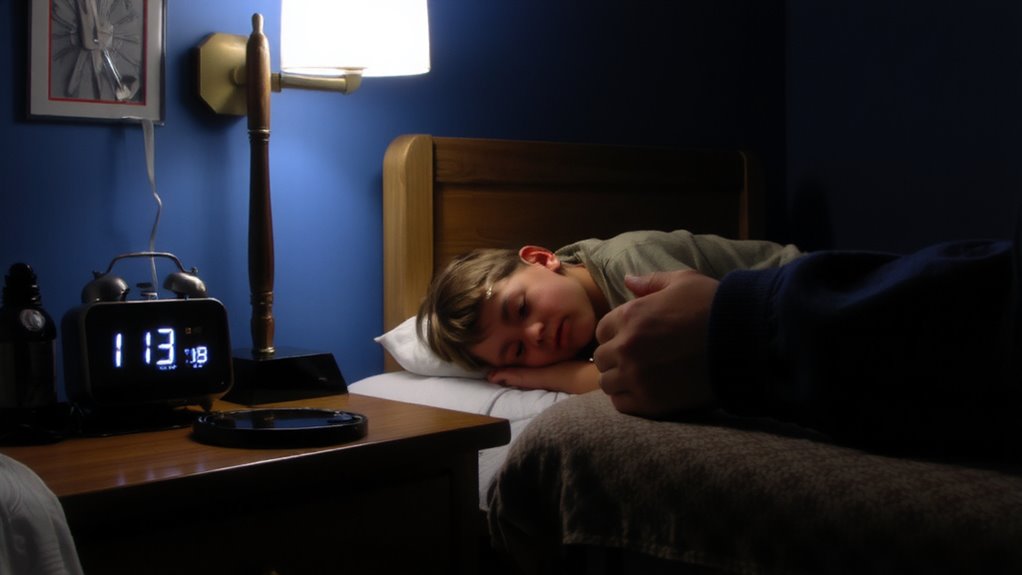
Although night terrors often strike during the same window each night, timing your intervention correctly is key to making scheduled awakenings work. You’ll want to wake your child about 15 to 30 minutes before their typical night terror episode, based on patterns you’ve tracked. Do this while they’re still in deep sleep-gently sit them up, speak softly, and keep lights low. A brief 2- to 5-minute wake-up is usually enough to disrupt the cycle without fully alerting them. Consistent bedtime routines and a calm sleep environment support the process by promoting predictable sleep stages. Stick to the same bedtime and wake-up time daily, reduce noise or light disturbances, and make sure the room feels safe and restful. This consistency helps regulate sleep cycles, making scheduled awakenings more effective over time.
How to Stick to Wake-Ups Without Burning Out
One effective strategy to maintain consistency without exhausting yourself is to share wake-up duties with a partner or caregiver, especially if nights are long or you’re managing multiple responsibilities. Sticking to consistent timing helps your child’s body adjust and makes the process more effective over time. Plan awakenings about 15–30 minutes before the usual night terror episode, based on your logs. Keep the interaction brief and calm-no bright lights or stimulation-then let your child return to sleep. Support progress by reinforcing good sleep hygiene: set a regular bedtime, limit screen use before bed, and create a quiet, comfortable sleep environment. These habits strengthen the routine and reduce disruptions. It’s normal to feel tired at first, but the schedule typically lasts only 2–4 weeks. Tracking improvements can help you stay motivated and assess what’s working.
When to See a Doctor for Night Terrors
What if the night terrors don’t improve despite consistent wake-up timing and strong sleep habits? You might need to contemplate a medical evaluation, especially if episodes happen frequently or worsen over time. Night terrors can be linked to other sleep disorders, such as sleep apnea or restless legs syndrome, so getting a proper diagnosis is key. A sleep specialist may recommend an overnight sleep study to check for underlying issues. If your child has trouble breathing, snores loudly, or seems unusually tired during the day, these could be signs to seek help sooner. Don’t wait if night terrors lead to injuries or serious daytime fatigue. Early medical evaluation can rule out conditions and guide safer, more effective management. Always track symptoms and routines before the visit-this helps doctors spot patterns tied to sleep disorders.
On a final note
You can reduce night terrors by using scheduled awakenings, waking your child about 15–30 minutes before episodes typically occur. Do this gently and consistently for several weeks. It works by disrupting the sleep cycle before deep sleep triggers an episode. Stick to a regular bedtime routine and track progress. If night terrors persist or disrupt daily life, consult a doctor to rule out underlying issues.