How to Use Smart Home Lighting to Support Shift Work Sleep Disorder
You can use smart home lighting to support shift work sleep disorder by adjusting color temperature and brightness to match your schedule. Bright, blue-rich light at night helps you stay alert, while warm, dim light before daytime sleep boosts melatonin. Set timed scenes or gradual sunrises to ease changes, and automate routines for consistency. Choose bulbs with at least 500 lumens, 6500K for daytime alertness, and reliable app control. Many come with a 2-year warranty and work with voice assistants. Testing a single room first helps gauge performance before expanding your setup.
Notable Insights
- Use blue-rich smart lighting during night shifts to boost alertness and suppress melatonin.
- Program gradual sunrise simulations in the morning to ease wakefulness for non-traditional schedules.
- Shift lights to warm, red-amber tones before daytime sleep to support melatonin release.
- Automate lighting scenes based on shift timing to maintain consistent circadian cues.
- Ensure whole-home color consistency and dim screens to reduce disruptive blue light exposure.
Why Night Shifts Wreck Your Sleep (And How Smart Lights Help)
Even though your schedule demands late-night work, your body still follows its natural rhythm, which can make sleeping during the day feel nearly impossible. Nighttime light exposure tricks your brain into thinking it’s still daytime, reducing melatonin and causing hormone disruption that devalues sleep quality. This misalignment affects focus, mood, and long-term health. Regular lamps or overhead lights worsen the issue with bright, blue-heavy light. Smart lighting offers a practical fix by adjusting color and brightness to match your shift pattern. You can program warmer, dimmer tones at night and block daylight with motorized blackout shades synced to sunrise. These systems support better sleep hygiene without medication. Most come with app control, voice compatibility, and trial periods, letting you test effectiveness. Warranties typically cover 1–3 years.
How Smart Lighting Resets Your Body Clock
Since your body’s internal clock relies heavily on light cues, smart lighting can help shift your sleep schedule by mimicking natural daylight patterns. You can use light therapy features in smart bulbs to deliver bright, blue-rich light when you need alertness, which helps with melatonin suppression. By adjusting color temperature and brightness throughout your day-or night shift-you guide your circadian rhythm more smoothly. Apps let you program scenes that gradually increase light, simulating sunrise, even before your workday starts. This steady shift supports better adaptation over time, especially when used consistently. Some systems include preset circadian modes based on sleep research, which you can customize. Look for bulbs or strips that offer a wide Kelvin range and dimming options so you can tailor intensity. Most reputable brands offer at least a one-year warranty, letting you test the system risk-free.
Wake up Faster With Morning-Style Smart Lighting
How do you make mornings easier when your sleep schedule conflicts with the sun? Use morning-style smart lighting to mimic natural sunrise, even at night. These lights gradually increase in brightness and shift toward blue light, which helps trigger a circadian boost that wakes your brain more smoothly. Instead of jolting awake in darkness, you rise with light that tells your body it’s time to be alert. Many smart bulbs offer customizable schedules and color temperatures, so you can set a 30-minute fade-in starting at your wake time. Look for models with at least 500 lumens and adjustable color temps up to 6500K for best results. Most come with app controls and voice compatibility. Try options with free apps and warranty periods-many offer 2-year coverage. Test the timing to find what helps you feel more alert without feeling harsh or too bright. For reliable options, consider checking the best wake-up lights based on performance and user feedback.
Wind Down With Evening Light Before Day Sleep
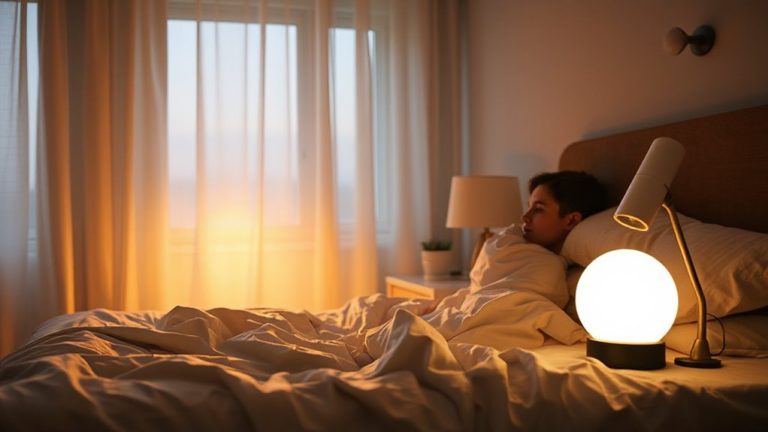
Why does it feel so hard to unwind when you’re preparing to sleep during the day? Your body expects alertness then, not rest. To shift gears, use smart lighting to create a consistent relaxation ambiance before daytime sleep. Set your bulbs to gradually dim and shift toward warmer tones-reds and ambers-about 30 to 60 minutes before bed. These colors support melatonin release, which helps regulate sleep. Pair this with screen dimming on your devices to reduce blue light exposure. Together, they signal your brain that it’s time to wind down. You don’t need special equipment-most smart bulbs offer these features through simple apps or voice commands. Try different color temperatures and dimming schedules over a few nights to find your ideal setup. Consistency improves results. This small change can make a measurable difference in sleep quality for shift workers managing sleep disorders. For best results, consider choosing bulbs specifically designed for circadian rhythm support, such as those found in top-rated sleep-friendly lighting picks.
Automate Your Lights for Effort-Free Circadian Support
You’ve already started shaping your evening routine with warmer, dimming lights to ease into daytime sleep, and taking that a step further-without adding more effort-is where automation comes in. With smart scheduling, your lights adjust on their own, supporting your circadian rhythm even when your sleep times shift. Automation guarantees color consistency across rooms, so your body gets uniform light cues. Just set scenes based on your work schedule, and let the system handle the rest. Make sure your devices have good fixture compatibility-some brands work only with specific hubs or bulbs. Test systems with a small setup first, checking app reliability and warranty terms.
| Feature | Why It Matters |
|---|---|
| Color consistency | Helps maintain steady circadian signals |
| Fixture compatibility | Guarantees lights work together seamlessly |
On a final note
Smart lighting helps manage shift work sleep disorder by mimicking natural light patterns. You can use bright, cool-toned light to stay alert during night shifts and switch to warm, dim light before daytime sleep. Automated schedules adjust lights without effort, supporting your circadian rhythm. Most systems work with apps, let you customize brightness and color, and offer free trials or warranties. Try one for a few weeks to see how it affects your sleep quality.