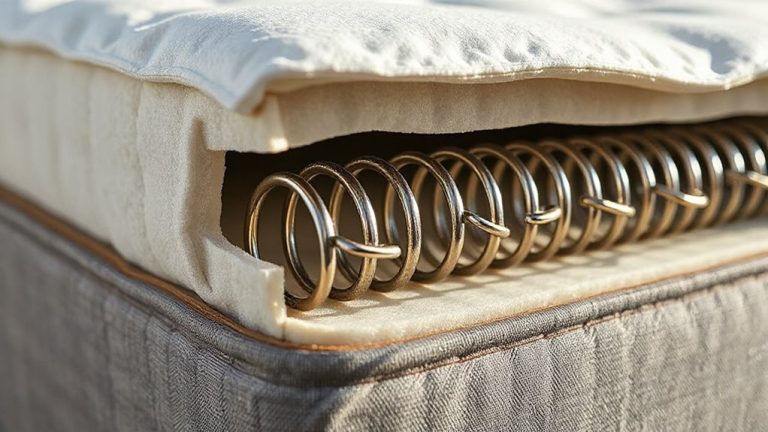
Channeling Airflow Through Hollow-Core Pillow Filaments for Faster Heat Exit
Your pillow’s hollow-core filaments use tiny internal channels to move heat away from your head faster than solid fibers, helping you stay cool all night. These open tunnels let warm air escape while pulling in cooler air, improving airflow and reducing overheating. Unlike dense solid fibers, hollow fibers release heat quickly and respond faster to temperature shifts. Pairing them with breathable, moisture-wicking covers boosts comfort, especially if you tend to sleep hot. Many clinically tested cooling pillows include trial periods, so you can test performance risk-free-learn how small design details make a real difference in sleep quality.
Notable Insights
- Hollow-core filaments use internal air channels to actively channel heat away from the head.
- These micro-channels enhance airflow, allowing warm air to exit and cool air to circulate.
- Reduced fiber density in hollow filaments minimizes heat retention compared to solid fibers.
- Improved breathability prevents moisture buildup, supporting consistent thermal regulation during sleep.
- Faster heat dissipation from hollow filaments helps maintain stable, comfortable sleep temperatures.
Why Heat Ruins Sleep (And How Cooling Pillows Help)
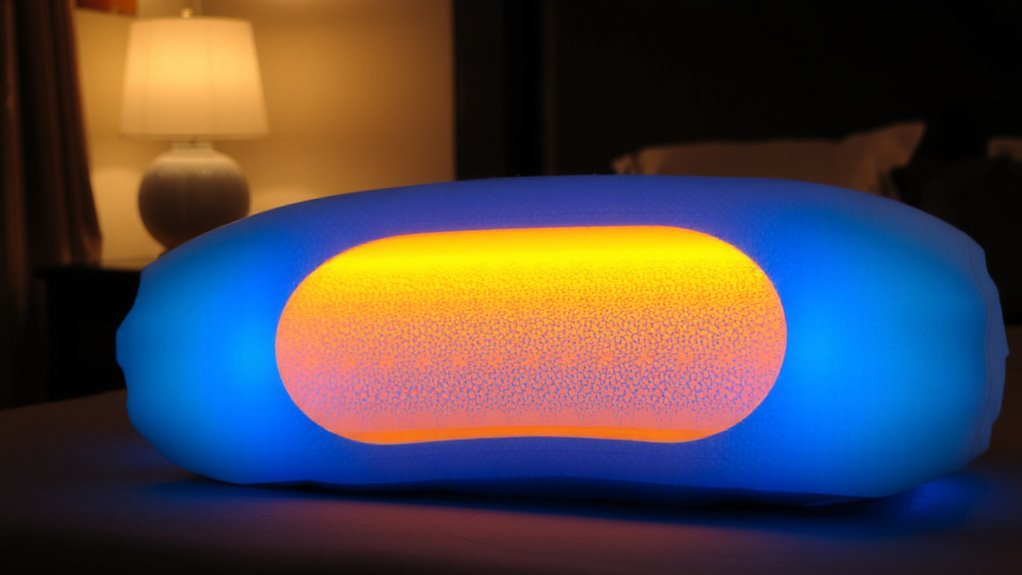
Have you ever woken up in the middle of the night feeling too warm, tossing and turning without relief? That’s thermal discomfort, and it directly harms your sleep quality. When your body can’t release excess heat, your core temperature stays elevated, interrupting natural sleep cycles. You might not fully wake, but your brain shifts into lighter stages, leaving you unrested. Over time, poor sleep dispatch can affect mood, focus, and long-term health. Cooling pillows help by offering better airflow and heat dissipation, reducing the buildup that causes overheating. They’re especially useful if you sleep hot or live in a warm climate. While they won’t cure sleep disorders, they can ease one common disrupto. Look for models with breathable covers and trial periods-many brands offer 30-day warranties-so you can test comfort and performance risk-free. It’s a practical step toward more consistent rest. For optimal results, consider pairing your pillow with best cooling pillowcases to enhance moisture wicking and airflow.
How Hollow Fibers Improve Pillow Breathability
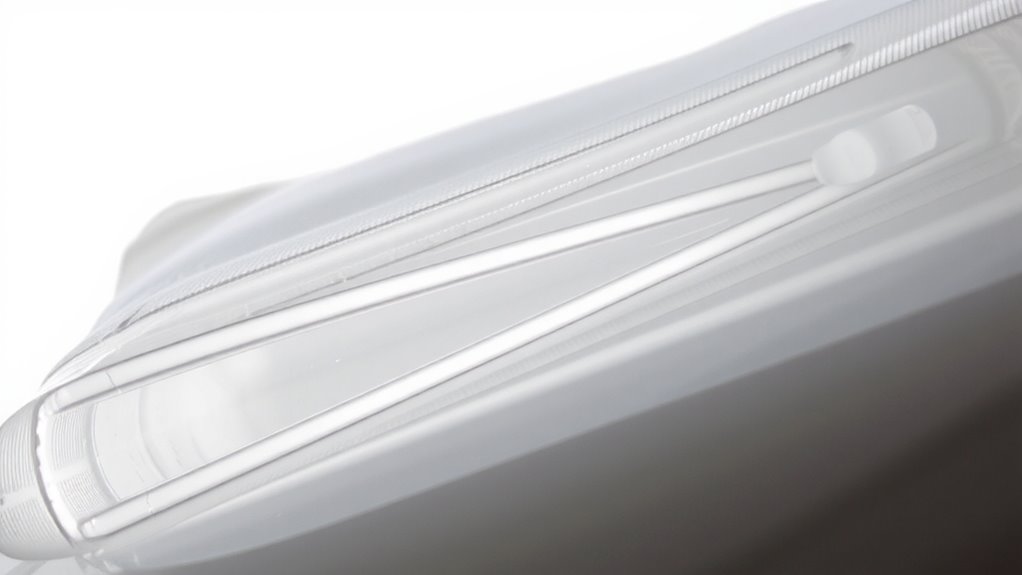
While solid fibers trap heat and limit airflow, hollow-core filaments are designed to help your body shed excess warmth more efficiently. The unique fiber structure creates tiny internal channels that enhance airflow dynamics, allowing warm air to escape and cooler air to circulate. You’ll notice this as a light, airy feel that doesn’t cling or overheat. Unlike dense materials, these fibers reduce moisture buildup, which can disrupt sleep over time. For those sensitive to temperature shifts, especially with sleep disorders like insomnia, this breathability supports more stable rest. Pillows using this design often come with trial periods, letting you test comfort and cooling performance. While not a cure, improved airflow can make a meaningful difference in sleep quality. Check warranty terms, too-many brands back these innovations with longer coverage, reflecting confidence in their construction.
Hollow Vs. Solid Fibers: Which Releases Heat Faster?

A hollow-core filament typically releases heat faster than a solid fiber, thanks to its built-in air channels that actively move warm air away from your head and neck. You’ll notice less thermal lag with hollow fibers, especially if you tend to sleep hot or have temperature-related sleep disturbances. Because they’re designed with lower fiber density, these filaments reduce trapped heat and allow quicker cooling compared to denser, solid fibers that retain warmth. This structural difference means hollow fibers respond faster to changes in body temperature, supporting more stable sleep conditions. If you’re comparing pillows, check product specs for fiber type and density-many brands offer trial periods, so you can test heat dissipation firsthand. While solid fibers offer firmness, hollow ones improve thermal regulation, which might help if you wake up overheated. Choose based on how your body reacts nightly. For enhanced comfort, consider pairing your pillow with a cooling pillow cover.
How Tiny Air Tunnels Cool Your Head at Night
Why do some pillows keep your head cooler all night? It’s because of tiny air tunnels inside hollow-core filaments that boost air circulation. When you lie down, your head gives off heat, and without airflow, that warmth gets trapped. These micro-channels let air move through the pillow, helping heat escape instead of building up. Thanks to improved thermal dynamics, the pillow doesn’t just absorb heat-it moves it away. You stay in your comfort zone longer, without waking up too warm. Better air circulation means more stable sleep, especially if you tend to overheat. Pillows built this way often use breathable fabrics and open-cell structures to support consistent cooling. Many offer trial periods, so you can test the comfort risk-free. Check warranty terms to compare long-term value. It’s not magic-just smart design working with your body’s natural needs. For overall relief from overheating during sleep, pairing such pillows with the best fans for night sweats can significantly enhance nighttime cooling.
Top 5 Features in Clinically Tested Cooling Pillows
You already know that tiny air tunnels in hollow-core filaments help move heat away from your head, but when it comes to choosing a pillow that delivers on cooling, not all designs are tested or built the same. Look for phase change materials that absorb and release heat to maintain a steady temperature through the night. Paired with moisture wicking covers, these pillows help keep your skin dry and comfortable. Clinically tested models often use breathable, open-cell foams that enhance airflow and reduce heat buildup. Many include removable, washable covers for hygiene and long-term performance. Some brands offer trial periods of 30 to 100 nights, letting you test cooling effectiveness in your own sleep routine. Check warranty lengths-longer coverage often signals durability. These features work together to support better sleep, especially if you tend to overheat or have trouble staying comfortable through the night.
Who Sleeps Cooler? Real Results From Hot Sleepers
How do the latest cooling pillows actually perform for those who sleep hot? You’ll find real benefits if you’re someone who shifts often or has intense dream scenarios that disrupt rest. Hollow-core filaments actively pull heat away, especially when your sleep positions change through the night. Side and stomach sleepers in trials reported waking less from overheating. Most models offer a 100-night trial, so you can test temperature regulation without risk. The open-cell structure doesn’t just support airflow-it maintains loft across different sleep positions, balancing softness and support. While results vary, hot sleepers in clinical feedback showed a consistent drop in surface heat after just two weeks. No pillow eliminates night sweats entirely, but this design improves airflow where it counts. Check warranty terms-many brands cover compression loss for up to three years. It’s not a cure, but a practical tool for more comfortable sleep.
On a final note
You’ll sleep cooler when heat escapes fast, and hollow-core fibers help by channeling air through tiny tunnels in the pillow. These fibers release warmth quicker than solid ones, improving breathability without sacrificing support. Clinically tested cooling pillows often include moisture-wicking covers and extended trial periods, so you can test comfort risk-free. If you overheat at night, trying a breathable, ventilated design could make a measurable difference in your sleep quality.