Blocking EMG Noise in Sleep Studies to Accurately Detect Low-Level Paraspinal Spasms
You need clean EMG signals to catch subtle paraspinal spasms during sleep, so start by blocking noise at the source. Secure electrodes firmly on clean, prepped skin, aligning them with neck and back muscle fibers to reduce motion artifacts. Use proper filters-high-pass at 10–30 Hz, low-pass at 300–500 Hz, and a 50 or 60 Hz notch-to cut interference without losing real activity. Watch for jaw or limb muscle crosstalk, and guarantee good grounding. Clearer signals mean more confident detection. There’s more to get right for reliable results.
Notable Insights
- Proper sensor placement along muscle fibers and away from bony areas minimizes motion and contact artifacts.
- Clean, abraded skin with secure adhesion ensures stable electrode connections and reduces signal interference.
- Use high-pass (10–30 Hz) and low-pass (300–500 Hz) filters to preserve muscle spasm signals while blocking noise.
- Apply a 50 or 60 Hz notch filter to eliminate power-line interference without distorting true EMG activity.
- Minimize external noise by grounding equipment properly and keeping electronic devices away from the recording area.
Why EMG Noise Ruins Paraspinal Spasm Detection
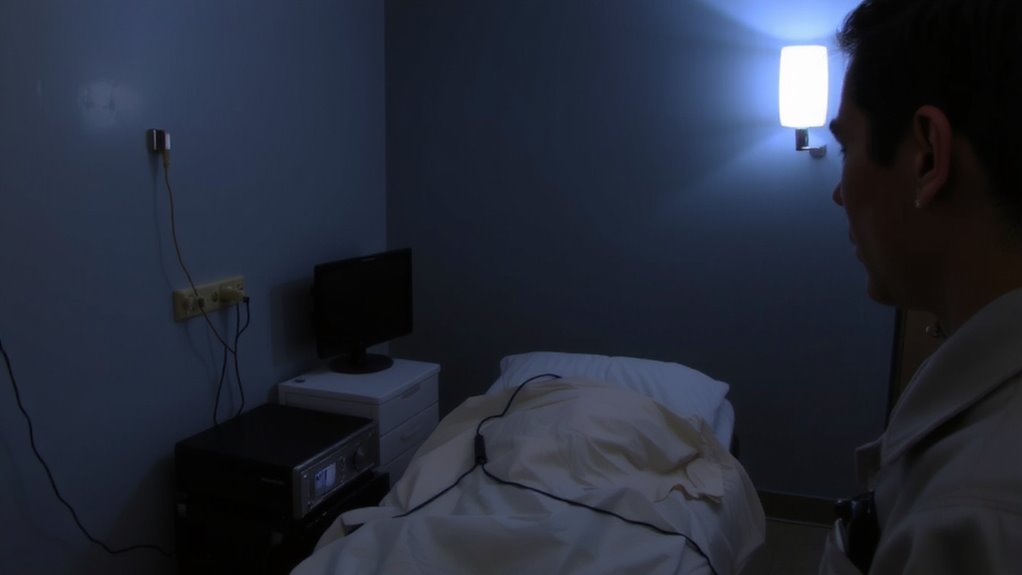
While your sleep study aims to pinpoint paraspinal spasms, EMG noise can distort the signals you rely on for accurate diagnosis. Signal interference from nearby muscles or faulty equipment introduces electrical distortion, making it hard to distinguish real spasms from false spikes. This compromises data quality and could lead to misinterpretation of your muscle activity during sleep. Even low-level spasms, which are subtle, become masked or mimicked by noise, affecting how well clinicians assess your condition. Filtering helps, but over-filtering might remove genuine signals. You’ll want recording systems that balance sensitivity with noise rejection, ideally tested in real-world sleep labs. Look for devices with proven performance in minimizing electrical distortion and offering clear signal fidelity. A trial period or solid warranty can also help you test compatibility without risk, supporting better decisions about your sleep health.
Where EMG Noise Comes From During Sleep Studies
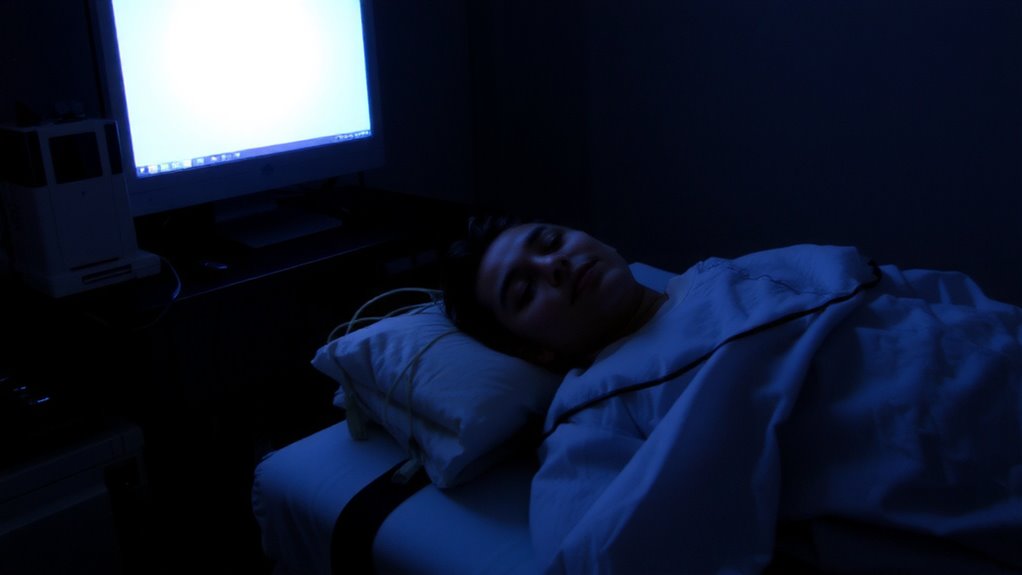
Electrical interference in your sleep study often starts with muscle activity you can’t control-like jaw clenching or restless leg movements-that floods the EMG signal with noise. These small, involuntary contractions generate electrical signals picked up by sensitive EMG sensors, making it hard to isolate targeted muscle data. Outside sources also contribute-poor electrode placement or loose connections can magnify electrical interference. Even nearby devices like cell phones or CPAP machines might introduce background noise if not properly managed. Grounding issues are another common culprit; without solid grounding, your system’s reference point becomes unstable, distorting measurements. Ensuring clean contact, secure wiring, and correct calibration helps reduce these unwanted signals. You don’t need expensive gear-just careful setup. By minimizing interference at the source, you improve overall signal quality, which supports better analysis later. Simple checks now prevent misleading results downstream.
How Noise Hides Real Paraspinal Muscle Spasms
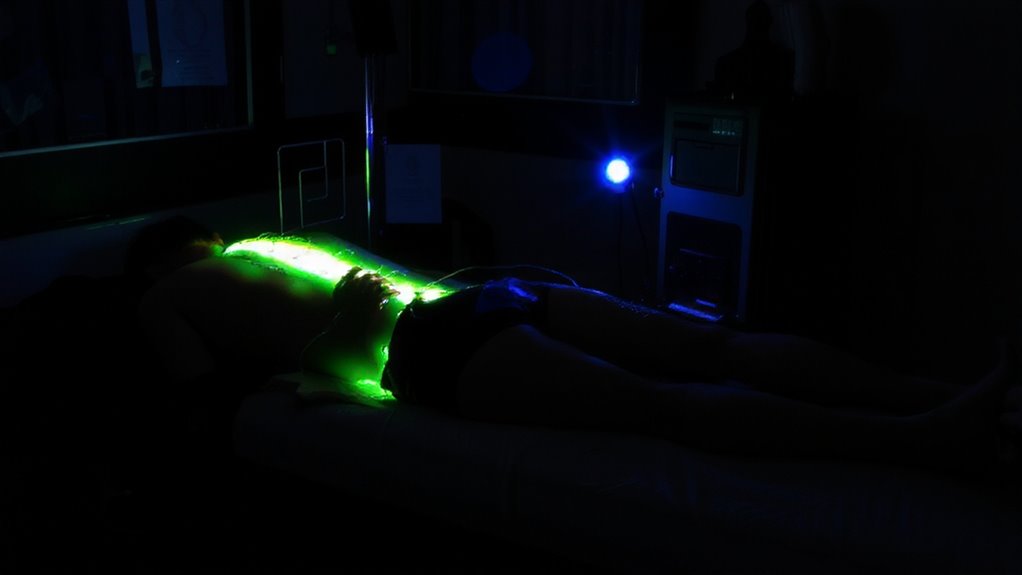
You’ve seen how EMG noise sneaks into sleep studies from muscle twitches and equipment issues, but that’s only part of the problem-it can also mask real clinical signs like paraspinal muscle spasms. Signal interference from nearby muscles or faulty leads distorts the data, making subtle spasms hard to spot. What looks like a spasm might just be muscle mimicry-false patterns created by neck or jaw tension that resemble true paraspinal activity. These false signals complicate diagnosis, especially in low-level cases tied to sleep disorders. When noise overlaps with genuine muscle events, it reduces confidence in scoring accuracy. Proper filtering helps, but you still need clean data to begin with. Recognizing the difference means fewer misdiagnoses and better treatment paths. It’s not just about removing noise-it’s about revealing what was hidden. Clear signals lead to clearer decisions, especially when choosing therapies or evaluating sleep aid effectiveness.
Stop Motion Artifacts With Proper Sensor Placement
A well-placed sensor makes a real difference when it comes to catching clean EMG signals during sleep studies. Proper electrode alignment and thorough skin prep reduce motion artifacts that mimic low-level spasms. You’ll want to clean the skin with alcohol, lightly abrade if needed, and guarantee firm adhesion. Shifts during sleep can distort data, so secure placement matters. Consider these key tips:
| Area | Skin Prep Step | Placement Tip |
|---|---|---|
| Neck | Wipe & dry well | Align electrodes parallel to muscle fibers |
| Upper back | Light scrub | Avoid bony prominences |
| Lower back | Use adhesive prep | Double-check electrode alignment |
You’re not just attaching sensors-you’re setting up reliability. Good prep and positioning mean fewer false readings. That helps distinguish real paraspinal activity from noise without over-filtering later.
Pick the Right Filter Settings for Clean EMG
While proper sensor placement lays the foundation, you’ll still need the right filter settings to separate true EMG activity from residual noise. Set your high-pass filter between 10–30 Hz to reduce baseline drift, which can distort low-amplitude signals during sleep. A low-pass filter around 300–500 Hz helps limit signal interference from nearby electrical sources. Use a notch filter at 50 or 60 Hz if ambient power-line noise is present-it’ll suppress interference without affecting muscle spike clarity. These settings preserve the fast, small-amplitude waveforms typical of paraspinal spasms while removing unrelated artifacts. Fine-tuning prevents over-filtering, which might smooth out real data. Many modern systems allow real-time adjustment, so test different configurations during initial recording. Look for stable baselines and sharp peaks. Reliable filter use improves data accuracy, helping clinicians distinguish subtle muscle events from noise-critical when evaluating sleep-related movement disorders.
Tell Real Spasms From Noise in EMG Readings
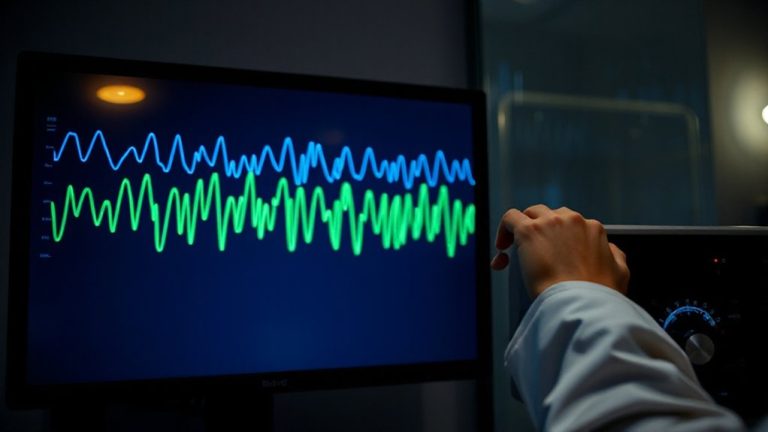
How can you be sure what you’re seeing on the EMG trace is a real muscle spasm and not just noise? Look for consistent patterns and use visual cues to distinguish true activity from interference. Real spasms show sharp, brief peaks with clear onset and return to baseline. Noise often causes signal distortion or erratic spikes without rhythm. Baseline drift can mask subtle events, so stabilize the signal first.
| Feature | Real Spasm | Noise |
|---|---|---|
| Shape | Smooth, defined peak | Jagged, irregular |
| Duration | 20–500 ms | Unpredictable length |
| Amplitude | Moderate, consistent | Sudden, extreme |
| Reproducibility | Repeats across channels | Isolated, sporadic |
| Relation to sleep | Tied to body movement | Random, no correlation |
Check morphology and timing-clarity helps accurate interpretation.
Make EMG Noise Control Part of Every Sleep Study
Since clean EMG readings are critical for accurate sleep staging and event detection, you’ll want to build noise control into every study from the start. Proper EMG calibration guarantees your sensors respond accurately to muscle activity, minimizing false spikes. You can achieve better signal isolation by using shielded cables and placing electrodes away from common interference sources like power lines or movement-prone areas. Grounding the system correctly also reduces ambient electrical noise. Don’t wait until you spot artifacts-apply these steps during setup. Consistent technique across patients helps with reliable data comparison. Many modern systems offer built-in filters and automatic calibration checks, which save time and improve accuracy. Though some devices cost more upfront, their performance and included warranties often justify the investment. Making EMG noise control routine improves detection of low-level paraspinal spasms and supports better diagnostic decisions.
On a final note
You’ll miss subtle paraspinal spasms if EMG noise isn’t controlled. Proper sensor placement reduces motion artifacts, while correct filter settings clean the signal without losing data. Learn to distinguish real muscle activity from interference by checking waveform patterns and timing. Make noise management routine in every sleep study. It improves accuracy, supports better diagnoses, and guarantees treatments target actual spasms. A careful setup, combined with consistent protocols, gives reliable results you can trust over time.