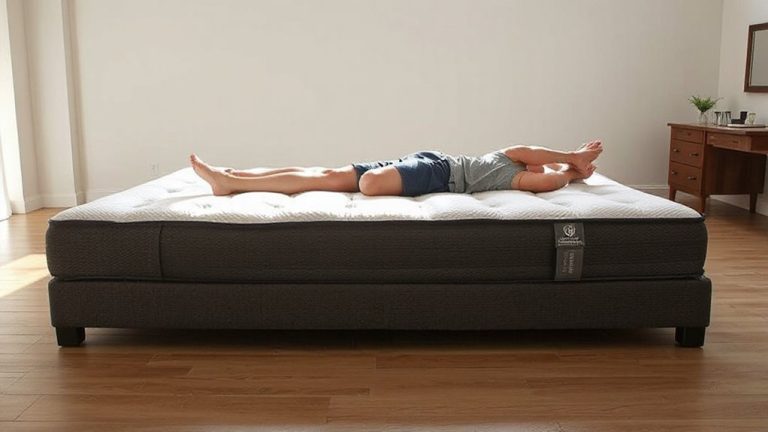
Engineering Mattresses With Progressive Compression Layers for Gradual Spinal Unwinding
You get better spinal support when your mattress uses progressive compression layers that respond to your body’s shape and sleep position. These layers cradle hips and shoulders while keeping your spine neutral, easing tension between vertebrae. Firm base foams align your back, while softer top layers reduce pressure. Combined with breathable materials and edge support, this design helps relieve pain. Models with layered foam, CertiPUR-US® certification, and trial periods offer safe, effective relief-explore further to match your sleep style with the right balance of support and comfort.
Notable Insights
- Progressive compression layers apply graduated firmness to cradle hips and shoulders while supporting the lower back.
- These layers promote spinal decompression by easing tension between vertebrae for gradual unwinding during sleep.
- Strategic foam layering balances softness and support, aligning the spine close to its natural curve.
- Medium to medium-firm mattresses (5–7 on scale) with high-density foams optimize spinal alignment and durability.
- Responsive, breathable designs with CertiPUR-US® certified foams ensure safety, comfort, and temperature regulation.
How Progressive Compression Aligns the Spine
A well-aligned spine starts with how your mattress responds to your body’s needs, and progressive compression layers play a key role. These layers gently cradle your hips and shoulders while supporting your lower back, keeping your spine in a neutral position throughout the night. You’ll notice improved spinal flexibility over time, especially if you move often or sleep in varying positions. The graduated firmness from soft to firm foam adapts precisely, reducing pressure points that disrupt rest. This kind of design also promotes posture restoration by aligning your spine close to its natural curve, whether you’re on your side or back. Many models offer a 100-night trial and a 10-year warranty, so you can test comfort and durability risk-free. Look for foams with CertiPUR-US® certification for safety and performance. It’s not a quick fix, but consistent support does make a difference. Top-rated options often feature best mattresses for better posture that combine adaptive foam layers with enhanced spinal alignment technology.
How Layered Foam Helps Your Spine Unwind
You already know how progressive compression keeps your spine in line, but what happens once you’re settled in? Layered foam works quietly to support spinal decompression by gently easing tension between vertebrae. Each layer responds to your body’s weight and shape, allowing deeper relaxation over time. The top layers cradle you softly, improving pressure distribution and reducing strain on hips, shoulders, and lower back. Beneath, firmer foams maintain stability so your spine stays aligned. This gradual give-in helps muscles release stress without sinking too deeply. Mattresses built this way often use memory foam, polyfoam, or latex in strategic combinations to balance softness and support. Look for models with at least three distinct layers for best results. Many offer trial periods, so test how well your spine unwinds over several nights. Check warranty terms that cover sagging or permanent indentations-these can affect performance.
Best Mattress Features for Back Pain Relief
While comfort is important, the right support matters most when choosing a mattress for back pain relief. You need a firm yet responsive surface that keeps your spine aligned and reduces pressure points. Look for models with strong edge support-this helps you move freely and makes getting in and out of bed easier. Temperature regulation is also key; overheating can disrupt sleep and worsen pain, so consider breathable covers or gel-infused foams that dissipate heat. Mattresses with layered construction often balance support and comfort well, adapting to your body’s needs. Many come with a trial period, allowing you to test these features risk-free. A solid warranty adds peace of mind. When tested over time, good edge support and effective temperature regulation consistently help people with back pain sleep better and wake feeling more refreshed. Top-rated options in 2024 include models specifically designed with progressive compression layers to provide targeted spinal support throughout the night.
Which Mattress Type Supports Spinal Alignment Best?
Getting proper spinal alignment while you sleep hinges on choosing a mattress type that balances support with just enough give. Memory foam and latex mattresses often excel here, thanks to their ability to contour to your body while maintaining consistent support. The key lies in firmness levels and material density-higher density foams resist sagging over time, offering durable alignment. Innerspring models with supportive comfort layers can also work, especially if you prefer a firmer surface. Hybrid designs combine coil support with foam or latex, blending responsiveness and pressure relief. You’ll want to look for medium to medium-firm options, typically rated 5–7 on the firmness scale, as they suit most sleepers. Check warranty length and trial periods-many reputable brands offer at least a 10-year warranty and 100-night sleep trial. These features help you test alignment support without risk.
How Sleep Position Affects Your Compression Needs
Why do side sleepers often need softer cushioning while back and stomach sleepers benefit from firmer support? Your sleep posture directly influences how your body weight distributes across the mattress. If you sleep on your side, your shoulders and hips sink deeper, so a softer top layer helps align your spine without pressure points. Back sleepers need balanced support-too soft, and your lower back dips; too firm, and you’ll feel strain. Stomach sleepers often arch their spines, requiring firmer surfaces to prevent sinking. Body weight also affects compression needs: heavier individuals usually need denser layers to avoid excessive sinkage, while lighter ones may prefer softer zones for comfort. Progressive compression layers accommodate these variations by firming up as pressure increases. That means your sleep posture and body weight guide the ideal balance. Always check trial periods and warranty terms when testing mattresses to guarantee long-term spinal support matches your sleep pattern. Best Mattresses provide targeted support based on sleep position and body type.
On a final note
You’ll find that mattresses with progressive compression layers gently support spinal alignment by easing pressure point by point. Layered foam adapts to your body’s needs, helping your spine unwind steadily through the night. If you have back pain, consider medium-firm models with zoned support and breathable materials. Side sleepers may need softer top layers, while back and stomach sleepers benefit from firmer zones. Check trial periods and warranties to test comfort risk-free.