Lavender Hotel Room Spray: DIY Ratio, Timing & Technique
Spray your lavender mist 10–15 minutes before bed on your pillow, linens, or nearby air to help calm your nervous system. Use 3–5 spritzes from 8–10 inches away, avoiding oversaturation. Choose a spray made with pure *Lavandula angustifolia*, distilled water, and witch hazel for stability. It works without drowsiness, unlike pills, and fits easily in your travel bag-making restful sleep in hotels simpler and more natural. You’ll find even better results with a few practical tweaks.
Notable Insights
- Apply lavender spray to your pillow and linens 10–15 minutes before bed for optimal scent dispersion.
- Use a travel-friendly bottle with 2–3 drops of pure lavender essential oil and distilled water.
- Add witch hazel or vodka to the spray to preserve freshness and disperse oils evenly.
- Mist the air lightly from 8–10 inches away to create a calming atmosphere without oversaturation.
- Choose only 100% pure Lavandula angustifolia oil to ensure effectiveness and avoid synthetic fragrances.
Why Lavender Spray Beats Other Hotel Sleep Aids
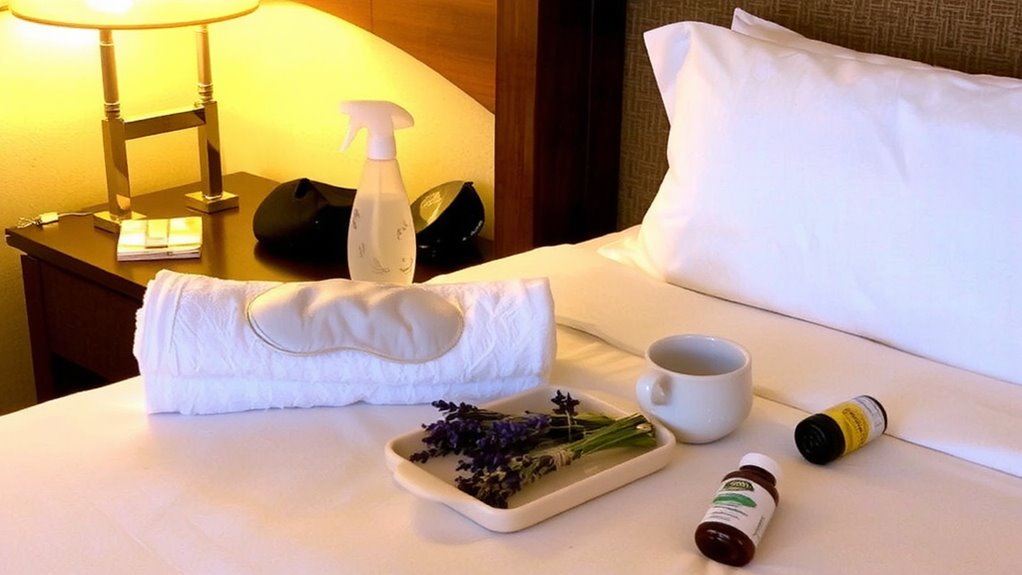
Ever wonder why so many hotels are switching to lavender spray instead of pills or white noise machines? It’s because guests want a simple, effective way to sleep better without side effects. Lavender benefits include reduced stress and improved sleep quality, making it a popular natural alternative to medications or electronics. Unlike pills, which can cause drowsiness the next day, or white noise machines, which some find distracting, a lavender spray offers a gentle, adjustable option. You just mist it on your pillow or in the air. It works fast, smells calming, and requires no setup. Most hotel-grade sprays use diluted essential oils, so they’re safe for most people. If you’re sensitive, test a small spray first. Many brands even offer satisfaction guarantees. For sleep support that’s easy, non-invasive, and pleasant to use, lavender spray often outperforms other common aids. Among the most effective options, best essential oils for sleep consistently rank high for promoting relaxation and better rest.
How Lavender Spray Calms Your Nervous System
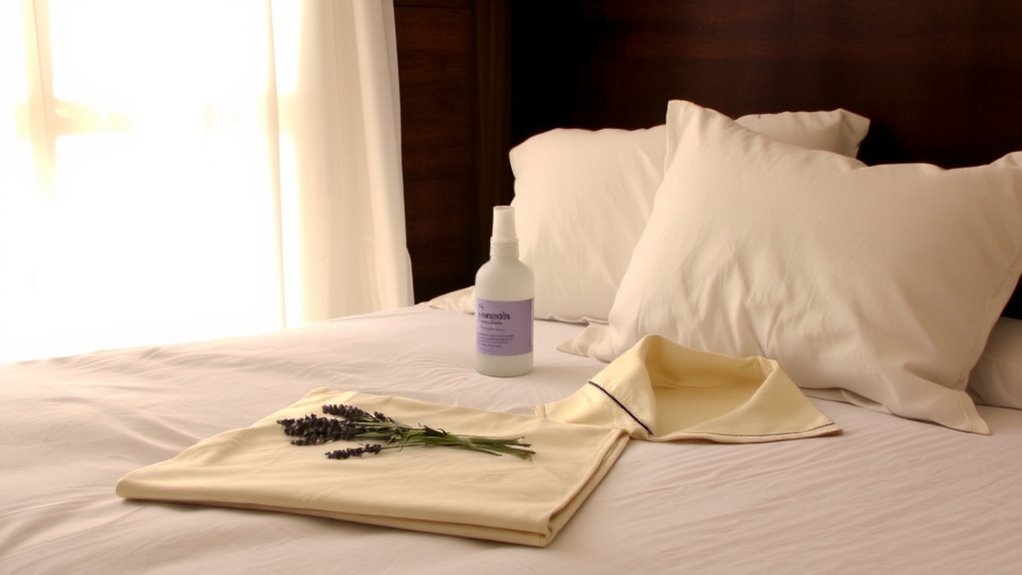
When you inhale the scent of lavender spray, your body responds by slowing down stress signals in the nervous system, helping you shift into a relaxed state. This calming nervous system response is part of the well-documented aromatherapy benefits linked to improved sleep quality. Compounds in lavender, like linalool and linalyl acetate, interact with brain receptors that regulate anxiety and arousal, gently promoting balance. You’ll likely notice reduced mental chatter and a physical ease in muscle tension, making it easier to fall asleep, especially in unfamiliar hotel rooms. Unlike strong sedatives or sleep medications, lavender works subtly, so it supports natural sleep cycles without grogginess. Research shows consistent use can assist those managing mild sleep disturbances, though results vary. For best effects, spray just before bed and allow the scent to diffuse. It’s a non-invasive option worth trying, especially if you prefer light, plant-based aids over pharmaceuticals. A well-rested infant often sleeps more soundly in a properly selected sleep environment, such as one featuring a best infant bed.
What You Need for a DIY Lavender Room Spray
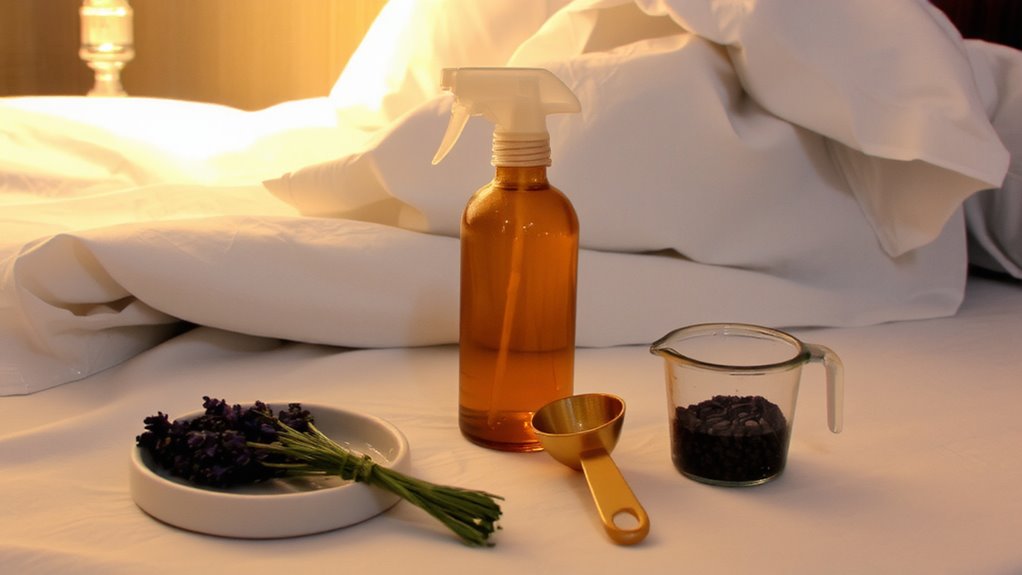
A simple spray bottle is your starting point for making a DIY lavender room spray at home. Choose one made of dark glass to protect the spray ingredients from light, which can weaken the lavender benefits over time. You’ll need distilled water to prevent bacteria and extend shelf life, plus a small amount of witch hazel or vodka-this helps disperse the essential oils and keeps the mixture stable. Two to three tablespoons of high-quality lavender essential oil per cup of liquid is usually enough to deliver noticeable effects. These spray ingredients work together to create a fine, consistent mist that won’t stain fabrics. When used in hotel rooms, this blend may support relaxation and help ease mild sleep issues. Always patch-test on fabric and consider scent sensitivity when applying. With proper storage, your spray can last up to six months. For those who prefer ready-made options, consider trying one of the top-rated best travel lavender sprays for convenience and consistent quality.
Make Your Own Travel Lavender Spray
Why carry bulky sleep aids when a few drops of lavender can fit in your pocket? You can make a travel lavender spray fast using a small glass bottle, distilled water, and a few drops of pure lavender essential oil. For longer shelf life, add a teaspoon of witch hazel or vodka as a natural preservative. This compact solution fits easily in your carry-on and avoids liquid restrictions when sized correctly. Want something more personal? Experiment with custom blends-adding a drop of chamomile or bergamot may enhance relaxation differently for you. These small adjustments let you tailor the scent to your preferences. As a practical travel tip, always label your spray and store it away from sunlight to preserve potency. Making your own means you control the ingredients, avoiding additives found in store versions. It’s simple, effective, and adapts well to different hotel environments.
Where and When to Mist for Better Sleep
Where should you spray your lavender mist for the best chance at restful sleep? Focus on areas close to your breathing zone without soaking surfaces. The ideal placement includes your pillow, bed linens, and nearby air space. Avoid spraying electronics or delicate fabrics. Timing matters just as much as location. The best timing is 10–15 minutes before bed, giving the scent time to disperse evenly. Here’s a simple guide:
| Location | Purpose | Frequency |
|---|---|---|
| Pillow | Calms mind, targets breathing | Every use |
| Bed linens | Long-lasting scent release | Every use |
| Air (2 ft away) | Even diffusion | As needed |
| Nightstand | Subtle ambient effect | Optional |
Use light mists for consistent results. Let personal comfort guide frequency.
Boost Results With These Pro Mist Techniques
Could the way you use lavender mist be limiting its sleep-supporting benefits? Yes, if you’re skipping essential timing and ideal diffusion. For best results, mist 20–30 minutes before bed to let the scent settle. This gives your body time to respond as melatonin levels begin shifting. Use 3–5 sprays in the air, not on linens, to guarantee even dispersion. Hold the bottle 8–10 inches from surfaces to prevent oversaturation. Opt for fine-mist bottles-they create smaller droplets that stay airborne longer, boosting inhalation efficiency. Essential timing matters most when aligning with circadian cues, like dimming lights. Pairing proper spray technique with ideal diffusion increases consistency in scent exposure, which supports relaxation without overwhelming the senses. This method works especially well in compact hotel rooms where fragrance lingers. With deliberate use, you’re not just adding scent-you’re shaping a sleep-ready environment.
Avoid These Lavender Spray Mistakes
While you might think spraying lavender mist is simple, small errors can reduce its effectiveness for sleep support. Using a product with poor ingredient purity means you might inhale fillers or synthetic fragrances that irritate rather than relax. Always check the label-look for 100% pure lavender essential oil, ideally labeled with *Lavandula angustifolia*. You’ll also want to monitor spray frequency; too little won’t deliver enough aroma, but overspraying can overwhelm your senses and disrupt sleep instead of aiding it. Two to three spritzes into the air, away from bedding, is usually enough. Avoid spraying directly onto pillows unless the formula is designed for fabrics. Test the spray once before bedtime to gauge scent strength and guarantee no adverse reactions. Consistency matters, but so does moderation-let your comfort guide how often you use it.
On a final note
You can try lavender spray to support better sleep in hotel rooms. It works by releasing calming compounds that may ease stress. Use a simple DIY mix with distilled water and a few drops of pure essential oil in a small spray bottle. Mist lightly on bedding or in the air 30 minutes before bed. Avoid spraying fabrics directly to prevent stains. Results vary, so test it at home first. While not a cure for sleep disorders, it’s a low-risk option worth considering alongside other proven methods.