Best Cribs Parents Trust for Their Infant’s First Bed
You’ll want a crib built to last, like the Dream On Me Synergy 5-in-1 or Graco Benton 5-in-1, both converting from infant crib to toddler bed and beyond. They use solid wood, meet CPSC and ASTM safety standards, and carry GREENGUARD Gold certification for low emissions. Adjustable mattress heights help as your baby grows, while non-toxic finishes protect sensitive airways. Many include lifetime warranties and easy assembly. Choosing one of these gives long-term value and tested safety-smart next steps reveal even more advantages.
We are supported by our audience. When you purchase through links on our site, we may earn an affiliate commission, at no extra cost for you. Learn more. Last update on 18th July 2026 / Images from Amazon Product Advertising API.
Notable Insights
- Choose cribs made from sustainably sourced solid wood with non-toxic finishes and GREENGUARD Gold Certification for safety.
- Look for models with adjustable mattress heights to support infant development and reduce parent strain.
- Prioritize cribs meeting ASTM, CPSC, and JPMA safety standards to ensure structural integrity and reliability.
- Opt for convertible designs that adapt to toddler beds, offering long-term use and value.
- Select lightweight, tool-free assembly cribs with portable, foldable designs for convenient travel and storage.
Dream On Me Synergy 5-in-1 Crib

If you’re looking for a crib that grows alongside your child, the Dream On Me Synergy 5-in-1 Crib is a practical choice, especially if you value long-term use and safety. I’ve found it smoothly shifts from infant crib to toddler bed, daybed, and full-size bed, though conversion kits are sold separately. Made from sustainably sourced New Zealand pine, it’s sturdy and features a non-toxic white finish. With three mattress height settings, it supports your child’s changing needs while meeting rigorous safety standards, including GREENGUARD Gold Certification. It’s CPSIA compliant, tested for lead and phthalates, and comes with a 1-year warranty, giving you peace of mind through years of use.
Best For: Families seeking a durable, safety-certified convertible crib that transitions from infancy through childhood with eco-friendly materials and timeless design.
Pros:
- Converts from crib to toddler bed, daybed, and full-size bed for long-term use
- Made from sustainably sourced New Zealand pine with GREENGUARD Gold Certification for low chemical emissions
- Three adjustable mattress heights and CPSIA compliance ensure safety and convenience as the child grows
Cons:
- Conversion kits required for toddler and full-size bed configurations are sold separately
- Assembly is required and may be time-consuming for some users
- Not portable, limiting usability for frequent movers or travel
Dream On Me Owen 5-in-1 Crib (Matte Black)

The Dream On Me Owen 5-in-1 Crib in matte black stands out for parents who want a durable, long-term sleep solution that grows with their child. I appreciate its sustainably sourced New Zealand pinewood frame and heavy-duty metal mattress support, which guarantee stability as your baby moves from crib to toddler bed, daybed, or full-size bed-conversion kits sold separately. It meets ASTM and CPSC standards, is GREENGUARD Gold Certified, and uses non-toxic, low-VOC finishes. With three mattress height positions and a 50 lb weight limit, it adapts safely across stages. The modern criss-cross legs and matte black finish coordinate well with the Owen Changing Table. A 1-year warranty covers manufacturing defects, and assembly is straightforward with included hardware.
Best For: Parents seeking a long-lasting, convertible crib made from sustainable materials with modern styling and strong safety certifications.
Pros:
- Converts from crib to toddler bed, daybed, and full-size bed for long-term use
- Made from sustainably sourced New Zealand pinewood with GREENGUARD Gold Certified non-toxic finish
- Modern matte black design with criss-cross legs that complements contemporary nursery decor
Cons:
- Conversion kits for toddler and full-size bed sold separately, increasing total cost
- Assembly required, which may be time-consuming for some users
- 50 lb weight limit may restrict use for older or heavier toddlers
BCOL 3-in-1 Baby Bassinet (Dark Grey)

I appreciate having options when setting up a safe sleep space, and the BCOL 3-in-1 Baby Bassinet stands out for parents who want one product that adapts as their baby grows. It converts into a standalone crib, bedside sleeper, or rocking cradle, with a lowering side for easy co-sleeping and rocking motion that soothes fussiness. It’s CPC, ASTM, and CPSIA certified, with breathable mesh walls and a firm mattress for safety. Three height settings help align it with beds or sofas, and the incline reduces reflux. It folds flat for travel, has silent wheels with brakes, and includes storage for essentials, plus washable, detachable fabrics.
Best For: Parents seeking a versatile, portable, and safety-certified sleep solution that transitions from newborn to toddler stages with multiple configurations.
Pros:
- Converts into three modes (crib, bedside sleeper, rocking cradle) with adjustable height and incline for comfort and safety
- Meets CPC, ASTM, and CPSIA standards with breathable mesh walls and a firm, washable mattress
- Foldable design with silent wheels and integrated storage makes it travel-friendly and convenient for small spaces
Cons:
- Rocking mode may be less stable on uneven surfaces due to lightweight frame
- Hand washing recommended for fabrics, which may be less convenient for frequent cleaning
- No canopy or shade included, limiting sun protection for outdoor use
Pamo Babe Foldable Portable Bassinet with Mattress

You’ll find the Pamo Babe Foldable Portable Bassinet with Mattress a solid choice when frequent moves or limited space shape your sleep setup-this lightweight, easy-to-fold crib steps in like a reliable travel partner. I use it at home and on trips because it assembles quickly, no tools needed, and folds down to just 66.5cm × 19.0cm × 19cm, fitting neatly in the included carry bag. It weighs only 8.0 kg, so I carry it with one hand. Breathable mesh walls let me check on my baby easily and keep air flowing, while the soft mattress offers comfortable support. It’s safe for infants up to 36 months, holding up to 15kg.
Best For: Parents and caregivers seeking a lightweight, portable bassinet for travel or small living spaces who need a safe, ventilated sleep solution for infants up to 36 months.
Pros:
- Tool-free assembly and compact fold (66.5cm × 19.0cm × 19cm) make it highly portable and easy to store
- Breathable mesh walls provide excellent airflow and visibility for monitoring baby
- Includes soft mattress and carry bag, supporting comfort and convenience at home or on the go
Cons:
- Weight capacity limited to 15kg, which may restrict use as toddlers grow
- Lightweight design may feel less sturdy on uneven surfaces
- No added accessories like a canopy or detachable tray for extended functionality
Dream On Me Karley Bassinet

Dream On Me Karley Bassinet stands out for parents seeking a lightweight, portable sleep solution that doesn’t compromise on safety or comfort. At 12.4 lbs, it folds down small-just 6″ x 19.5″ x 32″ with the carry bag-making it easy to transport or store. It supports babies up to 25 lbs and includes a dual-sided 1-inch mattress pad for durability. The adjustable double canopy boosts airflow while shielding from sunlight, bugs, and pets. Made with breathable polyester and a sturdy aluminum frame, it meets ASTM, CPSC, and BSA standards. A roomy storage basket holds essentials, and the fabric wipes clean quickly.
Best For: Parents looking for a lightweight, portable bassinet that combines safety, comfort, and convenience for indoor and outdoor use.
Pros:
- Lightweight at 12.4 lbs with a compact fold and carry bag for easy transport and storage
- Adjustable double canopy enhances airflow while protecting from sun, bugs, and pets
- Meets ASTM, CPSC, and BSA safety standards with a dual-sided mattress and sturdy aluminum frame
Cons:
- Maximum weight capacity of 25 lbs may limit use for larger or older infants
- Polyester fabric, while breathable, may not be as eco-friendly or natural as cotton or organic materials
- No rocking or vibration features, which some babies may require for soothing
Pamo Babe Pack and Play with Bassinet, Portable Playard for Baby

The Pamo Babe Pack and Play with Bassinet stands out for parents who need a reliable, travel-friendly sleep solution without sacrificing safety or convenience. I appreciate how the detachable bassinet and folding design make it easy to move and store-perfect for small homes or trips. The breathable mesh sides let me check on my baby easily while supporting airflow, which helps maintain a safe sleep environment. Setup takes minutes, no tools needed, and it collapses fast when it’s time to go. A stable 7-point base and lockable wheels keep it secure, and I can clean it quickly with just soap and water.
Best For: Parents seeking a portable, safe, and easy-to-assemble sleep space for infants, ideal for travel and small living areas.
Pros:
- Detachable bassinet and compact foldable design make it highly portable and convenient for travel
- Breathable mesh sides ensure visibility and healthy airflow for a safe sleep environment
- Quick, tool-free setup and takedown with a stable 7-point base and lockable wheels for security
Cons:
- Not suitable for children over 30 lbs, limiting long-term use
- Wipe-clean only maintenance may require extra effort for deep cleaning
- Bassinet is not standalone, requiring the playard frame for use
4-in-1 Baby Bassinet with Mosquito Net
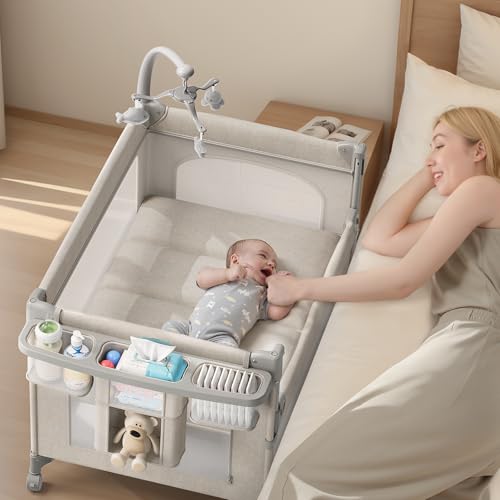
When I need a crib that adapts as my baby grows, the 4-in-1 Baby Bassinet with Mosquito Net stands out for its convertible functionality, smoothly shifting from bassinet to playpen, bedside crib, and diaper changer. I appreciate how the adjustable side panel keeps my baby close for nighttime care, supporting bonding and easy access. The mosquito net helps protect against bugs, while rotating toys encourage play. It sets up and folds in two seconds-no tools needed-and the lightweight frame travels easily. Integrated storage holds diapers and bottles, and the wrap-around design keeps diaper changes safe. I find it practical, well-structured, and built for real-life use.
Best For: Parents seeking a versatile, space-saving baby bassinet that adapts from newborn to toddler stages with ease and portability.
Pros:
- Convertible design transitions seamlessly between bassinet, playpen, bedside crib, and diaper changer to grow with the baby
- Quick, tool-free assembly and folding in 2 seconds make it highly portable and travel-friendly
- Features mosquito net, rotating toys, adjustable side panel, and integrated storage for comfort, safety, and convenience
Cons:
- Lightweight construction may feel less sturdy for larger babies or active toddlers
- Mattress included is thin, potentially requiring a separate purchase for added comfort
- Adjustable side mechanism may wear over time with frequent use
Baby Lounger for Newborn 0–24 Months (Hoot)
You’ll find the Baby Lounger for Newborn 0–24 Months (Hoot) works best if you need a safe, portable spot for your baby during awake-time activities, not sleep. I use it for tummy time, play, and diaper changes, always on the floor and never unattended. It’s lightweight, at 3.2 lbs, with handles for easy moving between rooms or trips. The breathable cotton and hypoallergenic filling meet CPC, CPSIA, and OEKO-TEX standards. A waterproof layer and machine-washable cover make cleanup quick. Adjustable straps let it grow with your baby, and the 12-month guarantee gives me confidence in its daily use.
Best For: Parents and caregivers seeking a safe, portable, and multi-functional newborn lounger for supervised awake-time activities like tummy time, play, and diaper changes.
Pros:
- Lightweight and portable with sturdy handles for easy transport between rooms or while traveling
- Made with certified breathable cotton and hypoallergenic filling, meeting CPC, CPSIA, and OEKO-TEX safety standards
- Features adjustable design, waterproof layer, and machine-washable cover for adaptability and easy cleanup
Cons:
- Not suitable for unsupervised use or sleep, limiting functionality during nap or nighttime
- Must be used only on flat surfaces, restricting placement options
- Age range limited to 0–24 months, requiring replacement as baby grows beyond toddler stage
Baby Trend Lil’ Snooze Deluxe II
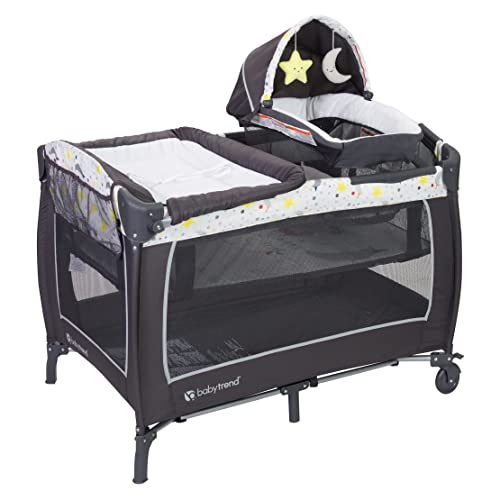
Looking for a versatile nursery center that adapts as your baby grows? The Baby Trend Lil’ Snooze Deluxe II supports infants from birth to 30 pounds, starting as a cozy bassinet with canopy and napper. I appreciate how it converts into a play center, offering lasting use. It includes a flip-away changing table with storage, plus two hanging toys for engagement. Its one-hand fold and compact frame-9.5 x 9.5 x 29.5 inches-make storage easy, and the included tote helps with transport. Weighing 27.6 pounds, it’s stable yet manageable. With 4.7 stars from over 20,000 reviews, it’s a trusted Amazon choice backed by a standard return policy and warranty support.
Best For: Parents seeking a versatile, space-saving nursery center that transitions from a newborn bassinet to a play and changing station for growing infants up to 30 pounds.
Pros:
- Converts from a cozy bassinet to a play center, offering long-term usability
- Includes a flip-away changing table with storage and hanging toys for convenience and infant engagement
- Features one-hand fold and compact dimensions (9.5 x 9.5 x 29.5 inches) with a travel tote for easy portability and storage
Cons:
- At 27.6 pounds, it may be heavy for some users to lift frequently despite its portability features
- Canopy and napper may become too enclosed or warm for some babies over time
- High customer rating and popularity may lead to periodic stock shortages
Graco Benton 5-in-1 Convertible Crib
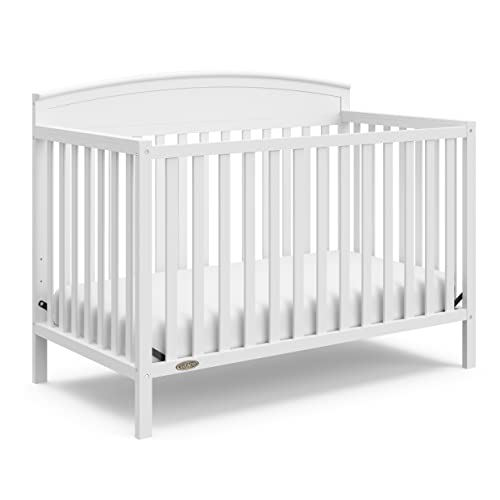
The Graco Benton 5-in-1 Convertible Crib stands out for parents who want a long-term sleep solution that grows with their child, transforming from a secure infant crib into a full-size bed. I appreciate its adjustable mattress heights, letting me lower the support as my baby grows-ideal for safety until they’re over 35 inches tall or start climbing. It’s GREENGUARD Gold and JPMA certified, so I trust it meets strict chemical and safety standards. Made from pine and TSCA-compliant wood, it feels sturdy, though assembly is required. Conversion kits for toddler and full-size beds are sold separately. It includes a one-year warranty and has earned strong parent recommendations.
Best For: Parents seeking a long-lasting, safety-certified convertible crib that transitions from infancy through childhood with adjustable height and durable construction.
Pros:
- Converts from crib to toddler bed, daybed, and full-size bed (with separate conversion kits), offering long-term use
- GREENGUARD Gold and JPMA Certified for low chemical emissions and high safety standards
- Features 4 adjustable mattress heights for safety and convenience as baby grows
Cons:
- Toddler bed and full-size bed conversion kits sold separately, increasing overall cost
- Requires assembly, which may be time-consuming or challenging for some users
- Standard full-size crib mattress not included, adding to initial purchase expense
Factors to Consider When Choosing a Bed for Infants
You’ll want to check for safety certifications first-look for labels that meet current U.S. standards to guarantee the crib won’t pose hidden risks. A convertible design lets you adjust the bed as your child grows, while an adjustable height mattress support helps you lift your baby safely and reduces strain over time. Sturdy materials, a solid weight capacity, and reliable construction all work together to support healthy sleep patterns and give you peace of mind during nightly use.
Safety Certifications
When choosing a crib for your infant, prioritizing safety certifications helps guarantee the sleep environment is free from harmful chemicals and structural risks. Look for GREENGUARD Gold Certification, which confirms the crib has been tested for over 10,000 chemicals and VOCs, supporting cleaner indoor air. You should make certain the crib meets ASTM and CPSC safety standards, as they cover critical factors like slat spacing and structural stability. Check for CPSIA compliance to verify lead and phthalate levels are below federal limits, reducing toxic exposure. Opt for JPMA-verified products, since they undergo third-party testing to meet all U.S. safety requirements. Consider cribs independently reviewed by groups like the Baby Safety Alliance for unbiased validation. These certifications together offer measurable assurance of safety, construction quality, and performance-helping you make informed choices that support your infant’s health and rest without unnecessary risk.
Convertible Design
While some parents prefer simplicity, a convertible crib grows with your child, shifting from infant crib to full-size bed across multiple stages. You’ll find most models offer at least four configurations: crib, toddler bed, daybed, and full-size bed, supporting use into adolescence. Adjustable mattress heights-often up to four positions-help keep your infant secure early on and allow safer access as they grow. Keep in mind that conversion kits are sometimes sold separately, so check what’s included before buying. Full-size conversion means the bed adapts to fit a standard full mattress later, extending its life. Many convertible cribs carry GREENGUARD Gold Certification, so you know they’ve been tested for over 10,000 chemicals and VOCs. That helps maintain cleaner indoor air, which matters for your child’s long-term health.
Material Quality
Durability and safety start with thoughtful material choices. You want cribs built from sustainably sourced solid wood, like New Zealand pine, because it holds up over time without warping or weakening. Always check for non-toxic finishes and low-VOC paints-these reduce your baby’s exposure to harmful chemicals during sleep. Look for GREENGUARD Gold Certification; it means the crib’s been tested for more than 10,000 VOCs and meets strict chemical emissions standards. Choose models with heavy-duty metal mattress supports, which offer better long-term stability and weight capacity than plastic or thin wire frames. Avoid materials containing phthalates or lead. Confirm the crib meets CPSIA standards, ensuring chemical levels are well below federal limits. You’re not just buying a bed-you’re creating a safer sleep space built to last through nightly use and growth. Each detail supports your baby’s health and your peace of mind.
Adjustable Height
Many infant cribs come with three to four adjustable mattress positions, giving you a practical way to adapt the bed as your baby grows. You’ll start with the mattress at its highest level, which lets you lift your newborn with less back strain. As your baby begins to sit or pull up-usually by 5 to 8 months-you’ll lower the mattress to prevent climbing and reduce fall risks. Most safety guidelines suggest making this change when your baby reaches about 35 inches or shows increased mobility. Adjusting the height supports both safety and comfort over time. You’ll want to check the crib’s instructions for proper repositioning, since mechanisms vary by model. Well-built cribs make the process simple, with tools-free adjustments. Using this feature correctly helps create a secure sleep space through each stage, letting you respond proactively to your baby’s development without needing a new bed.
Weight Capacity
A well-chosen crib handles your baby’s growth from newborn to toddler, and one key factor is weight capacity. Most infant beds support a minimum of 7 lbs, but max limits vary-you’ll see 15 to 50 lbs depending on design. Bassinets and portable sleepers usually cap at 15–25 lbs, fitting newborns but requiring shift as your baby gains weight. Standard cribs and convertible models typically support up to 50 lbs, lasting well into toddlerhood. Exceeding a bed’s limit risks structural failure, raising safety concerns. Manufacturers set these limits after rigorous testing under ASTM and CPSC standards, so always check the label. Choosing the right weight capacity means matching the bed to your baby’s expected growth, ensuring stability and safety without unnecessary early replacements. It’s a small detail that supports long-term, worry-free sleep.
Portability Features
When moving your baby between rooms or traveling regularly, a well-designed portable crib can make all the difference. You’ll want a model under 13 pounds so it’s light enough to carry without strain. Look for cribs that fold down to less than 20 inches in any direction-they’ll fit easily in trunks or tight storage spaces. Quick, tool-free assembly lets you set it up or break it down fast, which matters when you’re juggling a fussy newborn. Many portable cribs come with built-in carry bags, making transport hands-free and protecting the frame from dirt and damage. If you need to shift it often, pick one with lockable wheels for smooth movement and stable locking when still. These features don’t just add convenience-they help maintain consistent sleep routines wherever you are.
Sleep Environment
What makes a crib truly safe for your newborn? A firm mattress and tight-fitting sheet are essential-they reduce suffocation risks and meet safety standards. You’ll want breathable mesh or slatted sides for steady air flow, helping prevent overheating. Skip loose bedding, pillows, stuffed animals, and bumpers; each raises SIDS risk. Keep the room between 68°F and 72°F for safe, comfortable sleep. Choose materials low in VOCs-look for GREENGUARD Gold Certified wood or finishes to limit chemical exposure. A clean, open sleep surface with safe airflow and non-toxic construction supports healthy breathing and rest. You’re not just picking a bed-you’re building a sleep environment proven to protect.
Ease Of Assembly
Though you’re keen to set up the nursery, don’t overlook how quickly and smoothly a crib comes together-especially when sleep is short and time is precious. Look for models with tool-free assembly; they typically take under two minutes and cut down on frustration. A lightweight frame, under 30 pounds, makes moving and positioning easier, reducing physical strain. Cribs with fewer than 10 main parts and no need for special tools often lead to higher satisfaction. Pre-attached components, like fixed side rails or built-in hardware, simplify setup even more. Clear, printed instructions and labeled parts help you avoid mistakes and save time. These features don’t just speed things up-they make the process less stressful when you’re already tired. Prioritizing ease of assembly means you’ll spend less time reading manuals and more time preparing for your baby’s arrival.
Frequently Asked Questions
How Long Can a Baby Use a Bassinet?
You can typically use a bassinet until your baby is around 4 to 6 months old, or until they start pushing up on their hands, roll over, or sit up unassisted. Most models support babies up to about 15 to 20 pounds. Once these milestones occur, it’s time to move to a crib for safety. Always monitor developmental cues, as each baby grows at their own pace. Check your bassinet’s weight and height limits to confirm proper timing.
Are Portable Cribs Safe for Newborns?
Yes, portable cribs can be safe for newborns if they meet current safety standards. You should check for JPMA certification, sturdy construction, and a snug-fitting mattress. Guarantee the sides lock securely and the mesh is tightly woven with no loose threads. Avoid older or damaged models. Many top brands offer warranties and trial periods, so you can test stability and ease of use before committing.
Can I Reuse Crib Parts for a Second Child?
You can reuse crib parts for a second child, but only if they’re in excellent condition and meet current safety standards. Check for recalls, cracks, loose joints, or worn hardware. Avoid drop-side cribs or models over 10 years old. Follow the manufacturer’s guidelines-some void warranties or certifications after second use. Use fresh mattresses and hardware when possible, and inspect everything thoroughly before assembly to guarantee a safe, stable sleep space.
Do These Cribs Fit Standard Crib Mattresses?
Yes, these cribs fit standard crib mattresses, so you won’t have to hunt for custom sizes. You’ll want a snug fit-less than two fingers’ gap between mattress and crib edge-to keep your baby safe. Most models meet current safety standards, and the slats and frame are spaced properly for compatibility. Check the manufacturer’s specs, but you’re likely covered with a standard 28” x 52” mattress. Many include a mattress trial or come with one.
Are Conversion Kits Included With Convertible Cribs?
You’ll usually get a conversion kit with most convertible cribs, but you should check the product details to be sure. These kits let you turn the crib into a toddler bed, daybed, or full-size bed later. Some brands include them free; others sell them separately. The kits attach securely using included hardware, and manufacturers often back them with the same warranty. Look for kits made from durable, matching materials so the final bed stays safe and looks consistent.