How Innerspring Mattress Coil Systems Influence Bounce and Responsiveness
Your mattress’s bounce comes from how the coils respond to pressure, with firmer, lower-gauge wires giving quicker rebound. Pocketed coils move independently, offering targeted support and less motion transfer, while continuous or Bonnell coils provide classic springiness but may wear faster. Coil count and design affect responsiveness and weight distribution. Over time, coil fatigue and foam breakdown can dull bounce. You’ll notice differences in repositioning ease and support based on your sleep style-find the right balance, and you might just discover a more restful night.
Notable Insights
- Coil firmness and wire gauge affect bounce, with thicker, lower-gauge coils offering greater durability and responsiveness.
- Pocketed coils provide targeted bounce and motion isolation by responding independently to pressure changes.
- Bonnell coils deliver classic springiness but lose responsiveness faster due to shared structure and material fatigue.
- Higher coil counts improve elasticity and weight distribution, enhancing overall mattress responsiveness.
- Mattress age and foam degradation in hybrids reduce coil rebound, diminishing bouncy feel over time.
What Makes Innerspring Coils Bouncy?
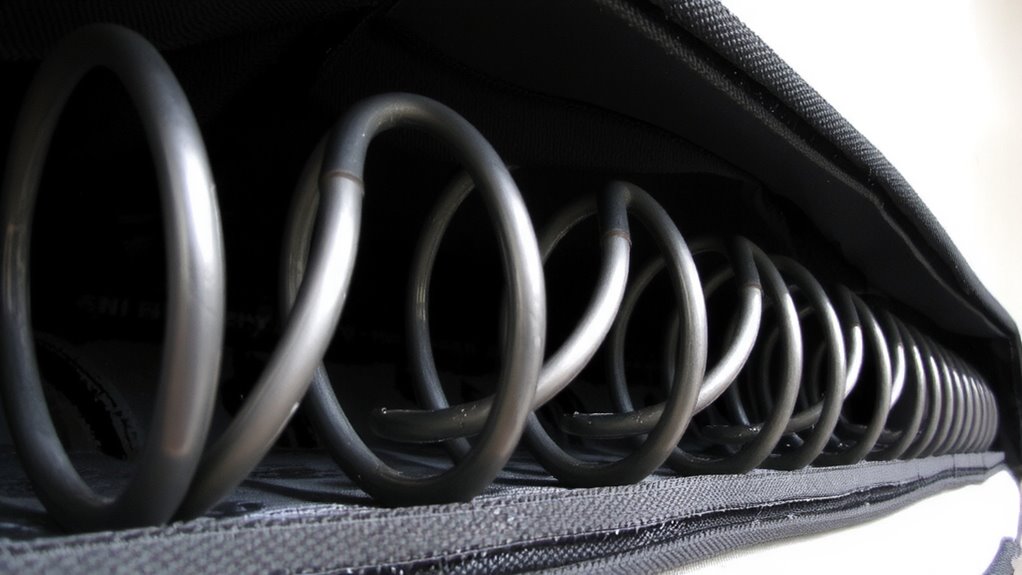
Bounce in an innerspring mattress comes down to coil design and how it responds to pressure. You feel the springiness when coils compress and rebound quickly under your weight. The firmness and spacing of the coils affect how much give and snap you experience. Over time, mattress age impacts this responsiveness-older coils may lose tension, reducing support. Paired with foam layers, especially in hybrid models, foam degradation can also dull the feel. As foam breaks down, it may sleep softer or unevenly, changing how the coils perform beneath. This shift might affect alignment or comfort, especially if you rely on bounce to reposition at night. Checking warranty terms helps, since many cover structural wear. If you value consistent responsiveness, consider models with durable coil gauges and high-density foams. These resist wear longer, maintaining support and bounce through years of use. Test firmness early and monitor changes as your mattress ages.
How Coil Type Changes Mattress Responsiveness

Why do some mattresses respond quickly to your movements while others feel sluggish? The answer lies in the coil type. Bonnell coils, with their symmetrical hourglass shape, offer classic bounce but can develop material fatigue over time, reducing responsiveness. Offset coils, with their pinched coils and enhanced coil symmetry, contour well and react faster to pressure shifts, making them better for those who move at night. Continuous coil systems, made from a single piece of wire, provide firm support but may transfer motion more, affecting sleep partners. Pocketed coils work independently, minimizing motion transfer and maintaining responsiveness longer, as each coil moves without affecting its neighbors. Their design delays material fatigue, supporting better spinal alignment and movement freedom. When considering durability and reactivity, look at the coil type first-it directly shapes how the mattress supports your movements, especially if you deal with restlessness or need support for deeper sleep stages. Many brands offer trials, letting you test responsiveness risk-free.
Coil Gauge and Count: What They Mean for Bounce
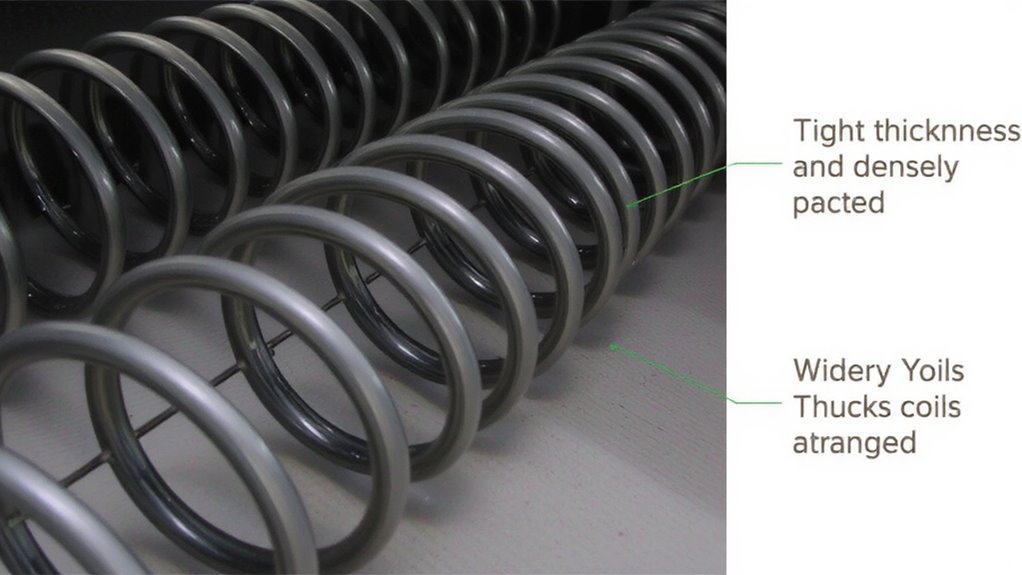
You’ve probably noticed how some mattresses spring back the moment you shift, while others feel slow or flat. That bounce often comes down to coil gauge and count. Lower gauge numbers mean thicker wires, which usually offer more support and better coil durability over time. Higher gauge wires are thinner and may feel softer but can lose responsiveness faster. A higher coil count often improves weight distribution and increases material elasticity, helping the mattress rebound quickly. However, more coils don’t always mean better performance-placement and design matter too. If you move a lot at night or have mobility concerns, a firmer, lower-gauge coil with strong elasticity may help you reposition more easily. Look for models with clear trial periods and warranties that cover structural wear, so you can test responsiveness risk-free. Balancing gauge, count, and personal comfort needs supports healthier sleep patterns over the long term.
Why Pocketed Coils Feel Different Under Pressure
When you lie down on a mattress with pocketed coils, each spring moves independently, responding to your body’s shape and pressure points without transferring motion to nearby areas. This design gives you better motion isolation, so if your partner rolls over, you’re less likely to feel it. That’s helpful if you’re a light sleeper or share the bed with someone who moves often. Pocketed coils also tend to offer more targeted support, conforming closely to your curves while reducing pressure on sensitive areas. While they don’t always provide the strongest edge support compared to reinforced perimeter coils, newer models often include denser foam or additional support around the border to help. The independent movement enhances comfort and reduces disturbance, making this system a smart choice for those prioritizing undisturbed rest. Test the mattress in-store or during a home trial to assess how it supports your preferred sleep position.
Best Coil Systems by Sleep Position and Style
Though your preferred sleep position plays a big role in how a mattress feels, the coil system inside can either support or undermine your comfort depending on how it’s built. If you’re a side sleeper, you’ll want pocketed coils with targeted flexibility for side sleeping comfort, allowing shoulders and hips to sink slightly while keeping your spine level. These coils reduce motion transfer and adapt closely to body contours. For back support alignment, especially if you sleep on your back or stomach, continuous coils offer firmer, uniform support that limits sinkage and promotes spinal balance. They’re durable and provide strong edge support, which helps with mobility. Hybrid designs with pocketed coils and added foam layers give a balance of responsiveness and pressure relief. Always check trial periods and warranties-most quality brands offer at least a 10-year warranty and 90-night sleep trials-so you can test how the coil system performs in your real-life routine.
On a final note
You’ll notice how coil type and gauge affect bounce and support-higher coil counts often mean better durability, while pocketed coils reduce motion transfer. If you sleep on your side, softer padding over coils may help; back and stomach sleepers might prefer firmer, more responsive setups. Consider a mattress with a solid trial period and warranty, especially since innerspring feel can vary widely. Test models if possible, focusing on edge support and responsiveness.