Circadian Rhythms and Aging: Maintaining Healthy Sleep Habits as You Grow Older
As you age, your circadian rhythm shifts, making you feel sleepy earlier and wake up sooner. This change, tied to lower and earlier melatonin release, can disrupt sleep quality. You can reset your body clock by getting 20–30 minutes of morning light soon after waking, either outdoors or with a 10,000-lux light box. Stick to a consistent sleep schedule, limiting daily variations to 30 minutes. Avoid late meals, screens, and blue light at night, since they delay melatonin and disturb sleep. Daytime movement, especially in natural light, supports better sleep timing and depth. If poor sleep continues despite changes, a medical evaluation might identify treatable causes like sleep apnea or hormone imbalances. Options including therapy or temporary sleep aids exist, but work best alongside routine and light adjustments. There’s more to explore about fine-tuning your sleep habits as you go.
Notable Insights
- Aging shifts circadian rhythms, causing earlier sleep and wake times due to changes in melatonin and sleep architecture.
- Morning light exposure within one hour of waking helps reset the body’s internal clock and boosts alertness.
- Maintaining a consistent sleep schedule daily, including weekends, stabilizes the circadian rhythm after age 50.
- Avoid late-night meals and screen use, as digestion and blue light can disrupt melatonin and delay sleep onset.
- Regular daytime physical activity, especially outdoors, supports better sleep, while persistent issues warrant medical evaluation.
How Aging Shifts Your Sleep Schedule
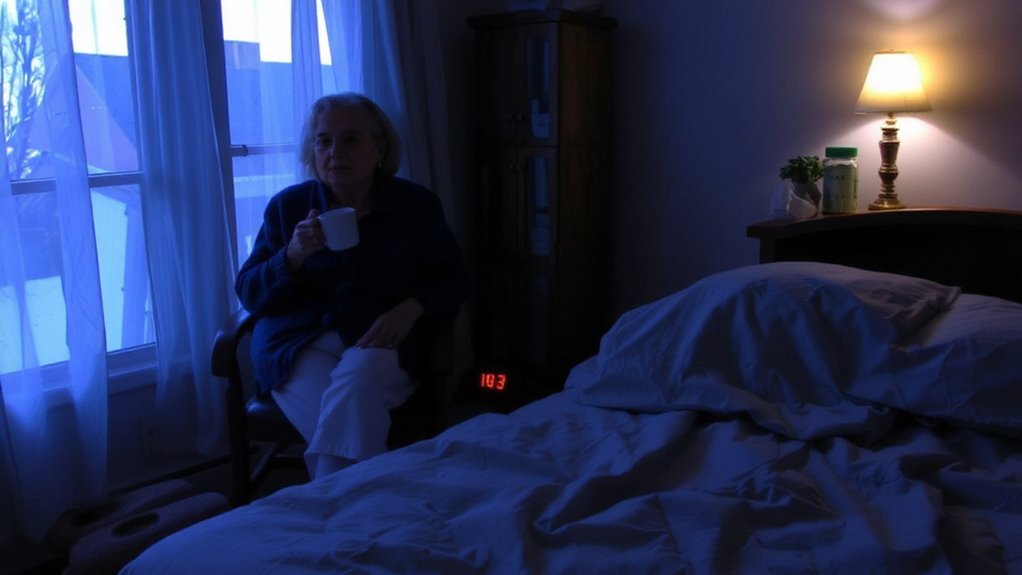
As you get older, it’s common for your internal clock to shift, making you feel tired earlier in the evening and wake up earlier in the morning than you used to. This change is linked to declining melatonin production, which starts later in the evening and peaks sooner, altering your sleep-wake cycle. Over time, your sleep architecture also shifts-deep sleep decreases, and REM cycles shorten, leading to lighter, more fragmented rest. These natural changes don’t always signal a disorder, but they can affect how refreshed you feel. If early awakenings or nighttime restlessness become bothersome, consider tracking your sleep patterns before trying aids. Over-the-counter melatonin supplements may help, but timing and dosage matter-low doses (0.5–1 mg) taken 1–2 hours before bed offer gentler support. Always consult a provider if sleep disruptions persist, as they could indicate underlying issues needing evaluation. For those considering supplementation, selecting a high-quality product is essential, and third-party tested melatonin supplements often provide greater assurance of purity and potency.
Fix Your Body Clock With Morning Light

You’re not stuck with an early-rising rhythm just because it’s become your norm. Morning light exposure helps reset your body clock, especially when timed right after waking. Natural light signals your brain to reduce melatonin, boosting alertness and improving wake timing. Aim for 20–30 minutes outside within an hour of waking, even on cloudy days. If getting outdoors isn’t possible, light therapy boxes that emit 10,000 lux can work-they’re designed to mimic sunlight and support circadian alignment. Position the light at about 16–24 inches from your face, angled slightly downward. Use it consistently each morning for best results. This isn’t a quick fix, but regular use may help shift sleep patterns over several weeks. No major side effects are reported for standard use, and many devices come with a 1–2 year warranty.
Keep a Consistent Sleep Routine After 50

Even if your sleep feels unpredictable, sticking to a regular bedtime and wake time can stabilize your circadian rhythm, especially as your body’s internal clock becomes more sensitive after 50. Bedtime consistency helps reinforce your natural sleep-wake cycle, making it easier to fall and stay asleep. It’s a core part of good sleep hygiene, signaling your body when it’s time to wind down or wake up. Try setting a fixed schedule-even on weekends-to strengthen this rhythm over time. Small deviations can disrupt your progress, so aim for no more than a 30-minute variation daily. This practice supports deeper, more restorative sleep without relying on sleep aids. You might not notice changes right away, but most people see improvements within a few weeks. If sleep issues persist, consider consulting a professional to explore underlying causes.
Avoid These Nighttime Habits for Better Sleep
What are you doing at night that might quietly undermine your sleep quality? Late night snacks, especially heavy or spicy ones, can disrupt digestion and make it harder to fall asleep. Your body slows down at night, so eating too close to bed may lead to discomfort or acid reflux. Screen exposure from phones, tablets, or TVs emits blue light, which suppresses melatonin-the hormone that signals it’s time to sleep. Even small amounts can shift your internal clock over time. To support better sleep, try finishing meals at least two to three hours before bed and dimming lights as evening progresses. Swap scrolling for reading a book or listening to calm music. These small changes can improve sleep onset and overall rest. Incorporating supportive tools like the best sleep accessories can further enhance comfort and promote deeper, more restful nights through optimized sleep environment.
Reset Your Rhythm With Daytime Movement
Morning light and physical activity kick-start your internal clock just when it needs it most. Getting outside early helps align your circadian rhythm, especially when paired with consistent exercise timing. Even a 20-minute walk counts as effective outdoor activity and supports better sleep onset at night. Your body responds well to movement during daylight, so aim for at least light exercise each morning or early afternoon. This reinforces natural alertness and improves nighttime rest. While any physical activity helps, outdoor activity adds the benefit of sunlight exposure, which boosts daytime wakefulness. Try to avoid late-day workouts if you’re sensitive to sleep disruption-exercise timing matters more as you age. Regular daytime movement doesn’t need to be intense; consistency and location matter most. Start small, track how you feel, and adjust based on your energy and sleep patterns.
When to See a Doctor for Sleep Problems
How do you know when sleep troubles go beyond the usual ups and downs? If you’re often tired despite spending enough time in bed, or if you struggle to stay asleep, fall asleep, or feel unrested, it might be time for a medical evaluation. Persistent issues could point to sleep disorders like sleep apnea or insomnia. These aren’t just nuisances-they can affect heart health, mood, and daily function. Seeing a doctor helps uncover underlying causes such as medication side effects, chronic pain, or circadian shifts linked to aging. A healthcare provider may recommend a sleep study, lifestyle changes, or targeted treatments. Don’t wait years; if problems last more than a few weeks or disrupt your quality of life, seeking care can clarify your options. Early action supports better outcomes, helping you regain restful nights and steady energy during the day.
On a final note
You might notice sleep changes as you age, but small adjustments can help. Exposure to morning light, consistent bedtimes, and daytime activity support your internal clock. Avoid late meals and screens at night. If problems persist, consult a doctor to rule out disorders. Over-the-counter aids offer short-term relief but come with risks-review ingredients and warnings. Consider non-drug options first, like melatonin under medical guidance, and evaluate effectiveness over a few weeks.