The Impact of Huntington’s Chorea on Sleep Continuity and Duration
Huntington’s chorea disrupts your sleep continuity and duration by throwing your internal clock out of sync with light-dark cycles, leading to delayed sleep onset and nighttime restlessness. You may experience frequent muscle jerks or REM disruptions, reducing sleep quality. Lower melatonin levels make it harder to fall and stay asleep. Practicing good sleep hygiene and discussing timed melatonin or light therapy with your care team can help. Options exist to better align your rhythm and improve rest over time.
Notable Insights
- Huntington’s chorea disrupts circadian rhythms, leading to irregular sleep timing and reduced sleep continuity.
- Melatonin deficiency in Huntington’s impairs sleep onset and weakens the body’s natural sleep-wake cycle.
- Nocturnal myoclonus causes frequent muscle jerks that interrupt sleep, reducing overall sleep duration.
- REM sleep fragmentation diminishes restorative sleep quality despite adequate time spent in bed.
- Poor sleep exacerbates motor and cognitive symptoms, creating a cycle of worsening sleep and disease severity.
How Huntington’s Chorea Disrupts Sleep
While Huntington’s chorea primarily affects movement and cognition, it also deeply influences sleep, often making rest feel out of reach. You may notice your sleep schedule becoming irregular, a sign of circadian misalignment, where your body’s internal clock falls out of sync with daylight and darkness. This misalignment often worsens nighttime restlessness and daytime fatigue. Many with this condition also experience melatonin deficiency, meaning your brain produces less of the hormone needed to signal sleep onset. Without enough melatonin, falling asleep becomes harder, and staying asleep more difficult. Sleep aids that include timed melatonin supplements may help regulate your rhythm, especially when used consistently. Light therapy in the morning can support circadian realignment. Devices like sleep trackers might help you monitor patterns over time. Always discuss treatments with your care team to find balanced, safe options tailored to your needs.
Common Sleep Disorders in Huntington’s
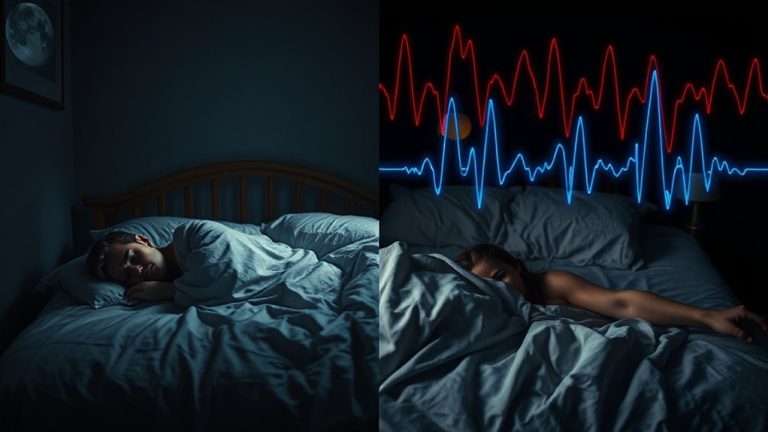
Sleep troubles in Huntington’s often go beyond simple insomnia-they can point to specific sleep disorders that need attention. You might experience nocturnal myoclonus, sudden muscle jerks at night that disrupt your sleep cycle and reduce rest quality. These aren’t just twitches-they’re frequent and rhythmic, often requiring evaluation through overnight monitoring. REM fragmentation is another common issue, where your dream-stage sleep breaks up, leaving you less rested even after long hours in bed. This can affect mood and focus the next day. Doctors may recommend a sleep study to pinpoint these patterns. Treatments vary-one option might include medications that stabilize muscle activity or improve sleep architecture. Devices like CPAP machines aren’t always needed, but if breathing disruptions are found, they could help. Always discuss trial periods and potential side effects with your care team.
Why Sleep and Symptoms Make Each Other Worse
You’re not imagining it-poor sleep and Huntington’s symptoms can feed into each other in a cycle that’s hard to break. Circadian misalignment disrupts your natural sleep-wake rhythm, making it harder to fall or stay asleep. This lack of rest worsens motor control and mood, which in turn strains sleep further. A neurotransmitter imbalance, especially in dopamine and melatonin, plays a key role in both movement symptoms and sleep disruptions. Below is a quick overview of how these elements interact:
| Factor | Effect on Sleep | Effect on Symptoms |
|---|---|---|
| Circadian misalignment | Irregular sleep timing | Increased fatigue, mood shifts |
| Neurotransmitter imbalance | Reduced sleep quality | Worsened chorea, anxiety |
| Poor sleep | Daytime drowsiness | Reduced cognitive function |
Monitoring patterns and discussing sleep aids with your care team may help interrupt this cycle.
What’s Happening in the Brain to Disrupt Sleep?
A tangled web of brain changes lies behind your sleep struggles in Huntington’s chorea. You’re facing a neurotransmitter imbalance, where chemicals like dopamine and serotonin don’t signal properly, making it harder to fall or stay asleep. At the same time, circadian misalignment throws off your body’s internal clock-your sleep-wake cycle runs on a shifted or unstable rhythm. These disruptions aren’t just random; they stem from early damage in brain regions that regulate sleep timing and quality. Your nighttime wakefulness or daytime drowsiness isn’t laziness-it’s biology. Recognizing this helps in choosing targeted support, whether behavioral strategies or timed light exposure. Understanding the root causes lets you weigh sleep aid options more realistically, knowing some may address symptoms but not the underlying brain changes. Always consider treatments that align with your specific sleep patterns and medical advice.
How to Improve Sleep With Huntington’s
What can make sleep better when Huntington’s affects your brain’s sleep controls? Focus on consistent routines and environment. Good sleep hygiene means setting a regular bedtime, limiting screen time before bed, and keeping your room quiet, cool, and dark. Avoid caffeine late in the day and stay physically active, but not too close to bedtime. Medication timing also plays a key role-some treatments can disrupt sleep if taken too late. Work with your doctor to schedule doses earlier in the day. Melatonin supplements might help regulate sleep, but always discuss them first. Monitoring sleep patterns over time helps identify what works. Trials of small adjustments, backed by medical guidance, offer the best chance to improve rest without unnecessary risks. Warranties or guarantees don’t apply here-just careful, informed choices. Establishing a better sleep routine can further support restfulness despite neurological challenges.
On a final note
You can manage Huntington’s-related sleep issues by addressing both symptoms and sleep habits. Consider sleep studies to identify disorders like insomnia or sleep apnea, then discuss treatments with your care team. Some find relief with melatonin or prescription aids, though side effects vary. Weighted blankets or dark, cool rooms often help. Always weigh benefits against risks, and remember that what works may change over time-trial periods and close monitoring improve decisions.