How to Reduce Lower Back Strain With a Properly Positioned Lumbar Support Pillow
A properly positioned lumbar pillow reduces lower back strain by supporting your spine’s natural curve. Place it just above your hips, where your lower back bends inward, to maintain alignment and ease pressure on discs. Pair it with correct chair height, seat depth, and a slightly reclined backrest for best results. Choose a pillow with memory foam or breathable mesh that fits your body and chair. If you notice less stiffness and improved posture, you’re using it right-there’s more to learn about optimizing support.
Notable Insights
- Position the lumbar pillow just above the hips to align with the spine’s natural inward curve.
- Use memory foam or resilient filler to maintain firm, consistent support without collapsing.
- Adjust chair height so feet rest flat and thighs are parallel to the floor.
- Ensure the pillow does not extend above the waist or below the hip bones for targeted support.
- Maintain a 100–110 degree backrest angle to reduce disc pressure and enhance posture.
Why Lumbar Pillows Help With Lower Back Pain
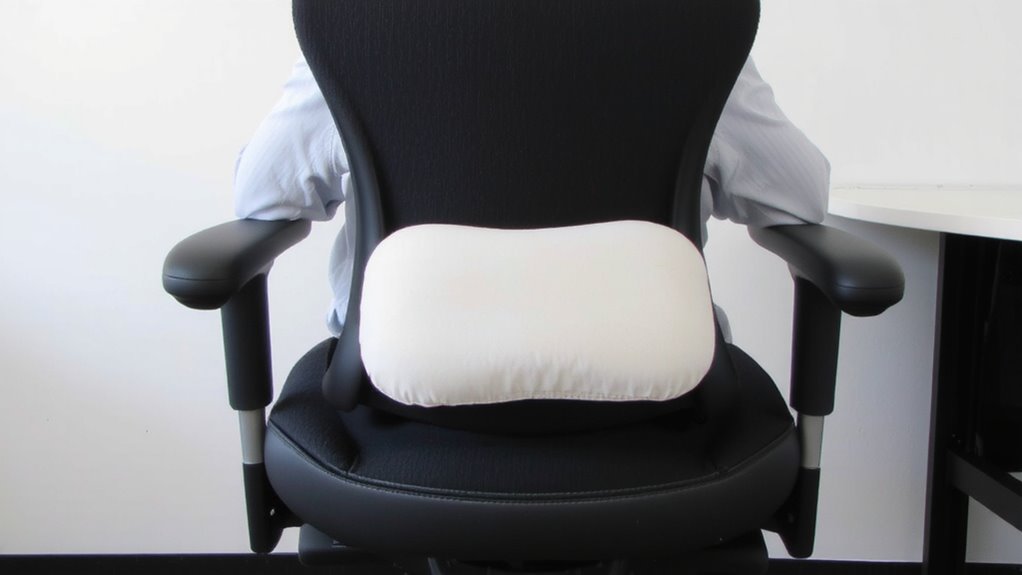
Back health starts with alignment, and a lumbar support pillow can make a real difference in how your spine rests during sitting. When you sit for long periods, your lower back often loses its natural curve, causing strain. A pillow with ergonomic design gently supports that curve, helping maintain proper spinal alignment. This reduces pressure on discs and ligaments, which may ease discomfort over time. Most models use memory foam or resilient mesh, balancing softness and firmness to hold shape without collapsing. Breathable covers help manage heat, making them comfortable for daily use. Many come with adjustable straps to fit various chair types. Look for models offering trial periods or warranties, so you can test support without risk. Small changes in seating support can influence overall back health, especially if you sit often. Proper alignment today might prevent bigger issues tomorrow. Based on reviews and performance, the top picks for lumbar support pillows provide excellent balance of support and comfort for long-term use.
Place the Pillow at Your Lower Back’s Natural Curve
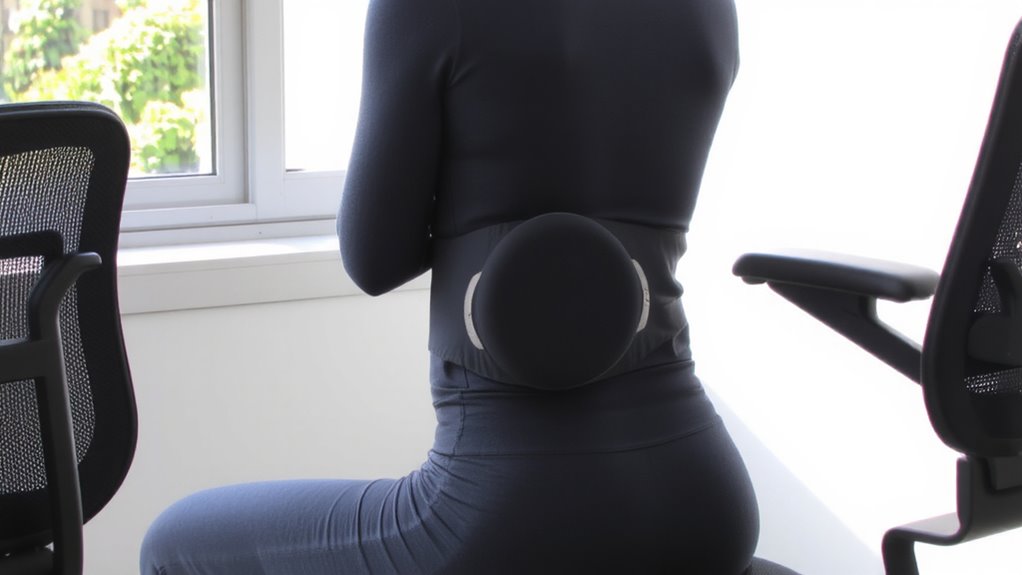
Your spine’s natural curve deserves proper support, and positioning the pillow correctly makes all the difference. Place the lumbar pillow just above your hips, where your lower back curves inward, to maintain proper spinal alignment. This spot helps stabilize your spine and reduces strain on muscles and ligaments. A well-placed pillow encourages consistent posture correction, especially during long sitting sessions. Look for pillows with firm yet compressible filling-memory foam works well-to keep shape over time. Make sure the cover is breathable and removable for easy cleaning. Try different positions briefly to find what feels most supportive. Most quality pillows come with a trial period, so test it for a few days. If discomfort continues, reevaluate placement or consider adjusting the pillow’s firmness. Proper positioning supports long-term comfort and spinal health. For adjustable bed users, choosing the right pillow can enhance alignment and comfort, especially when paired with best pillows for adjustable beds.
Adjust Your Chair to Work With the Lumbar Pillow
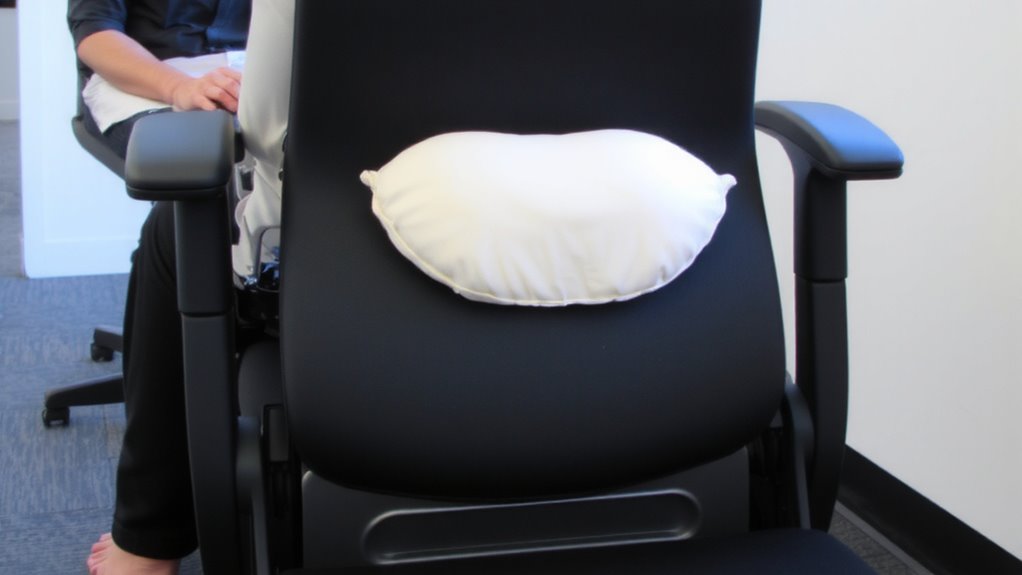
| Adjustment | Recommended Setting |
|---|---|
| Chair height | Feet flat, thighs parallel |
| Seat depth | 2–4 inches behind knees |
| Backrest angle | 100–110 degrees |
| Pillow position | Matches lower back curve |
| Posture | Hips slightly above knees |
These tweaks improve posture and reduce strain.
Choose a Lumbar Pillow That Fits Your Body and Seat
A well-chosen lumbar pillow can make a noticeable difference in comfort and spinal alignment, especially during long seated periods. You’ll want one that matches your body shape and chair depth to guarantee proper ergonomic design. If the pillow’s too thick, it may push you forward; too thin, and it won’t support your lower back. Look for adjustable straps or covers so you can customize fit and tension. Memory foam usually maintains shape well, offering consistent posture alignment, while inflatable models let you fine-tune firmness. Consider trying pillows with trial periods or warranties, so you can test comfort without risk. Make sure the size doesn’t extend above your natural waistline or below your hip bones. A well-fitting lumbar pillow should feel supportive, not intrusive, blending seamlessly with your seat and spine curve.
Avoid These Lumbar Pillow Mistakes
Placing the lumbar pillow too high or too low on your back is a common error that can actually worsen strain instead of relieving it. Incorrect placement disrupts your spine’s natural curve, leading to discomfort over time. You also risk poor results if the pillow has inadequate firmness-it should support, not collapse, under pressure. To help you avoid these pitfalls, consider the following:
| Mistake | Solution |
|---|---|
| Incorrect placement | Position pillow at lower back, just above seat level |
| Inadequate firmness | Choose fill that resists compression, like memory foam |
| Too bulky design | Pick a slim profile that fits your chair |
| Ignoring adjustability | Use straps or covers to fine-tune fit |
Selecting the right pillow means matching support to your posture needs. Test models with trial periods to guarantee long-term comfort.
Use Lumbar Support During Long Sitting Sessions
When you’re sitting for long periods, especially at a desk or during travel, using a lumbar support pillow can help maintain the natural curve of your lower back and reduce the risk of strain. You’ll want to position the pillow so it supports the small of your back, promoting ergonomic alignment and reducing muscle fatigue. A well-placed pillow improves pressure distribution, which means less stress on your spine and discs over time. Look for models with adjustable straps and dense foam that keep the pillow in place without compressing too much. Memory foam options often provide balanced support while adapting to your shape. Most come with a removable, breathable cover for comfort during extended use. Many brands offer a trial period, so you can test the fit. Using lumbar support consistently during long sitting sessions helps prevent discomfort and supports long-term spinal health.
Know the Signs Your Lumbar Pillow Is Working
You’ll know your lumbar pillow is doing its job when you start noticing less stiffness and soreness in your lower back after sitting for hours. Improved posture becomes easier to maintain, as the pillow supports your spine’s natural curve. You’ll catch yourself sitting taller without effort, and slouching feels less comfortable than before. Reduced fatigue throughout the day is another clear sign-your muscles aren’t working overtime to keep you upright. You might also feel less tension radiating into your hips or shoulders. These changes often appear within a week of consistent use. Look for medium-firm support that holds its shape over time. Most quality pillows include a removable cover for washing and offer a trial period, so test it during work or travel. If discomfort fades and focus improves, your body’s telling you it’s working. For those also dealing with radiating pain, consider pairing your lumbar support with a pillow designed for sciatica and buttock pain relief.
On a final note
You’ll know your lumbar pillow works when sitting feels easier and lower back discomfort decreases over time. Position it just above your chair’s base, supporting your spine’s natural curve without pushing too hard. Choose one with firm, contoured foam and a breathable cover that stays comfortable during long sessions. Most quality models come with a 30-day trial and a warranty, so test it in your daily routine. Adjust your chair height and posture as needed, and replace the pillow if it loses shape.