Why Evening Resistance Training Improves Sleep Quality and Bone Density
You’ll sleep deeper and build stronger bones when you lift in the evening because it boosts growth hormone and testosterone during your body’s natural winding-down phase. The controlled muscle fatigue helps you fall asleep faster and stay in restorative deep sleep longer, while hormonal shifts support tissue repair and bone density. Cooling down after exercise aligns with your circadian rhythm, enhancing recovery without sleep aids. Timing and recovery habits make a clear difference-there’s more to how this works the longer you explore it.
Notable Insights
- Evening resistance training boosts growth hormone and testosterone, enhancing bone density and tissue repair.
- It increases deep sleep duration, optimizing recovery and natural tissue regeneration.
- Aligning workouts with circadian rhythm improves sleep onset and overall sleep quality.
- Finishing exercise 60–90 minutes before bed supports melatonin release and reduces cortisol.
- Post-workout protein and carb intake aids muscle repair and stabilizes overnight recovery.
Why Evening Resistance Training Improves Sleep and Bone Health

Why might evening resistance training be one of the smarter choices you can make for both your sleep and bone health? You support hormonal balance and stimulate muscle hypertrophy when you lift later in the day. Resistance training boosts growth hormone and testosterone levels naturally-both essential for tissue repair and bone density. These hormonal shifts occur more effectively after evening workouts due to your body’s circadian rhythm. Muscle hypertrophy isn’t just about strength-it strengthens supporting structures around bones, improving overall skeletal resilience. Since high-impact lifting is less likely to disrupt sleep than once believed, it offers a practical option if you struggle with restlessness or poor recovery. You may find you sleep deeper without needing sleep aids. For those evaluating routines, evening lifting presents a balanced trade-off: it supports long-term bone health and improves sleep patterns without requiring supplements or medications. It’s a sustainable, evidence-backed option worth trying.
How Evening Lifting Enhances Deep Sleep and Recovery

Your evening lifting routine could be the key to more restful nights and better recovery. When you train later in the day, controlled muscle fatigue signals your body to prioritize deep sleep, the stage where tissue repair peaks. This physical demand, paired with improved hormonal balance-like rising growth hormone and stabilized cortisol-supports overnight recovery. You may notice you fall asleep faster and wake feeling more refreshed. If you struggle with sleep onset or light sleep, evening resistance work might offer a natural alternative to sleep aids. It doesn’t replace medical treatment for sleep disorders, but it can complement good sleep hygiene. Start with moderate weights and allow several hours before bed to let your nervous system settle. Over time, track how your energy, sleep quality, and soreness change. Consistency matters more than intensity.
How Evening Lifting Syncs With Your Circadian Rhythm
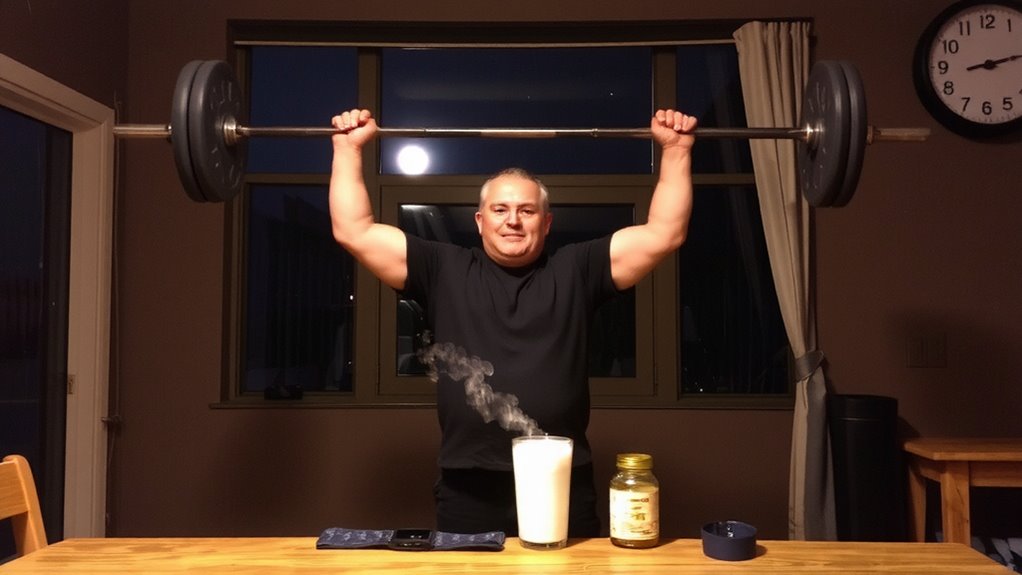
Though your body’s internal clock naturally shifts energy levels throughout the day, evening resistance training can align with its winding-down phase to support better sleep timing. When you lift in the evening, you’re not fighting your biology-you’re using it. This period often allows for improved focus and strength, thanks to higher core temperatures and muscle readiness. That timing promotes circadian alignment, helping your body recognize when it’s time to rest. Exercise-induced fatigue cues your system to initiate recovery processes at a consistent hour, stabilizing sleep patterns. Evening workouts also support hormonal optimization, boosting growth hormone and melatonin release during sleep. These changes improve sleep quality over time, especially for those with irregular schedules. You might find you need fewer sleep aids, as your body increasingly self-regulates. Consistent timing, even on rest days, reinforces this rhythm. Trial a four-week schedule to assess performance and recovery improvements.
When to Lift at Night for Maximum Recovery
So, when should you lift at night to get the most out of recovery? Aim to finish your workout 60–90 minutes before bed. This timing lets your body cool down and cortisol levels drop, helping you fall asleep easier. Lifting too close to bedtime may delay sleep onset, especially if you’re sensitive to stimulation. Proper muscle activation timing means working out late enough that your body benefits from peak strength, but early enough to allow wind-down. After lifting, focus on post workout nutrition-include protein and carbs within 45 minutes to support repair. A balanced snack like Greek yogurt with berries helps recovery without disrupting sleep. If you have a sleep disorder, monitor how late workouts affect your rest, and adjust based on how you feel. Not everyone responds the same, so trial periods of 1–2 weeks help determine your ideal schedule. Consistency matters more than perfection.
How to Wind Down After Evening Workouts
What if winding down after an evening workout could be as effective as the workout itself? You can make it that way with a few smart steps. Start with post workout hydration-drink water or an electrolyte beverage to help your body recover and regulate temperature. Dehydration may disrupt sleep, so replenishing fluids supports rest. Then, try relaxation techniques like deep breathing, gentle stretching, or meditation to lower your heart rate and ease muscle tension. These practices signal your body it’s time to rest, improving sleep onset and quality. Avoid screens and bright lights to support natural melatonin release. If you struggle with sleep disorders, consider tracking your wind-down routine to spot patterns. Sleep aids might help short-term, but lifestyle adjustments often offer lasting benefits. Test strategies over a few weeks to see what works best for your recovery and sleep.
On a final note
You might sleep better and build stronger bones by lifting in the evening, since your body temperature and hormone levels support muscle recovery then. Evening workouts can deepen sleep cycles if done early enough, ideally 3–4 hours before bed. Pair resistance training with a calm wind-down routine to avoid sleep disruption. While sleep aids exist, consistent timing and natural rhythms often work better, with fewer side effects. Try a trial routine for 2–3 weeks to see what your body responds to best.