How Melatonin Supplements Help Regulate Sleep in Shift Work Sleep Disorder
Melatonin supplements can help reset your sleep-wake cycle when night shifts disrupt your natural rhythm. Taken 30 to 60 minutes before your post-shift sleep, even 1 mg can boost drowsiness and improve sleep quality by aligning your internal clock with your schedule. It works best with dark, quiet sleep environments and consistent routines. While short-term use is generally safe, effects vary. You’ll find practical tips that fit your shift pattern further on.
Notable Insights
- Melatonin supplements help realign circadian rhythms disrupted by night shifts by signaling sleep onset.
- Taken 30–60 minutes before daytime sleep, melatonin improves sleep timing and duration for shift workers.
- Low doses (0.5–5 mg) are effective and reduce risks of grogginess or side effects.
- Melatonin works best when combined with good sleep hygiene, like consistent schedules and darkness.
- It supports long-term sleep regulation without sedative effects, aiding adaptation to non-traditional work hours.
What Is Shift Work Sleep Disorder?

Ever wonder why working nights leaves you feeling so drained, even after a full sleep? You might be dealing with Shift Work Sleep Disorder. It happens when your job schedule overlaps with your body’s natural rest time, disrupting your circadian rhythm. This internal clock expects you to sleep at night and be awake during the day. When you flip that, your sleep quality often suffers. You may struggle to fall asleep, wake up too soon, or feel unrested. Poor sleep hygiene-like exposure to light before bed or inconsistent sleep times-can make it worse. The disorder doesn’t just cause fatigue; it can affect focus, mood, and long-term health. Recognizing the signs early helps you take action. Improving sleep habits and considering aids are practical steps. It’s about finding what works for your schedule and body, with room to adjust as needed.
How Does Melatonin Help Shift Workers Sleep?
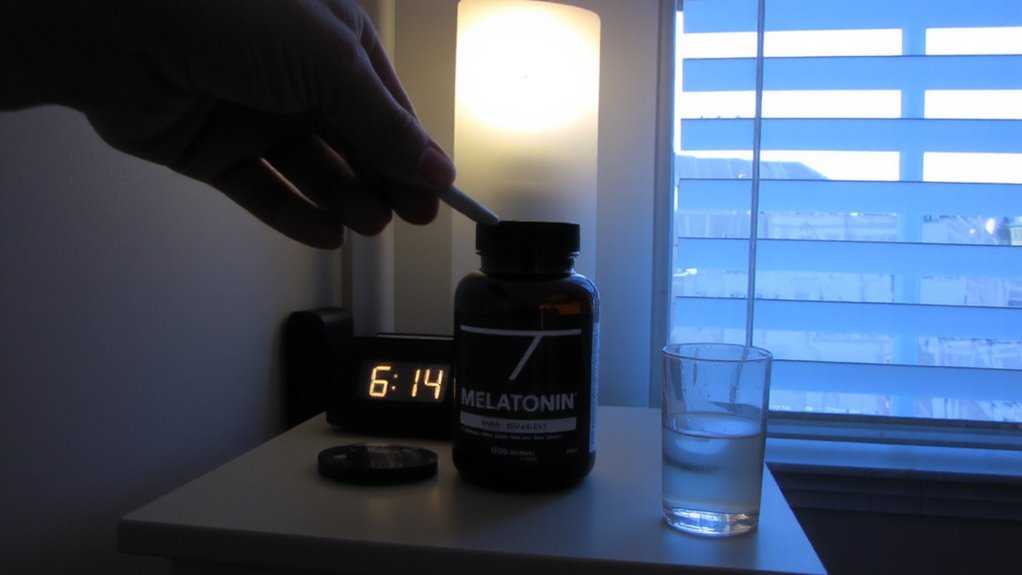
Your body’s natural sleep-wake cycle doesn’t sync well with night shifts, and that misalignment is at the heart of Shift Work Sleep Disorder. This circadian misalignment tricks your brain into staying alert when you need rest, making sleep harder and less restorative. Over time, that disruption can lead to chronic fatigue, poor focus, and long-term health concerns. Melatonin, a hormone your body naturally produces in darkness, helps signal that it’s time to sleep. When taken as a supplement, it can shift your internal clock closer to your work schedule. It doesn’t knock you out but gently promotes drowsiness, supporting sleep onset. Studies suggest consistent use helps regulate sleep patterns in shift workers, especially when combined with good sleep hygiene. Results vary, so starting with a low dose (0.5–3 mg) and monitoring effects is wise.
When Should You Take Melatonin After a Night Shift?

Though timing your melatonin right can make a real difference, taking it too soon or too late might not help much at all. For night shift workers, ideal timing considerations suggest taking melatonin about 30 to 60 minutes before your planned sleep time after finishing work. Since your body’s natural melatonin release is suppressed by light and activity, using the supplement too early-like right after clocking out-can reduce its effectiveness. Instead, integrate it into consistent post shift routines, like brushing your teeth, dimming lights, and avoiding screens. This reinforces your body’s signal that it’s time to rest. Aim to create a predictable pattern, so your internal clock starts adjusting. Doing this regularly helps improve sleep onset and quality over time. While individual responses vary, aligning melatonin use with smart timing and routine habits supports better alignment with your shifted schedule.
What’s the Best Melatonin Dose for Shift Work?
Getting the timing right for melatonin matters, but so does the amount you take. For shift work, the best dose usually ranges between 0.5 to 5 mg, taken about 30 minutes before your planned sleep. Lower doses often work just as well as higher ones and may reduce grogginess later. Research shows that dosage effectiveness improves when paired with ideal timing-aligning melatonin release with your body’s natural wind-down, even during daytime sleep. You might start at 1 mg to assess your response, adjusting slightly if needed. Everyone’s different, so small changes can make a meaningful difference. Don’t assume more is better; evidence supports modest doses for consistent results. Keep track of how you feel upon waking and during your next shift. This helps you fine-tune both dose and schedule over time.
Are Melatonin Supplements Safe for Shift Workers?
Could melatonin be a safe choice for you when coping with shift work disorder? For most, short-term use is well-tolerated, but you should consider potential interactions with medications like blood thinners or antidepressants. Always talk to your doctor first, especially if you have underlying health conditions. While melatonin helps reset your sleep-wake cycle, little is known about its long term effects when used nightly over months or years. Some users report mild side effects like dizziness or daytime drowsiness. It’s not habit-forming, which makes it appealing compared to stronger sleep aids. Still, effectiveness varies from person to person. Monitoring how you feel after starting melatonin can guide adjustments. Though generally safe for shift workers, weighing the benefits against unknown long term effects and potential interactions helps you make a more informed, practical decision.
How to Combine Melatonin With Shift-Work Sleep Habits
When you’re adjusting to irregular hours, pairing melatonin with consistent sleep habits can improve your body’s ability to adapt over time. Focus on strong sleep hygiene-like keeping a cool, quiet bedroom and avoiding screens before bed-to help your mind wind down. Control light exposure carefully: use bright light during your “day” and wear sunglasses after a night shift to signal nighttime. Take melatonin about 30 minutes before desired sleep to support your internal clock.
| Factor | Supports Sleep | Avoid For Better Results |
|---|---|---|
| Light Exposure | Bright light during wake hours | Sunlight before bedtime |
| Sleep Hygiene | Fixed sleep schedule | Caffeine close to bedtime |
| Melatonin Timing | 30 min before sleep | Irregular dosing times |
What Does Research Say About Melatonin for Shift Work?
Studies show melatonin can help shift workers sleep longer and more soundly when used correctly. You may struggle with circadian misalignment, where your body’s internal clock doesn’t match your work schedule, leading to poor sleep and chronic fatigue. Research suggests taking melatonin before daytime sleep helps realign that rhythm. Most trials use 3–5 mg, taken 30 minutes before rest. It doesn’t work for everyone, but when timed right, it improves sleep quality and duration for many. Side effects are usually mild, like drowsiness or dizziness. You’ll get better results when pairing melatonin with dark, quiet sleeping environments and consistent rest times. It’s not a long-term fix on its own-combining it with good habits increases effectiveness. Talk to your doctor if symptoms last, since chronic fatigue may need broader evaluation.
On a final note
Melatonin can help shift workers by aligning your body’s internal clock with your schedule, especially when taken shortly before planned sleep. A low dose-usually 0.5 to 3 mg-often works best, minimizing grogginess. It’s safest for short-term use, alongside good sleep habits like dark, quiet rooms and consistent rest times. Research supports its modest benefit, but results vary, so try it cautiously and track your response over a few shifts.