Why Sleeping on Your Stomach Increases Lumbar Hyperextension and Neck Rotation Stress
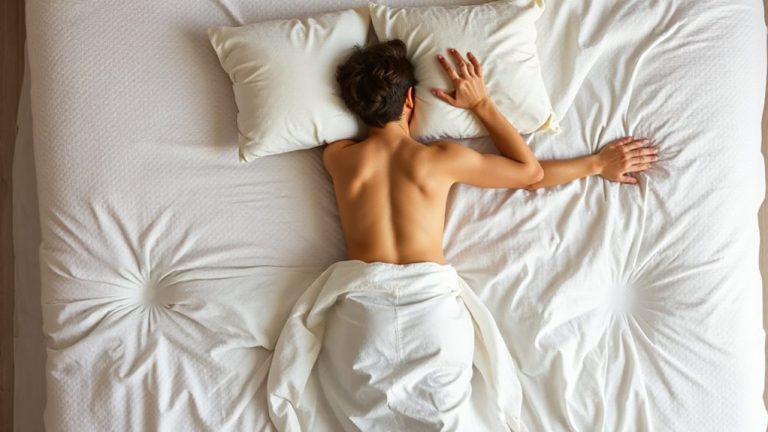
Sleeping on your stomach forces your lower back into excessive arching, increasing lumbar hyperextension as your pelvis tilts forward. This strains back muscles and compresses spinal joints over time. To breathe, you turn your head sideways, causing prolonged neck rotation that stresses cervical tissues and restricts blood flow. Even supportive pillows or mattresses may not fully offset these effects, especially without proper trial periods to test comfort. Choosing better-aligned sleep positions can reduce strain-options that balance support and natural posture offer clearer long-term relief.
Notable Insights
- Sleeping on your stomach tilts the pelvis forward, increasing lumbar hyperextension and straining lower back muscles.
- The spine loses its natural curvature, promoting poor alignment and heightened pressure on discs and joints.
- To breathe, the head must rotate sideways, causing prolonged neck torsion and cervical spine stress.
- Neck rotation compresses soft tissues and restricts blood flow, raising the risk of morning pain and stiffness.
- Even with supportive pillows, stomach sleeping maintains unnatural spinal positioning, worsening long-term joint and muscle strain.
Why Stomach Sleeping Causes Back Pain
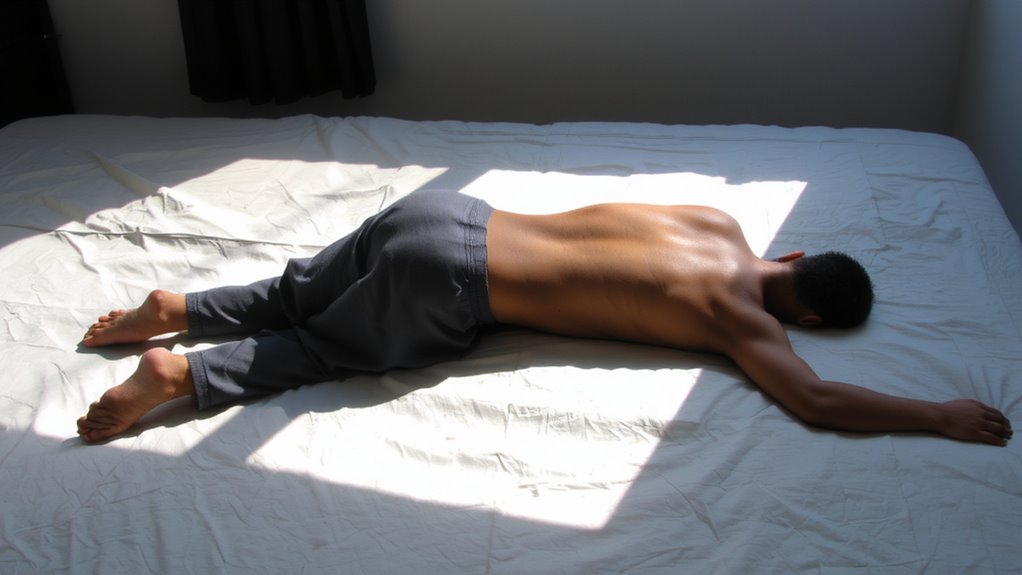
Back pain when sleeping on your stomach often starts with the spine’s alignment. Your body’s natural curves aren’t supported in this position, leading to muscle fatigue as your back works to stabilize overnight. Without proper alignment, joint compression increases along the lower spine, adding stress with every shift. You might not notice it immediately, but repeated strain can worsen over time. Some pillows and mattresses claim to reduce these effects by offering targeted support, though results vary by build and sleep pattern. Look for options with trial periods so you can test comfort and support over several weeks. Firmness should balance pressure relief without encouraging further misalignment. While changing sleep positions helps, adjusting your setup can make a difference if you prefer sleeping on your stomach. Pay attention to how you feel in the morning-it’s a reliable sign of how well your spine is supported. A supportive best mattresses for back pain can significantly improve spinal alignment and reduce discomfort during stomach sleeping.
How Stomach Sleeping Overarches Your Lower Back
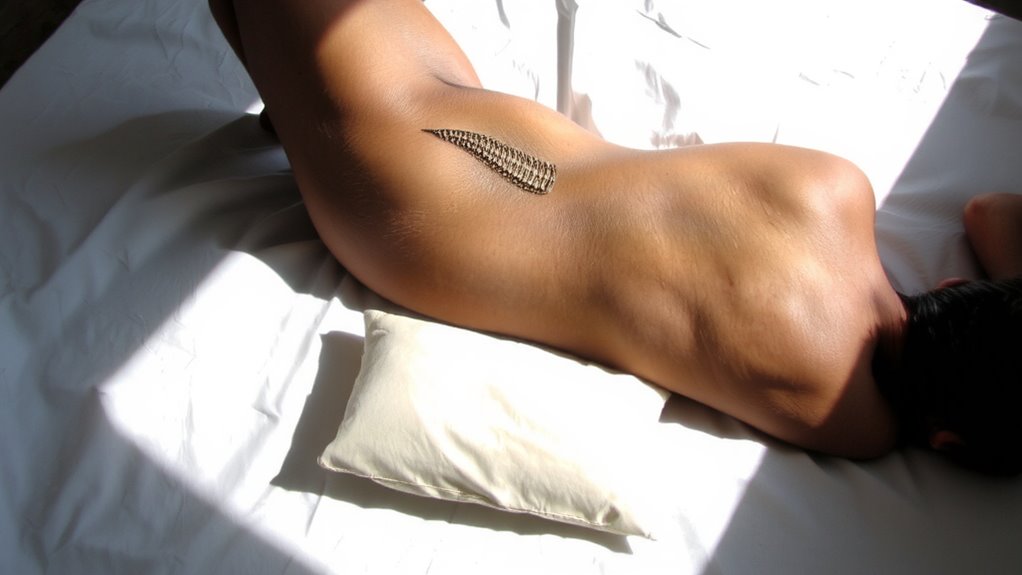
While you’re lying face down, your spine often shifts into an unnatural curve that strains the lower back. This position forces a forward pelvic tilt, tightening your hip flexors and pulling your lower spine into excessive arching. Over time, this posture promotes muscle imbalance, with some muscles overworking while others weaken. Your core can’t stabilize properly, increasing stress on spinal joints. Even firm mattresses may fail to correct this, as the body’s alignment stays compromised. Some sleep aids, like contoured pillows or specialized cushions, aim to reduce pelvic tilt, but results vary by build and sleep pattern. Trial periods on such products let you test comfort and spinal support without risk. While adjustments help, retraining sleep habits remains key. Consider how small changes might ease strain and support better spine health over time. Choosing the right pillow, such as those designed for stomach sleepers, can significantly reduce neck rotation and improve spinal alignment during sleep.
How Stomach Sleeping Twists and Strains Your Neck
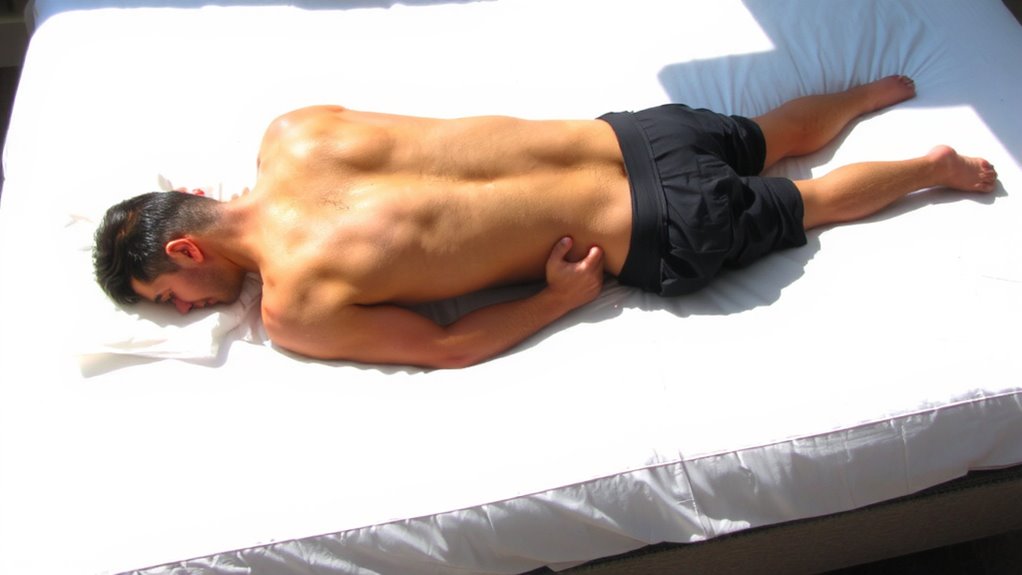
Since your head has to stay turned to the side through the night, stomach sleeping forces your neck into a rotated position that can strain muscles and compress spinal nerves over time. This prolonged neck torsion limits blood flow and irritates soft tissues, increasing the risk of morning stiffness or persistent discomfort. You’re also likely to develop cervical strain, especially if you use a thick pillow that elevates your head too much. Unlike back or side sleeping, stomach sleeping doesn’t support natural spinal alignment, placing uneven stress on your neck’s joints and discs. Consider adjusting your sleep position gradually, using a travel pillow to discourage rolling onto your stomach. Some find success with body pillows or specially designed sleep aids that guide safer posture. Check product details like foam density, warranty length, and trial periods when choosing supports. Small changes can reduce strain and improve sleep quality over time. Side sleepers may also benefit from using a pillow specifically designed to alleviate hip pain relief.
How Spinal Misalignment Leads to Sleep Pain
You’re probably already aware that turning your head to the side while sleeping on your stomach strains your neck, but that’s just one part of a bigger issue-how misalignment of your entire spine can contribute to sleep-related pain. Poor spinal alignment increases pressure on discs and joints, raising risks for spinal degeneration and nerve compression over time. This stress can disrupt sleep quality and worsen discomfort nightly.
| Factor | Impact on Sleep |
|---|---|
| Spinal misalignment | Reduces natural support, increasing muscle tension |
| Lumbar hyperextension | Promotes lower back strain during rest |
| Nerve compression | May cause tingling or radiating pain |
| Spinal degeneration | Accelerates wear, reducing resilience over time |
Adjusting sleep position or using supportive pillows might help maintain alignment. Some sleep aids are designed to reduce strain, often with trial periods to test effectiveness. Consider these factors carefully to support long-term spinal health and uninterrupted rest.
Common Back and Neck Problems From Stomach Sleeping
Why do so many stomach sleepers wake up with stiff necks or sore backs? Because this position forces your spine into unnatural curves. Your neck stays rotated for hours, increasing strain on muscles and joints. You’re likely to develop muscle fatigue from holding that twisted posture all night. At the same time, joint stiffness creeps in, especially in the lower back, where lumbar hyperextension compresses vertebrae. Over time, this can lead to chronic discomfort or disrupted sleep. You might not notice it at first, but repeated stress adds up. Using a thin mattress or overly firm pillow can make these problems worse by limiting spinal support. Switching to a more neutral sleep posture helps reduce these risks. Look for sleep aids like contoured pillows or supportive mattresses designed to align the spine. Checking return policies or trial periods helps you test solutions safely.
Best Sleep Positions to Replace Stomach Sleeping
A shift in sleep posture can make a real difference for spinal health, especially when moving away from stomach sleeping. Prioritizing body alignment and proper pillow elevation helps reduce strain on your spine and neck. Two effective alternatives are side and back sleeping, both offering better spinal support.
| Sleep Position | Benefits |
|---|---|
| Side Sleeping | Improves body alignment, reduces snoring, pairs well with pillow elevation between knees |
| Back Sleeping | Maintains natural spine curve, minimizes neck rotation, supports even weight distribution |
| Fetal Position | Offers comfort, enhances body alignment with slight tuck, ideal with contoured pillows |
| Zero Gravity | Uses adjustable bed to optimize pillow elevation and body alignment, reduces lumbar stress |
Choose positions that support neutral spine positioning. Test options using supportive mattresses and pillows to see what improves your comfort and alignment over time.
Easy Tips to Stop Sleeping on Your Stomach for Good
How do you break a habit that happens while you’re asleep? Start with simple behavioral modification techniques. Switching from stomach to side or back sleeping takes time, but consistent changes to your sleep hygiene can help. Try placing a pillow under your chest or abdomen to reduce the urge to turn over. Use a body pillow to support your new position and limit movement. Invest in a supportive mattress and pillow that align your spine naturally. Avoid screens before bed and set a regular sleep schedule to improve sleep hygiene. You might wear a soft sleep shirt with a small ball sewn between the shoulder blades-it can gently remind your body not to roll forward. Most people succeed within a few weeks of daily practice. Give these strategies a trial run for at least 21 nights to fairly assess their effectiveness.
On a final note
You’re more likely to strain your lower back and neck when sleeping on your stomach, as it forces your spine into an exaggerated arch and your head to twist sideways. This misalignment can worsen over time, leading to chronic discomfort. Instead, try side or back sleeping to support natural spinal curves. Use a supportive mattress and a thin pillow for better alignment. Many people find relief within weeks by making small changes-trial adjustments for at least 21 days to assess improvement.