How Innerspring Mattress Covers Can Be Hypoallergenic
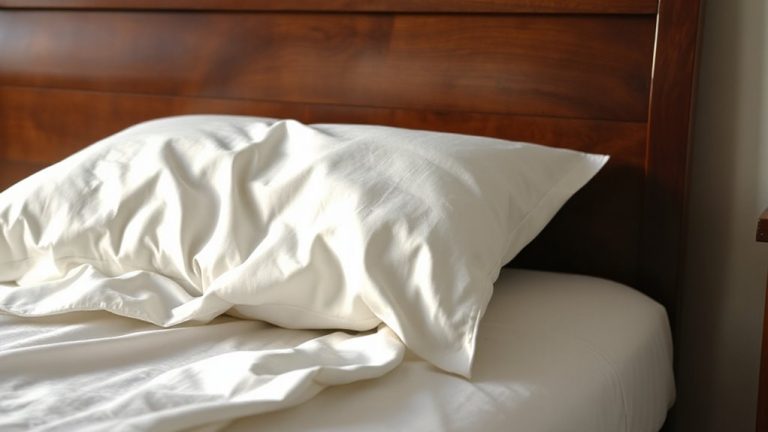
Your innerspring mattress can harbor dust, moisture, and allergens in its foam layers and coil gaps, but a hypoallergenic cover helps by sealing the surface with tightly woven organic cotton or bamboo fabric. These natural fibers resist dust mites and mold while allowing airflow. Look for a zippered encasement that’s breathable, moisture-resistant, and free from harsh chemicals. Many come with trial periods, so you can test comfort and protection-smart choices like these make managing allergies easier.
Notable Insights
- Tightly woven natural fabrics like organic cotton or bamboo block dust mites and allergens effectively.
- Hypoallergenic covers use polymer barriers to prevent allergen penetration without compromising breathability.
- Moisture-resistant coatings and natural fiber properties inhibit mold and mildew growth in humid environments.
- Zippered encasements fully seal innerspring mattresses, preventing allergen accumulation in coils and foam layers.
- Avoiding heavy chemical treatments reduces irritation while maintaining effective, long-lasting allergen resistance.
Why Innerspring Mattresses Trap Allergens
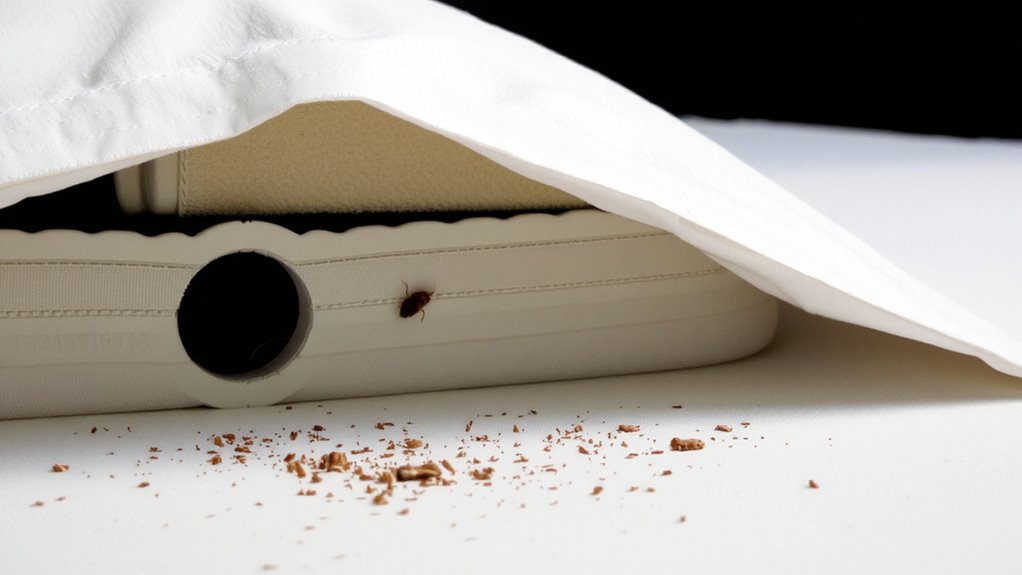
An innerspring mattress might seem like a simple choice, but its construction can create hidden pockets where allergens accumulate over time. The porous structure of the foam layers above the support system traps dust, dead skin, and moisture, creating a welcoming environment for allergens. Beneath that, the metal coils don’t move much, but the gaps between them can collect debris that’s hard to clean. Over time, this buildup may affect your sleep quality, especially if you have sensitivities or respiratory concerns. While the coil system offers solid support, the design doesn’t inherently resist allergens. Airflow around the coils can help reduce moisture, but it won’t stop particles from settling. Choosing a mattress with accessible design features or removable components might help you manage cleanliness. Regular maintenance and protective covers are practical steps to take into account when aiming for a healthier sleep environment. Some models are specifically designed as the best mattresses for dust mite allergies, featuring advanced encasements and antimicrobial materials.
How Hypoallergenic Covers Block Dust Mites and Mold
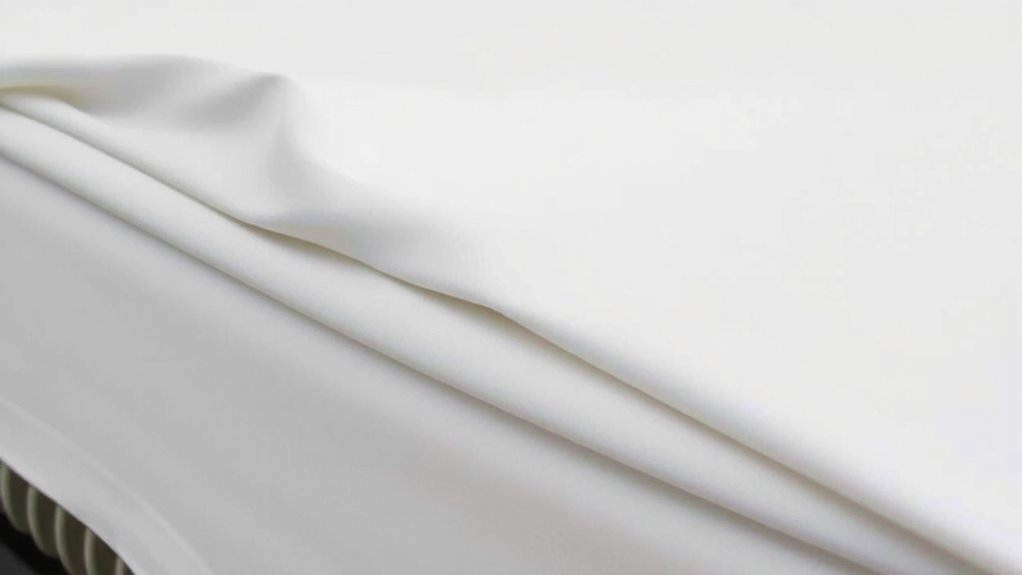
Many hypoallergenic mattress covers use tightly woven fabrics or advanced polymer barriers to keep dust mites and mold spores from reaching the mattress surface. You’ll find these covers act as effective dust mite barriers, blocking the tiny pests and their allergenic waste. The tight weave prevents them from burrowing into the mattress where they thrive. Plus, many include mold resistant coatings that inhibit moisture absorption, reducing the chance for mold growth in humid environments. These features work together to maintain a cleaner sleep environment over time. Most covers allow for regular washing, helping you manage allergens long-term. Look for models with durable seals and breathable layers so comfort isn’t sacrificed. Many brands offer trial periods or warranties, letting you test effectiveness without risk. Choosing one with both dust mite barriers and mold resistant coatings supports better respiratory health and improves sleep quality, especially if you’re sensitive to allergens. Some top-rated options are specifically designed for innerspring mattresses, providing best hypoallergenic protection without compromising on comfort or durability.
Best Hypoallergenic Fabric Materials for Mattress Covers

You’ve seen how tightly woven barriers and mold-resistant coatings help keep allergens at bay, and now it’s time to look at the fabrics behind those protections. Organic cotton is a top choice-it’s breathable, soft, and grown without synthetic pesticides, making it gentler for sensitive skin. Its natural fibers allow airflow, helping regulate temperature while reducing moisture that dust mites love. Bamboo fibers are another strong option, known for their inherent resistance to microbes and moisture-wicking properties. They’re spun into smooth, durable fabric that feels cool to the touch, ideal if you tend to sleep hot. Both materials hold up well over time, especially when blended with minimal synthetics for strength. Look for certifications like GOTS to verify purity. Many brands offer trial periods, so you can test comfort without risk. Choose based on your sleep needs, climate, and skin sensitivities.
5 Must-Have Features in an Allergy-Safe Innerspring Cover
A well-designed allergy-safe innerspring cover does more than just protect your mattress-it actively limits exposure to common triggers like dust mites, mold, and pet dander. Look for tightly woven natural fibers, such as organic cotton or bamboo, which allow breathability while blocking allergens. These materials resist moisture buildup, reducing the chance for mold growth. Avoid covers with heavy chemical treatments, since some finishes may irritate sensitive skin or worsen respiratory symptoms over time. Instead, choose ones labeled as naturally antimicrobial or treated with minimal, non-toxic processes. A zippered, encasement design guarantees full protection, sealing allergens inside the mattress. Make sure the cover feels durable yet soft, and check if it comes with a trial period or warranty-this lets you test comfort and performance without risk. Some of the top models for allergy relief feature covers made with best mattresses for allergies technology to enhance protection and comfort.
How to Clean and Maintain Your Hypoallergenic Cover
While keeping your hypoallergenic innerspring cover clean helps sustain its protective qualities, sticking to the right care routine guarantees it stays effective without damage. Vacuum regularly to remove surface dust, dead skin, and allergens that accumulate over time. This simple step maintains breathability and prevents irritants from settling into the fabric. You should also air frequently by removing the cover and letting it breathe in a well-ventilated space, which discourages moisture buildup and mildew. Most covers aren’t machine-washable, so always check the manufacturer’s instructions before cleaning. Spot clean with a mild detergent if needed, and avoid harsh chemicals that can degrade the allergen-resistant barrier. A well-maintained cover supports better sleep hygiene, especially if you deal with allergies or respiratory sensitivities. Look for models with removable, hypoallergenic layers and trial periods to test comfort and performance over time.
On a final note
You can keep your innerspring mattress clean and allergen-free with a hypoallergenic cover. These covers block dust mites, mold, and other irritants using tightly woven, breathable fabrics like cotton, bamboo, or microfiber. Look for features like zippered encasement, moisture resistance, and OEKO-TEX certification. Most covers are machine washable, making maintenance easy. Check warranty terms and trial periods before buying, so you can test comfort and effectiveness without risk.