How to Choose a Bed Frame That Supports Mattress Integrity and Spinal Alignment
Choose a bed frame that matches your mattress type-memory foam and latex need solid, closely spaced slats, while innerspring works best on sturdy metal or wood. Side sleepers benefit from flexible support, stomach sleepers need firmness, and heavier individuals should pick reinforced frames with center support. Keep slat gaps under 3 inches to prevent sagging. Opt for solid hardwood, steel, or quality engineered wood, and never exceed the weight limit. A proper frame maintains spinal alignment and extends mattress life-knowing these details helps you make a smarter choice.
Notable Insights
- Match your mattress type to a compatible frame: memory foam and latex need solid, slatted support with gaps no wider than 3 inches.
- Choose a platform or sturdy frame with proper slat spacing to maintain spinal alignment and prevent sagging over time.
- Prioritize frames with reinforced center support and durable materials like solid hardwood or steel for long-term mattress integrity.
- Ensure slat spacing is 2.5 to 3 inches to provide even support, especially for foam mattresses that require consistent base contact.
- Select a frame with appropriate weight capacity and support features to match your sleep position and body weight needs.
Pick the Right Bed Frame for Your Mattress Type
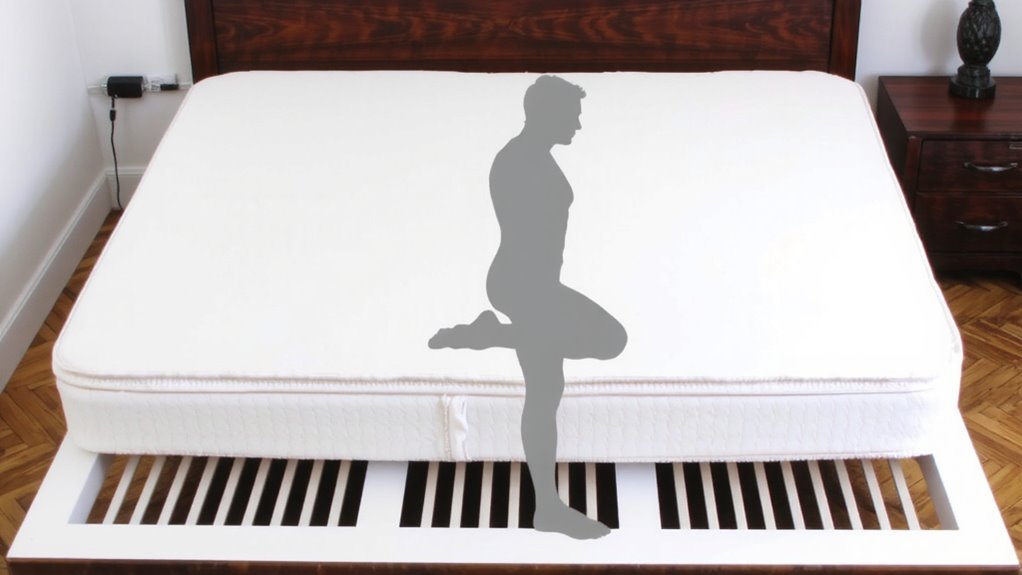
While your mattress plays a key role in comfort and spinal alignment, the bed frame you choose matters just as much-especially when it comes to support and longevity. You’ll need to match your bed size with a frame that fits securely to prevent shifting or sagging over time. Certain mattress types, like memory foam or latex, work best with frames that offer solid, slatted support-wide gaps can reduce stability. For innerspring models, a sturdy metal or wooden frame helps maintain structure. The frame style also impacts compatibility; platform frames often eliminate the need for a box spring, saving space and cost. Bunkie boards fit under low-profile beds to add firmness. Always check manufacturer guidelines-using the wrong frame might void the warranty. A well-matched bed size and frame style helps preserve your mattress’s performance, supports your spine, and improves sleep quality over years. Best bed frames provide both durability and proper foundation for long-term mattress health. Best bed frames ensure optimal support and compatibility with various mattress types.
Match Your Bed Frame to Your Sleep Position and Weight
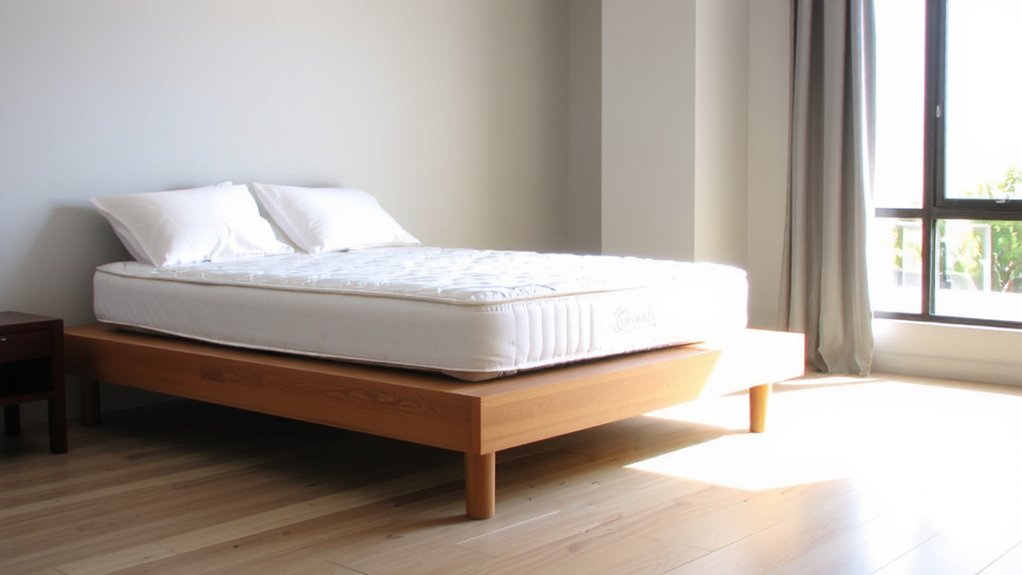
Every sleep position and body weight interacts differently with your bed frame, so choosing the right one helps maintain proper spinal alignment and mattress support over time. If you sleep on your side, your hips and shoulders need more give, so a flexible frame with solid slats can help your mattress cradle those areas without sagging. Stomach sleepers benefit from firmer, more rigid frames that keep the spine neutral. Back sleepers usually need balanced support, so a sturdy frame with even weight distribution works best. Your body weight also affects this-lighter individuals may find softer support sufficient, while those with higher body weight often need reinforced frames to prevent premature wear. A well-matched frame stabilizes your mattress, reducing stress points. Look for models with strong center supports and warranties of 10 years or more to guarantee long-term performance.
Check Slat Spacing for Solid, Even Support
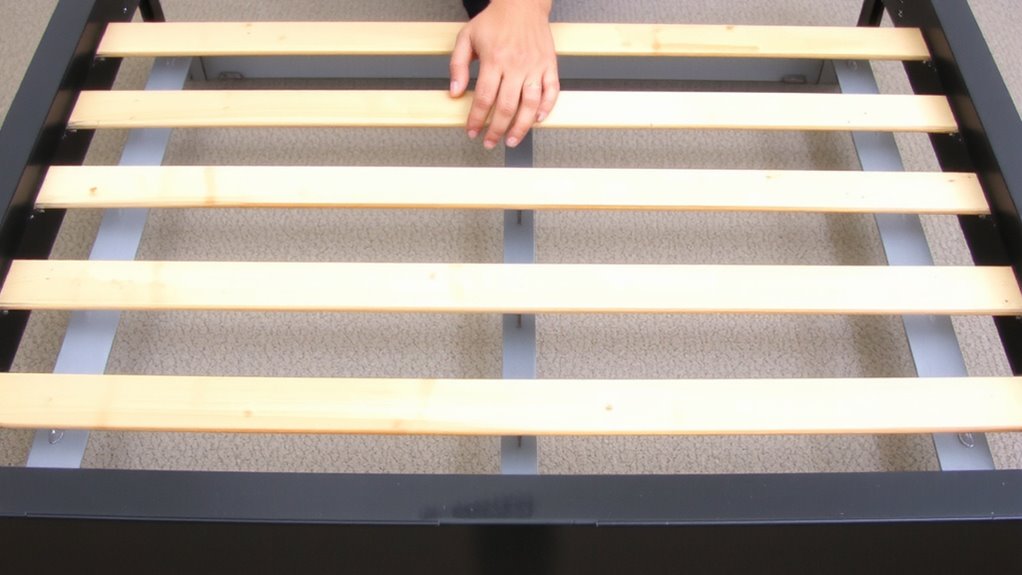
If you want your mattress to stay supported and keep your spine aligned, you’ll need to pay close attention to how far apart the slats are on your bed frame. Gaps wider than 3 inches can sag your mattress over time, reducing support consistency and affecting spinal alignment. Look for slats spaced 2.5 to 3 inches apart for maximum performance. Slat durability matters too-well-constructed frames use solid wood or reinforced composites that resist warping. Weak slats flex unevenly, creating pressure points that disrupt sleep quality. Foam mattresses perform best on frames with consistent slat spacing to maintain structural integrity and support.
| Support Issue | Impact on Sleep |
|---|---|
| Wide slat gaps | Spine misalignment, back pain |
| Uneven slats | Pressure points, restless sleep |
| Poor slat durability | Decreased mattress life, costly replacements |
Choose slat design that guarantees long-term support consistency and lets your spine rest naturally.
Choose a Bed Frame Made From Durable Materials
You’ve already checked the slat spacing to make sure your mattress stays properly supported, but the material of the bed frame itself plays just as big a role in long-term stability. Choosing a frame made from solid hardwood, steel, or high-grade engineered wood improves material durability, helping prevent warping or sagging over time. These materials maintain consistent support, which is key for both mattress shape and your spine’s alignment during sleep. Well-constructed frames often feature reinforced joints and protective finishes that boost frame longevity, especially in changing humidity or temperature. Avoid flimsy particleboard or thin metal-they may save money now but often fail within a few years. Look for models with warranties of 5 years or more, as brands confident in their material durability usually back their work. A sturdier frame means less shifting at night and fewer disruptions to restful sleep. Top picks in this category often feature best bed frames under $1000 that combine durability with value.
Don’t Exceed Your Bed Frame’s Weight Capacity
While it might seem like a minor detail, staying within your bed frame’s weight limit is essential for both safety and longevity. Exceeding weight limits stresses joints and braces, reducing frame durability over time. To help you stay within safe parameters, here’s a quick reference:
| Frame Type | Weight Limit (lbs) | Key Factor |
|---|---|---|
| Twin Metal | 300 | Reinforced crossbars |
| Full Wood | 400 | Solid slats, sturdy legs |
| Queen Steel | 600 | Center support leg |
| King Hybrid | 700 | Dual center supports |
| Adjustable Base | 550 | Motorized component care |
You’ll protect your mattress and avoid structural damage by respecting these ratings. Frame durability depends on consistent adherence to weight limits. Always check manufacturer specs before purchase-especially if using a partner or heavy bedding. A well-matched frame supports long-term sleep quality without compromise.
Support Spinal Alignment With the Right Bed Frame
When your spine stays properly aligned during sleep, you’re more likely to wake up feeling refreshed and free of aches, and the right bed frame plays a quiet but critical role in making that possible. Look for a frame with ergonomic design that supports your mattress’s structure, helping maintain posture stability throughout the night. Slats should be evenly spaced-ideally no more than two to three inches apart-to prevent sagging and offer consistent support. Metal frames with center support legs reduce flexing, especially in larger sizes, while solid wood frames often provide sturdier long-term performance. Adjustable bed frames can enhance alignment by letting you elevate head or legs slightly, which may help with conditions like sleep apnea. Check warranty length and trial periods when buying, since proper alignment often takes weeks to evaluate. A well-chosen frame works with your mattress to support spine health night after night.
On a final note
You’ve seen how bed frame choice affects your mattress and spine. Matching frame type to your mattress and sleep needs guarantees lasting support. Watch slat spacing-too wide harms mattress integrity. Durable materials like solid wood or steel hold up over time. Stay within weight limits for safety and performance. A proper frame keeps your spine aligned, improving sleep quality. Test warranties and return policies before deciding.