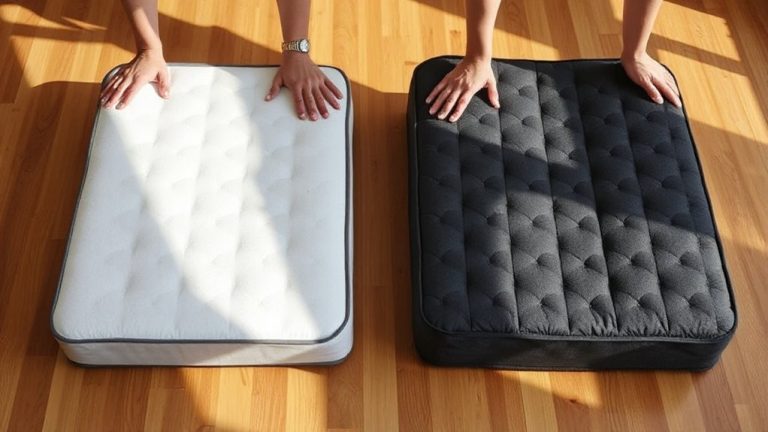
Innerspring Mattress Long-Term Support: Preventing Lumbar Sinkage
Your innerspring mattress can lose lower back support over time if it uses thin, low-gauge coils or low-density foam, leading to sagging and misaligned sleep. Pocketed coils help by offering targeted support, especially when zoned for the hips and lumbar area. High-density foam under the coils resists compression and lasts longer, while reinforced edges and core layers boost stability. Look for coil gauges between 12–15, strong edge support, and a solid warranty-these features signal lasting durability. You’ll find even better results when combining these elements thoughtfully.
Notable Insights
- Choose innerspring mattresses with coil gauges between 12 and 15 for stronger, longer-lasting core support.
- Opt for pocketed coils with zoned support to reinforce the center third and reduce lower back sagging.
- Select high-density foam base layers (above 2.0 PCF) to resist compression and extend mattress lifespan.
- Prioritize edge reinforcement with high-density foam or sturdy coils to prevent sinkage and improve stability.
- Look for models with strong warranties and sleep trials as indicators of durable, sag-resistant construction.
What Causes Lumbar Sinkage in Innerspring Mattresses?
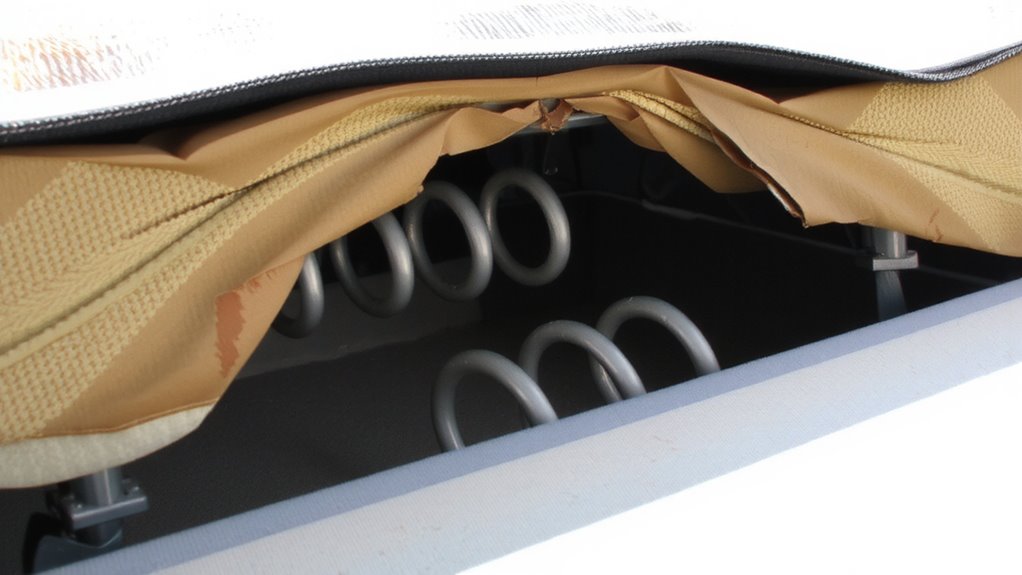
Why does your lower back feel strained after months of sleeping on an innerspring mattress? Over time, poor coil gauge weakens the core support, letting your lumbar area sink below proper alignment. Thinner wires can’t handle consistent pressure, especially if you’re a side or back sleeper needing targeted support. Combine that with inadequate support layers beneath the coils, and the mattress bottoming out becomes more likely. These layers should resist compression, but many entry- to mid-tier models use low-density foams that compact quickly. Without stable reinforcement, your spine isn’t evenly cradled, potentially worsening discomfort. Look for mattresses listing coil gauge (ideally 12–15) and denser base foams or doubled support cores. Check trial periods and sagging policies-some brands cover visible indentations over 1 inch. A solid warranty helps, but construction details matter more in preventing long-term lumbar sinkage. For better spinal alignment and pressure relief, consider models highlighted in the best orthopedic mattresses roundup.
Do Pocketed Coils Prevent Lower Back Sagging?
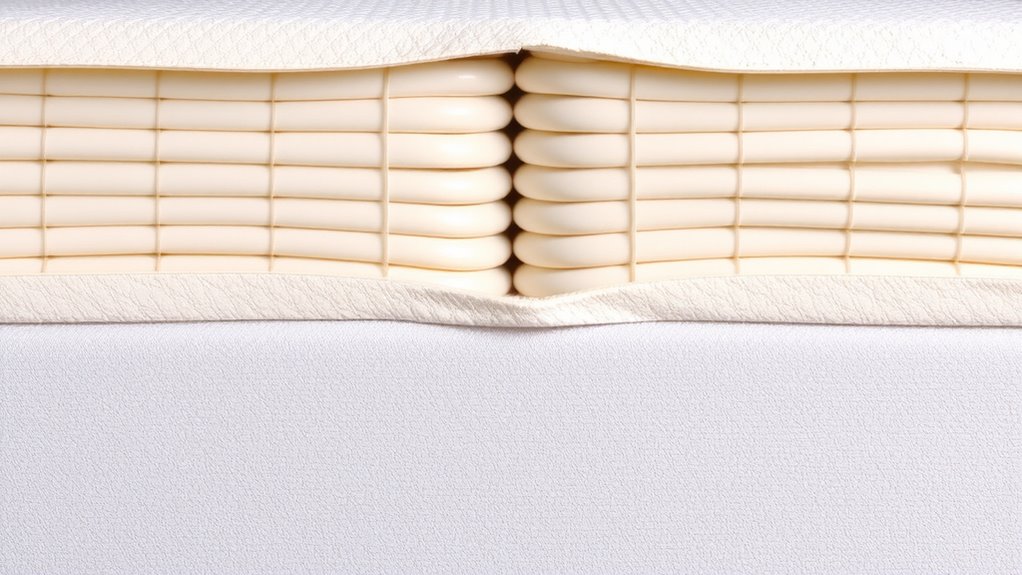
While not a guarantee, pocketed coils can help reduce lower back sagging by isolating motion and conforming more closely to your body’s shape. Thanks to coil isolation, each spring moves independently, so your partner’s movements won’t disrupt your sleep and your spine stays better aligned. Many models also use zoned support, meaning specific areas-like the center third-have extra reinforcement to cradle your hips and lower back. This targeted design helps maintain a neutral spine position, which is key for long-term comfort. You’ll often find these features in higher-end innerspring or hybrid mattresses, where durability and support are prioritized. Look for units with strong edge support and at least a 10-year warranty to guarantee lasting performance. Test the mattress in-store or through a home trial to confirm how well it supports your sleep posture.
How High-Density Foam Blocks Lumbar Sinkage
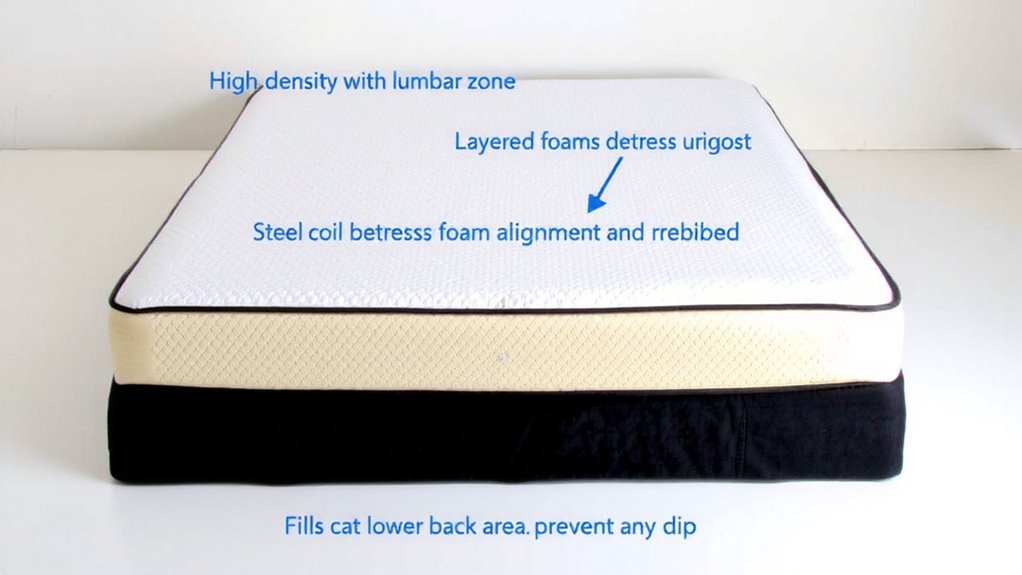
Foam layers in innerspring mattresses do more than just cushion-they play a key role in preventing the kind of lower back sinkage that can throw off spinal alignment. High foam density means firmer, more durable support right where you need it most. This layer works with the coils to evenly distribute your weight and maintain proper spinal alignment throughout the night. Over time, low-density foams compress, but high-density versions resist sagging, preserving support and extending mattress life.
| Foam Density (PCF) | Support Level | Expected Lifespan |
|---|---|---|
| < 1.5 | Low | 2–3 years |
| 1.5–2.0 | Moderate | 4–5 years |
| > 2.0 | High | 6–7+ years |
Choose a mattress with high foam density if you want lasting support for spinal alignment. Check warranty terms that cover foam layer degradation.
How Edge and Core Reinforcement Stop Sagging
When you sit or sleep near the edge of your mattress, reinforced edges help keep the surface stable and supportive, preventing the roll-off or dip that weakens comfort over time. Strong edge support isn’t just about ease when getting in and out of bed-it’s key to maintaining the mattress’s structural integrity. High-quality innerspring models often include reinforced coils or high-density foam along the perimeter, which resist compression and extend usable sleep space. This reinforcement also stabilizes the core, reducing mid-mattress sagging caused by uneven weight distribution. Over time, consistent support across the entire surface means better spine alignment and less strain, especially if you share the bed or move frequently at night. A well-supported core and edge system work together to preserve shape and firmness. Look for models offering trial periods or long warranties, as they often reflect confidence in lasting structural performance.
5 Must-Have Features in a Sag-Resistant Innerspring
Because long-term support matters most in an innerspring mattress, you’ll want to focus on a few key features that prevent sagging over time. Coil gauge, fabric durability, and coil type all play a role in how well your mattress resists lumbar sinkage. Lower coil gauge means thicker wires and firmer support, while reinforced edges and high-density foam layers add stability. A durable fabric cover resists wear and maintains shape.
| Feature | Why It Matters | What to Look For |
|---|---|---|
| Coil Gauge | Thicker coils resist compression | Gauges between 12–15 for firm support |
| Fabric Durability | Prevents surface sagging and tears | Tightly woven, breathable materials |
| Coil Type | Affects motion transfer and support | Pocketed coils for targeted support |
Choose models with solid warranties and sleep trials to test performance over time.
On a final note
You’ll want an innerspring mattress with pocketed coils, high-density foam under the lumbar zone, and reinforced edges to resist sagging. These features support your spine’s natural curve and reduce wear over time. Look for models with solid core support and at least a 10-year warranty, plus a sleep trial, so you can test comfort and durability. Choosing wisely helps maintain alignment and may ease lower back discomfort linked to poor support.