How to Handle Sleep Disruptions During Parental Illness
When parental illness disrupts your sleep, start by setting a consistent bedtime-even 15 minutes earlier helps reset your internal clock. Pair this with a simple routine like turning off screens and deep breathing (4 in, 6 hold, 8 out) to calm nighttime anxiety. Use earplugs, blackout curtains, and do-not-disturb mode to protect your rest. Share caregiving duties when possible, and consider guided meditations-they’re short, non-habit forming, and effective. Stronger sleep habits build over time, and there are more ways to balance care and rest that fit your situation.
Notable Insights
- Maintain a consistent bedtime, even slightly earlier, to strengthen your body’s natural sleep rhythm.
- Practice calming bedtime routines like turning off screens and brushing teeth to signal your brain it’s time to sleep.
- Use breathing exercises or guided meditation for 5–10 minutes to reduce nighttime anxiety and ease into rest.
- Set clear caregiving boundaries, including shared nighttime duties and do-not-disturb periods, to protect your sleep.
- Optimize your sleep environment with blackout curtains, white noise, and cooler temperatures to improve sleep quality.
Understand How Parental Illness Affects Your Sleep
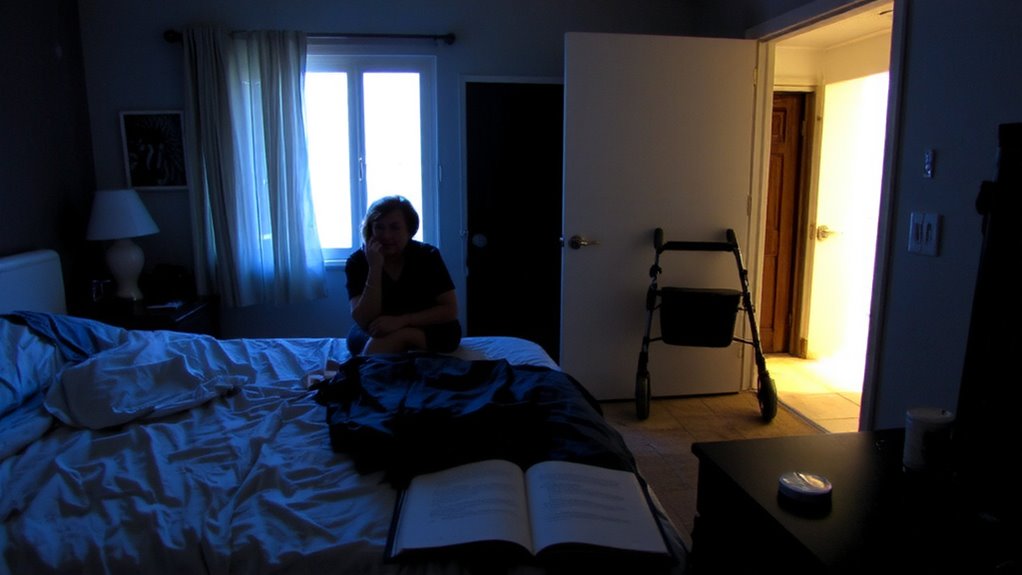
While dealing with a parent’s illness, it’s common for your sleep to take a hit, whether from stress, changing routines, or nighttime caregiving duties. You might notice emotional exhaustion creeping in, making it hard to wind down even when you have time. Racing thoughts, anxiety, or sadness can delay falling asleep or lead to frequent nighttime awakenings. Over time, this contributes to caregiver fatigue-a deep tiredness that rest doesn’t easily fix. Poor sleep doesn’t just dull your focus; it can weaken immunity and worsen mood. Recognizing these patterns helps you decide when to seek support or consider short-term sleep aids. Over-the-counter options exist, but check with a doctor first, especially if taking other medications. Some come with trial periods or money-back guarantees. Understanding how illness disrupts your rest helps you make informed choices without feeling overwhelmed.
Start a Doable Bedtime Routine Tonight

What if tonight were the night you began reclaiming better sleep, not with a complete overhaul but with one small, manageable change? Start by choosing a consistent bedtime, even if it’s just 15 minutes earlier than usual. This builds bedtime consistency, which strengthens your body’s internal clock. Your brain responds well to routine-doing the same calming activity nightly, like reading or dimming lights, sends clear sleep signals. These signals help shift your mind from alertness to rest. Try using a regular pattern: turn off screens, brush your teeth, then sit quietly. Keep it simple so it’s easier to repeat. You don’t need special tools-just commitment to timing and repetition. If you miss a night, restart the next day. Over time, consistent effort improves sleep quality. Monitor what works, then adjust as needed. Small steps now support better rest later.
Calm Nighttime Anxiety With Simple Techniques

Why does your mind race just when you need it to rest? During parental illness, nighttime anxiety often flares, making sleep feel out of reach. You don’t need complex tools to quiet your thoughts-simple, evidence-backed strategies can help. Breathing exercises work quickly: try inhaling for four counts, holding for six, and exhaling for eight. This calms your nervous system and signals safety to your body. Guided meditation uses voice-led focus to redirect anxious thoughts, often available through free apps or online tracks. These tools don’t require expertise-just 5 to 10 minutes in bed. They’re non-habit forming and can be used nightly. While they may not replace medical treatment for severe sleep disorders, they offer a low-risk starting point. Test a few breathing patterns or guided sessions to see what suits your rhythm. Consistent use often improves results over time.
Set Boundaries to Protect Your Rest
A clear boundary can make all the difference when your sleep is on the line. When caring for a parent, emotional exhaustion creeps in quickly if you’re always on call. You might feel guilty stepping away, but protecting rest isn’t selfish-it’s necessary. Set specific hours when you’re available and share nighttime responsibilities with others when possible. This reduces caregiver isolation and gives you time to recharge. Use a do-not-disturb mode on your phone or a dedicated alert system only for true emergencies. Let family know your limits so expectations are clear. These boundaries help prevent chronic sleep disruptions that lead to long-term sleep disorders. Consider sleep aids only after discussing risks and benefits with a doctor. A trial period with melatonin or prescription options may help, but they work best when paired with consistent limits on caregiving duty. Choosing the right pillow, such as one from the best pillows for firm mattresses, can further support restful sleep by improving spinal alignment.
Make Your Bedroom a Sleep Sanctuary
Think of your bedroom as a retreat built for recovery, not just a place to crash. To support rest, focus on light control and noise reduction. Use blackout curtains or a sleep mask to block unwanted light, signaling your brain it’s time to wind down. For noise reduction, try earplugs or a white noise machine-both help muffle household sounds or sudden noises. Choose breathable bedding and keep the room cool, ideally between 60–67°F. Remove electronics that disrupt sleep with blue light or alerts. Test solutions over a few nights to see what works. Many sleep aids come with trial periods, so take advantage of warranties or returns. Simple changes in design and routine can improve sleep quality without medication. You don’t need perfection-just consistent, supportive conditions that encourage rest. For optimal darkness, consider installing best light-blocking curtains that combine dense fabric with a sealed backing to prevent light gaps.
Ask for Help: How to Accept Support Without Guilt
Creating a restful bedroom environment sets the stage for better sleep, but it’s only one part of the picture-especially when you’re coping with a parent’s illness. Letting people help isn’t weakness; it’s part of sustainable self-care. Emotional guilt often blocks support acceptance, but remember: others want to help because it connects them to you. Use clear communication to specify what kind of assistance you need.
| Type of Support | Benefit | Example |
|---|---|---|
| Meal delivery | Reduces daily decisions | Friend brings dinner weekly |
| Ride sharing | Saves energy | Neighbor drives to visits |
| Emotional check-ins | Eases mental load | Sibling calls every other day |
| Housekeeping help | Frees time and mental space | Cousin cleans bathroom monthly |
| Overnight sitting | Allows uninterrupted sleep | Aunt stays during night shifts |
Accepting support helps you stay present-guilt doesn’t serve anyone.
When to Talk to a Therapist About Sleep and Stress
When should you consider reaching out to a therapist for sleep problems tied to stress? If stress keeps you awake most nights, or you wake up anxious and can’t return to sleep, it might be time to explore support. Sleep therapy can help identify patterns linking your thoughts and sleep habits, offering tools to improve rest. You don’t need a formal diagnosis to benefit-many people find relief through early intervention. Chronic stress affects both mental and physical health, so effective stress management is essential. A therapist can guide you through techniques like cognitive behavioral strategies, relaxation training, or mindfulness-all proven to support better sleep. If over-the-counter sleep aids haven’t helped or cause grogginess, professional guidance offers a sustainable path. Therapists also help weigh pros and cons of treatment options. Seeking help isn’t a sign of failure-it’s a step toward regaining control and well-being.
On a final note
You can improve sleep during parental illness by adjusting your routine and mindset. Try a consistent bedtime, simple relaxation methods, and clear boundaries to protect rest. Make your bedroom quiet and comfortable. Accepting help eases stress. If sleep problems continue, consider talking to a therapist. Sleep aids may help short-term, but check with a doctor. Trial changes slowly and track what works.