Creating A Relaxing Bath Routine That Prepares You For Deeper, More Restful Nights
Take a warm bath 1–2 hours before bed using water around 100–103°F to gently raise your core temperature, followed by a natural cooldown that signals sleep onset. Dim the lights, add calming scents like lavender, and avoid screens 20–30 minutes prior to support melatonin release. Use pure essential oils and soft lighting to enhance relaxation without irritation. Keep the routine consistent to strengthen your sleep-wake cycle-and discover how small, science-backed choices compound into deeper rest over time.
Notable Insights
- Take a warm bath 1–2 hours before bed to align with your body’s natural temperature drop and improve sleep onset.
- Set bath water to 100–103°F (38–39°C) for 15–20 minutes to promote optimal post-bath cooling and sleep signaling.
- Add lavender or chamomile essential oils to your bath or diffuser to calm the nervous system and reduce pre-sleep stress.
- Dim bright lights and use warm-toned lighting to support melatonin release and create a restful environment.
- Unplug from screens 20–30 minutes before bathing and keep devices out of the bathroom to enhance relaxation.
Start With a Bath to Improve Sleep Quality
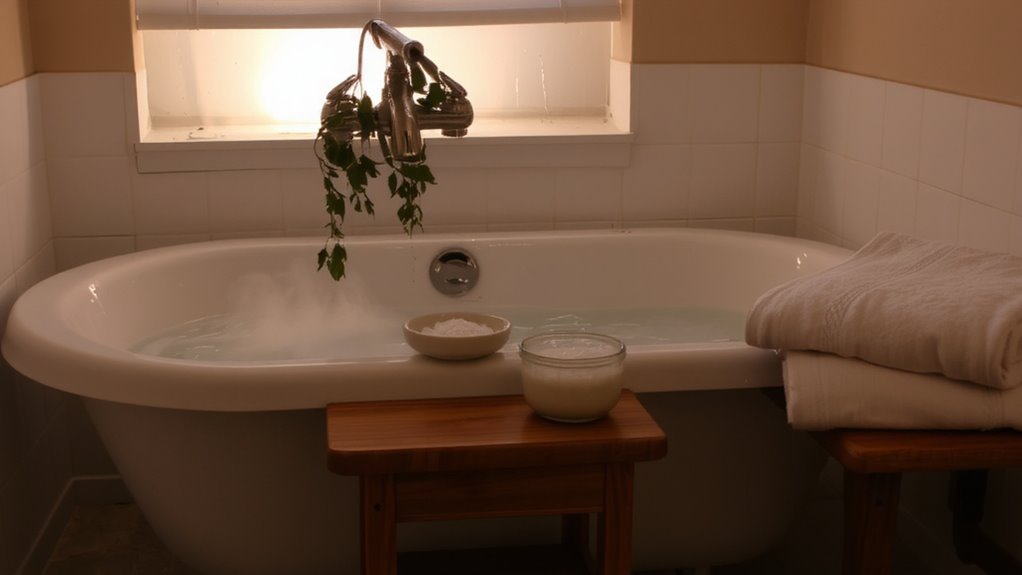
While it might seem simple, taking a bath before bed can make a real difference in how well you sleep. Your body temperature rises during a bath and drops afterward, signaling your brain that it’s time to rest-this shift supports natural sleep cycles. For better results, consider bath timing: starting 1–2 hours before bed aligns with your body’s natural cooldown. Add a few drops of lavender or chamomile essential oil to take advantage of aromatherapy benefits, which may reduce stress and support relaxation. These features work together to create a routine that’s both soothing and effective. You don’t need expensive products-just consistent timing and simple additions like Epsom salts or gentle scents. If you struggle with mild sleep issues, this low-risk habit offers a non-medicated option worth trying. Give it a few nights to assess the effect, as performance varies per person. Some of the most effective Best Bath Products are formulated specifically to enhance relaxation and improve sleep quality.
Time Your Bath for Faster Sleep Onset
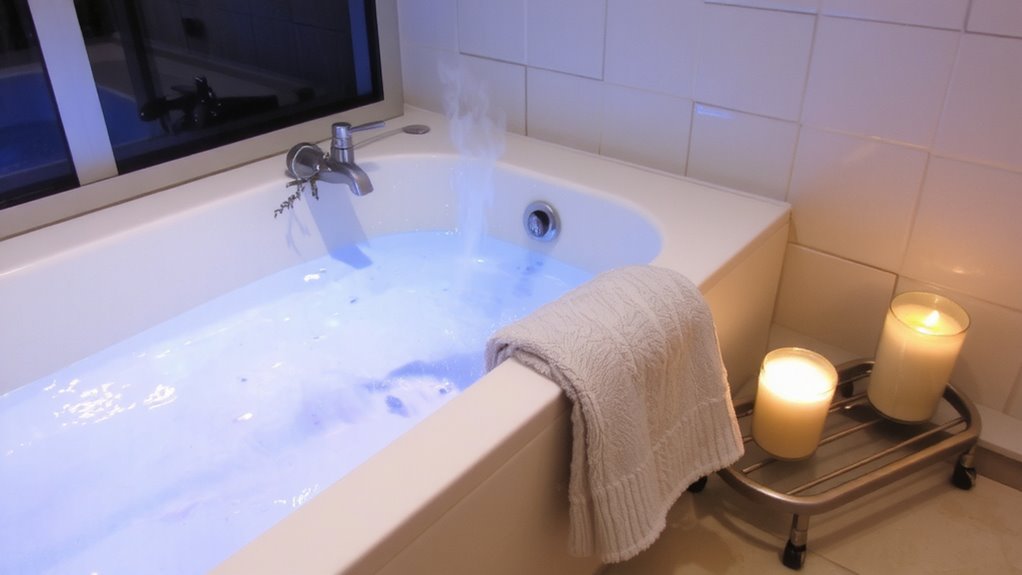
Because your body’s natural temperature drop helps signal sleep, taking a bath 1–2 hours before bed can align with that cycle and speed up how fast you fall asleep. This bath timing isn’t random-it supports sleep alignment by working with your circadian rhythm, not against it. When you soak during this window, your core temperature rises slightly, then drops rapidly after you get out, mimicking the body’s natural cooldown. That shift tells your brain it’s time to wind down. For those dealing with trouble falling asleep, adjusting bath timing may reduce reliance on sleep aids. It’s a simple, non-invasive strategy with consistent results in studies. If you’re testing this, stick with the same bedtime and bath schedule for at least a week. Good sleep alignment takes consistency. This method works well alongside other routines, offering a steady step toward faster sleep onset without medication. Adding best sleep-inducing bath products can further enhance relaxation and improve sleep quality.
Use Warm Water to Lower Your Body Temperature
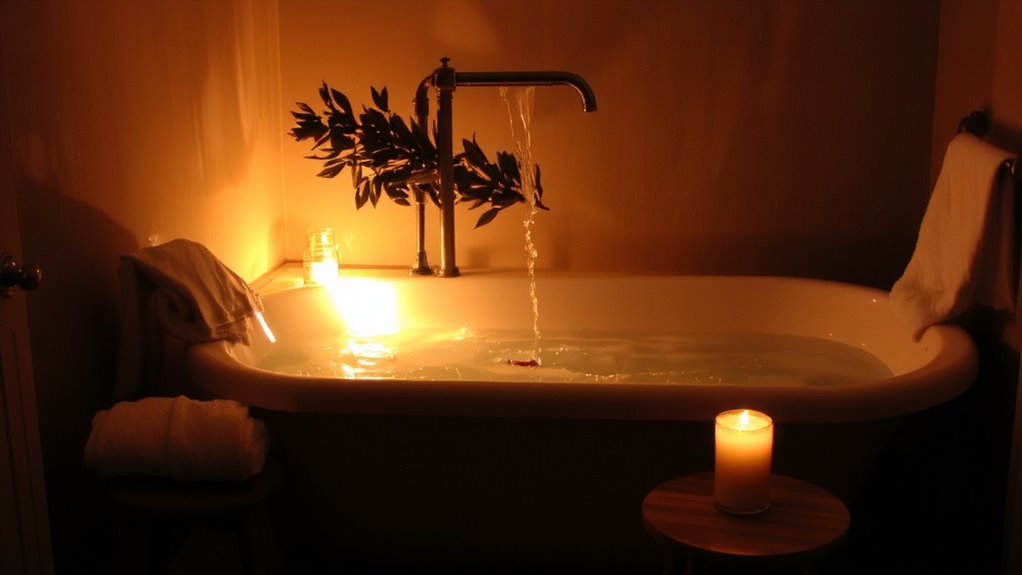
Even though it might seem counterintuitive, soaking in warm water-around 100–103°F (38–39°C)-can actually help lower your core body temperature in the hours after you get out, especially when timed right before bed. This drop supports your body’s natural thermal regulation, signaling that it’s time to rest. As your core temp falls, it aligns with your circadian rhythm, which governs sleep-wake cycles. Research shows this temperature shift can make falling asleep easier, particularly for people with mild sleep onset issues. For best results, soak for 15–20 minutes, then let your body cool gradually in a slightly cooler room. Avoid hot water, as it may disrupt the process. This method works without supplements or devices, relying instead on your body’s built-in systems. It’s a simple, non-invasive option worth trying for several nights to assess its effect on your sleep quality.
Use Soft Lights and Calming Scents
When you’re preparing for bed, dimming the lights and introducing a soothing scent can make a noticeable difference in how relaxed you feel. Soft lighting signals to your brain that it’s time to wind down, easing the shift from alertness to calm. Swap bright overheads for warm-toned lamps or candles to create a gentle glow. Pair this with soothing scents like lavender, chamomile, or sandalwood, which have been studied for their calming effects on the nervous system. These aromas can be introduced through essential oil diffusers, bath salts, or unscented candles infused with natural oils. Using soft lighting and soothing scents doesn’t treat sleep disorders directly, but it supports healthier sleep habits. Many find these elements improve sleep onset and quality when used consistently. Try different combinations to see what works best for your routine, and allow at least a few nights to evaluate results before making changes. For optimal scent dispersion, consider using an aromatherapy oil diffuser designed to preserve the therapeutic properties of essential oils.
Add Ingredients That Promote Sleep Naturally
A warm bath can do more than just relax your muscles-it can become a powerful part of your sleep routine when you add the right ingredients. Try mixing in magnesium flakes; they dissolve easily and may help ease tension and support muscle recovery, which could improve sleep quality over time. Many find that soaking in magnesium helps regulate bodily functions linked to rest. Add a few drops of Lavender essential oil-its scent has been studied for calming the nervous system and may reduce anxiety before bed. These natural options are easy to use and don’t require a prescription. While they aren’t guaranteed cures for sleep disorders, consistent use might help your body wind down more effectively. Results vary, so test them for several nights to judge their effect. Always choose pure oils and quality flakes without added fragrances to avoid skin irritation. This small step could support a more restful pattern over time.
Unplug Before Your Bath to Prepare for Sleep
Putting down your phone or stepping away from the screen before your bath gives your mind a chance to slow down, just like how adding magnesium or lavender sets the physical tone for rest. This simple act of screen separation signals your brain that it’s time to shift into evening mode. A short digital detox helps reduce mental stimulation, making it easier to move into restful sleep. You don’t need to cut out screens entirely-just aim for 20 to 30 minutes of disconnection before your bath.
| Benefit | Suggested Practice |
|---|---|
| Reduces blue light exposure | Turn off devices 30 mins prior |
| Lowers mental alertness | Read a physical book instead |
| Supports natural melatonin release | Use warm, dim lighting |
| Enhances bath mindfulness | Keep phone in another room |
This gentle pause improves sleep onset without relying on sleep aids.
Build a Consistent Bedtime Routine Around Your Bath
Though your bath sets the stage for relaxation, pairing it with a consistent bedtime routine strengthens your body’s sleep-wake cycle over time. Start at the same time each night, letting bath mindfulness anchor your shift-focus on breath, warmth, and sensation to signal downtime. Follow your bath with dim lighting and low stimulation: read, stretch, or write in a journal. This sequence reinforces sleep intention, teaching your brain to associate steps with rest. Keep screens out and temperatures cool. If sleep problems persist, consider discussing sleep aids with a healthcare provider, but prioritize non-drug strategies first. A predictable pattern, including your bath as a cornerstone, improves sleep quality gradually. Many find this routine reduces reliance on sleep medications over time. Consistency matters most-even on weekends. Trial the full sequence for at least three weeks to assess changes in your rest.
On a final note
You’ll sleep better when you time your bath right-about 90 minutes before bed, in warm (not hot) water. This helps lower your core temperature, signaling it’s time to rest. Pair it with soft lighting, calming scents like lavender, and no screens. Add sleep-friendly ingredients like Epsom salts. Make it consistent, and your body will learn the routine. If sleep problems continue, consider consulting a doctor or trying evidence-backed aids with clear instructions and safety info.