Using Mesh Laundry Bags to Protect Delicate Pillow Inserts
You should use a mesh laundry bag to protect delicate pillow inserts during washing, as it reduces agitation and prevents fabric tearing or filling clumps. The bag’s open weave lets water and gentle detergent reach the pillow while shielding it from drum friction. Pick a bag at least 2 inches larger than your insert for proper fit and balance. Wash with cool water, a mild cycle, and low spin using enzyme-free detergent. Make sure the zipper is secured and check for mesh damage first - choosing the right care now helps maintain comfort and support longer, and there’s more to contemplate for long-term pillow upkeep.
Notable Insights
- Mesh laundry bags reduce agitation and prevent clumping in delicate pillow inserts during machine washing.
- A properly sized mesh bag allows space for water flow while protecting pillow fabric from tears and pilling.
- The mesh barrier shields inserts from direct drum contact, preserving seam integrity and outer fabric.
- Using a mesh bag with gentle cycle, cool water, and mild detergent extends pillow loft and comfort.
- Always inspect the bag for tears and secure the zipper to avoid snagging delicate pillow materials.
Why Delicate Pillow Inserts Need a Mesh Laundry Bag
While your pillow inserts may seem sturdy at first glance, they’re often made with delicate fabrics and fill materials that can break down quickly in the wash. Fabric fragility means even gentle cycles can weaken seams or damage soft exteriors over time. Filling displacement is another common issue-tumbling and agitation can push stuffing to one side, leaving lumps or flat spots that reduce comfort and support. You’ll notice uneven loft and compromised structure after just a few washes without proper protection. These changes affect how the pillow performs, potentially impacting head and neck alignment during sleep. Over time, that might influence sleep quality, especially if you rely on consistent support. While some inserts claim machine-washability, the reality is they’re rarely built to endure repeated cleaning. Protecting them isn’t about being overly cautious-it’s a practical step to preserve function and extend lifespan.
How a Mesh Laundry Bag Protects Pillows in the Wash
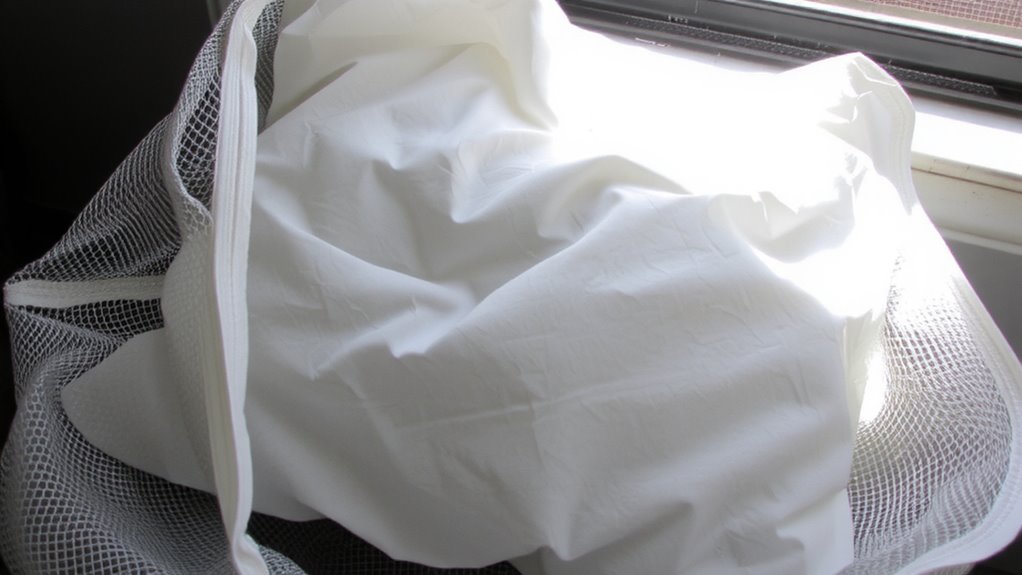
A mesh laundry bag acts like a shield for your pillow inserts, keeping them safe without slowing down your routine. It reduces pillow agitation and minimizes fabric friction during the wash cycle, preserving structural integrity. The open weave allows water and detergent to flow through while containing delicate materials. Below is how protection breaks down:
| Protection Feature | How It Helps |
|---|---|
| Reduced pillow agitation | Limits tumbling, preventing clumping |
| Decreased fabric friction | Stops fibers from tearing or pilling |
| Mesh barrier | Shields from direct contact with drum |
You maintain cleanliness without sacrificing longevity. Over time, less agitation means better loft retention, which supports consistent comfort. Choosing a durable bag with reinforced seams guarantees repeated use without failure. You’ll notice fewer lumps and a softer feel after each wash-important if you rely on specific support for restful sleep. It’s a simple step that aligns care with long-term performance. Using an organic-certified protector inside the mesh bag enhances hypoallergenic benefits and supports best organic pillow protectors for sensitive sleepers.
Choose the Right Mesh Bag Size for Your Pillow Insert
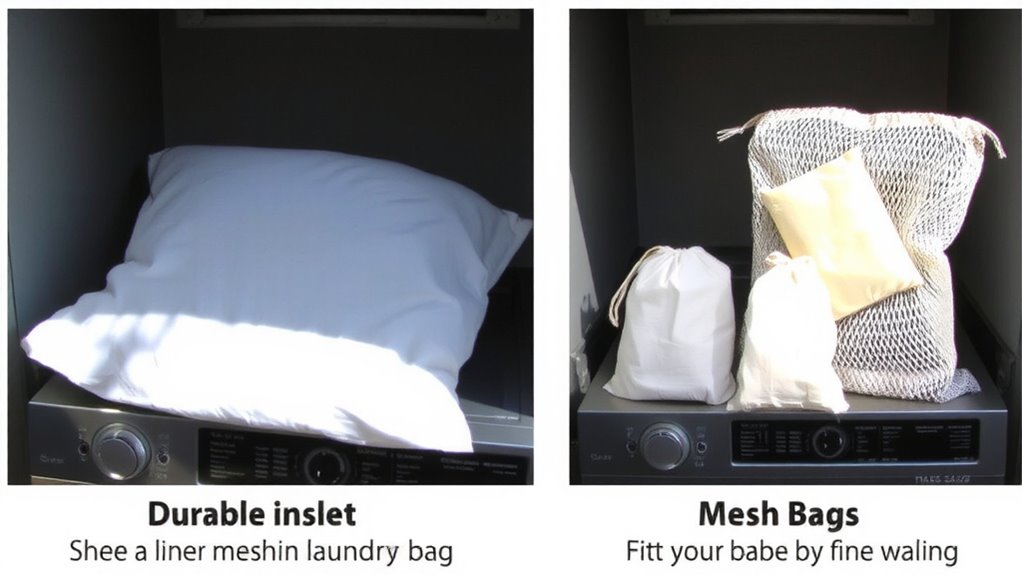
Picking the right mesh bag size matters-use one that’s at least 2 inches larger than your pillow insert on all sides to allow room for water flow and gentle movement during the wash cycle. The correct bag size prevents overcrowding, which can cause uneven cleaning or stress on seams. If the bag’s too small, your pillow won’t have proper pillow fit, increasing friction and wear over time. A slightly roomy fit helps the insert shift naturally without bunching, supporting even detergent distribution and rinsing. Measure your pillow before buying, and check the manufacturer’s recommended dimensions-many brands list compatibility for standard sizes like queen or king. Some mesh bags come with drawstrings or reinforced zippers, which help secure the closure during agitation. Always test the pillow fit before washing: if the insert fits comfortably but isn’t swimming in space, you’ve likely found the right bag size.
Use a Mesh Bag to Wash Pillow Inserts Safely
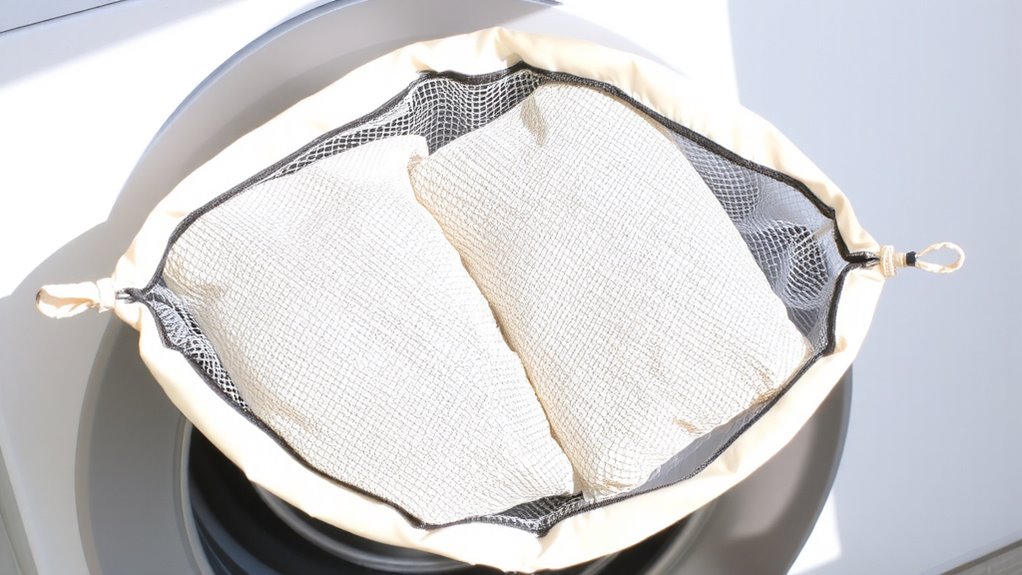
Now that you’ve selected a mesh bag with the right fit for your pillow insert, it’s time to use it properly during washing to guarantee long-term durability and clean results. Secure the zipper fully to prevent fabric tagging, which can damage both the insert and your machine. For even cleaning and effective pillow fluffing, wash two identical inserts together in separate mesh bags. Avoid overloading the washer to allow proper water circulation. Use cool water and a gentle spin cycle to maintain the insert’s structure over time. Refer to the care label on your pillow for specific instructions, and check for any small tears in the mesh before starting.
| Wash Step | Mesh Bag Benefit | Care Tip |
|---|---|---|
| Loading Machine | Prevents tangling | Pair inserts for balance |
| Mid-Cycle | Reduces fabric tagging | Avoid overstuffing |
| Rinse Phase | Supports pillow fluffing | Use mild detergent |
| Spin Cycle | Protects fibers | Check zipper seal beforehand |
Gentle Detergents and Safe Wash Cycles for Delicate Fill
While treating delicate pillow fills, choosing the right detergent and wash cycle can make a noticeable difference in maintaining both cleanliness and longevity. You’ll want to use gentle, enzyme free formulas, since they clean effectively without breaking down sensitive fibers or triggering irritation. These detergents are ideal for maintaining the integrity of down, down alternative, or memory foam inserts. Always select a delicate or gentle wash cycle with slow agitation to prevent shifting or clumping. Pair that with cool rinse settings, which help preserve fiber structure and reduce shrinkage. Cold water also minimizes wear on seams and fabrics over time. Your machine’s spin speed should stay low to limit stress on the fill. Combining a mesh bag with these settings guarantees a balanced clean-effective yet kind to materials. This routine supports the pillow’s performance and comfort, helping sustain restful sleep without unnecessary damage.
Dry Pillows Without Clumping After a Mesh Bag Wash
Since your pillow’s fill is fragile, drying it properly after a mesh bag wash helps maintain its shape and support. Tumble drying on low heat with clean tennis balls can break up clumps and restore loft, but you must check it often. If your pillow’s care label allows, air drying is gentler-just lay it flat on a rack in a well-ventilated space, flipping it halfway through. Air drying takes longer but reduces wear over time. Regardless of method, fluff frequency matters: stop every 20–30 minutes to reshape the pillow and redistribute filling evenly. This prevents dense spots and keeps support consistent. High heat can damage fibers, so always opt for low or no heat. Following these steps preserves the insert’s construction and performance, helping sustain comfort night after night.
Signs Your Pillow Insert Needs Replacing
A well-maintained pillow insert can last for years, but over time, wear and compression begin to affect its performance. You might notice pillow wear patterns like lumps, thinning edges, or uneven support, which can disrupt proper spinal alignment during sleep. These changes often mean the filling has broken down and can’t rebound like it used to. Look closely for fabric discoloration signs-yellowing or dark spots-even after washing, as they may point to absorbed moisture, oils, or allergens. Flatness or a musty smell after drying signals diminished performance. While mesh laundry bags help extend lifespan, they can’t reverse damage. If your pillow doesn’t regain shape or support after cleaning, it’s likely time to replace it. Consider inserts with trial periods or warranties for a confident upgrade.
On a final note
Using a mesh laundry bag helps protect delicate pillow inserts during washing by preventing fiber clumping and structural damage. Choose a bag large enough to let the insert move freely, and always use a gentle cycle with mild detergent. After washing, dry thoroughly on low heat with clean tennis balls to maintain loft. Inspect regularly for thinning or lumps, as these signal it’s time to replace the insert.