Optimizing Spinal Alignment During Sleep to Reduce Lumbar Degeneration Over Time
You lose spinal support each night if your sleep posture misaligns your spine, speeding up lumbar degeneration over time. Side or back sleeping with proper alignment reduces disc pressure and supports natural curvature. A medium-firm mattress with memory foam and a 10-inch profile offers balanced support and pressure relief. Use a pillow that keeps your neck neutral-taller for side sleepers, medium for back sleepers-and consider a knee pillow to maintain pelvic balance. Many quality mattresses come with trial periods, so you can test comfort risk-free and adjust your setup for long-term spinal health.
Notable Insights
- Maintain a neutral spine during sleep to minimize lumbar disc compression and support natural spinal curvature.
- Sleep on your side or back with proper pillow support to reduce lower back strain and prevent misalignment.
- Use a medium-firm mattress that supports the lumbar spine while providing pressure relief for optimal spinal health.
- Place a pillow under the knees when back sleeping or between knees when side sleeping to align the pelvis.
- Replace inadequate pillows and mattresses regularly to ensure consistent support and reduce long-term spinal wear.
Why Poor Sleep Posture Hurts Your Spine
While you’re asleep, your body works to repair and restore itself, so the way you lie each night really does matter-especially for your spine. Poor sleep posture can lead to spinal compression, which strains discs and limits their ability to rehydrate overnight. When your spine isn’t properly supported, it can also create nerve pressure, possibly leading to tingling, numbness, or chronic discomfort. Over time, this misalignment may contribute to wear on spinal structures, especially in the lower back. You don’t need a medical degree to see the results-just morning stiffness or ongoing aches. Using supportive pillows or adjustable bases can help maintain natural curves, reducing harmful stress. Look for sleep aids designed to minimize compression and ease nerve pressure, checking return policies to test comfort. Small changes now may support long-term spinal health without drastic measures. A well-chosen mattress can significantly ease symptoms for those with spinal stenosis, making best mattresses for spinal stenosis an important consideration.
Best Sleep Positions for Spinal Alignment
Where you rest your head and how you position your body each night can make a real difference in spinal health-so what sleep positions actually support proper alignment? Side sleeping is one of the best choices for spinal balance, especially when you keep your spine straight and tuck a pillow between your knees to reduce hip pressure. This position naturally supports the spine’s curve and eases lower back strain. If you prefer lying on your back, use a supportive pillow under your head and a smaller one under your knees to maintain natural back support. This helps keep your lumbar spine in a neutral position overnight. Stomach sleeping isn’t ideal, as it often twists the neck and flattens the lower back. Try adjusting position gradually and test changes over a few nights. Both side sleeping and back support help align your spine and may reduce long-term wear. For enhanced temperature regulation that supports restful alignment, consider a mattress with gel infusion technology.
Choose a Mattress That Supports Your Lower Back
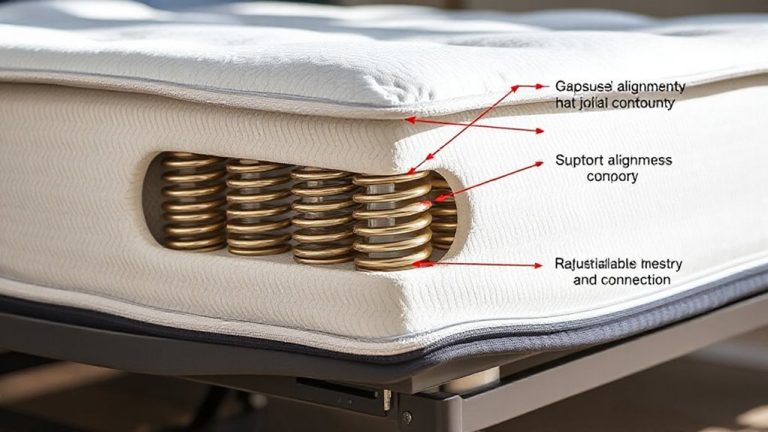
If you’re looking to maintain proper spinal alignment through the night, picking a mattress that supports your lower back is key. A mattress that’s too soft may let your hips sink too deeply, straining your lumbar spine, while one that’s too firm might lack needed pressure relief. Memory foam mattresses often work well because they contour closely to your body, evenly distributing weight and reducing stress on the lower back. They offer reliable support and consistent pressure relief, especially if they’re at least 10 inches thick with high-density base layers. Look for models with a medium-firm feel, as studies link this firmness level to better spinal alignment and reduced back pain. Many quality brands offer sleep trials and extended warranties, so you can test firmness and support risk-free. Choosing wisely now can improve comfort and spinal health over time. Among the top options, the best mattresses for back pain relief combine targeted support with pressure-relieving materials to promote restorative sleep.
Use Pillows to Align Neck and Spine Correctly
A well-chosen pillow can make a real difference in keeping your neck and spine aligned while you sleep. The right pillow height guarantees your neck stays neutral, whether you’re on your back, side, or stomach. If you’re a side sleeper, you’ll likely need a taller pillow to fill the gap between your shoulder and head, while back sleepers often do better with a medium height. Pillow height matters because too high or too low can strain your spine over time. Material firmness also plays a key role-memory foam offers consistent support, while down adjusts softly but may collapse. Consider models with removable inserts to tweak height and firmness. Many brands offer 30-night trial periods, letting you test support and comfort before committing. Look for durable covers and washable materials for long-term hygiene.
Fix Your Sleep Setup in 3 Simple Steps
Start by choosing a supportive mattress that keeps your spine in a neutral position throughout the night. Look for medium-firm options with good pressure relief, especially if you notice morning back pain-many brands offer trial periods, so test one risk-free. Next, adjust your sleep environment: keep the room cool, dark, and quiet, and consider blackout curtains or a white noise machine if needed. Finally, stick to a consistent bedtime routine-dimming lights an hour before bed and avoiding screens helps regulate your sleep cycle. Simple changes like these improve spinal alignment and reduce strain over time. A well-designed sleep setup doesn’t need perfection, just thoughtful choices that support your body and habits.
On a final note
You can protect your spine by adjusting how you sleep. Choose a position that keeps your back neutral, like lying on your side with a pillow between your knees. Use a supportive mattress that matches your body’s needs, and align your neck with a proper pillow. Small changes in your setup help reduce strain over time. Most quality sleep products offer trial periods, so test what works. Your spine will thank you with better comfort and less wear.