How to Clean Down Alternative Pillows: Wash & Dry Guide
Always check the care label before washing your down alternative pillow, as instructions vary by material. Use a mild, hypoallergenic detergent and run the machine on a gentle cycle with cold water. Wash no more than two pillows at once to guarantee even cleaning and balance. Dry on low heat with dryer balls to restore loft, or air dry flat if the label allows. Fluff often to maintain shape and support. Consider using protectors to extend cleanliness between washes-there’s more to learn about keeping your pillow fresh and supportive long-term.
Notable Insights
- Check the care label to confirm if the down alternative pillow is machine washable and suitable for drying methods.
- Use a mild, hypoallergenic detergent and select a gentle cycle with cold water to protect the synthetic fill.
- Wash no more than two pillows at a time to ensure thorough cleaning and prevent machine imbalance.
- Tumble dry on low heat with dryer balls to restore fluff and prevent fiber clumping, following label instructions.
- Fluff the pillow thoroughly after drying by shaking and squeezing to redistribute fibers and maintain loft.
Always Check the Label First
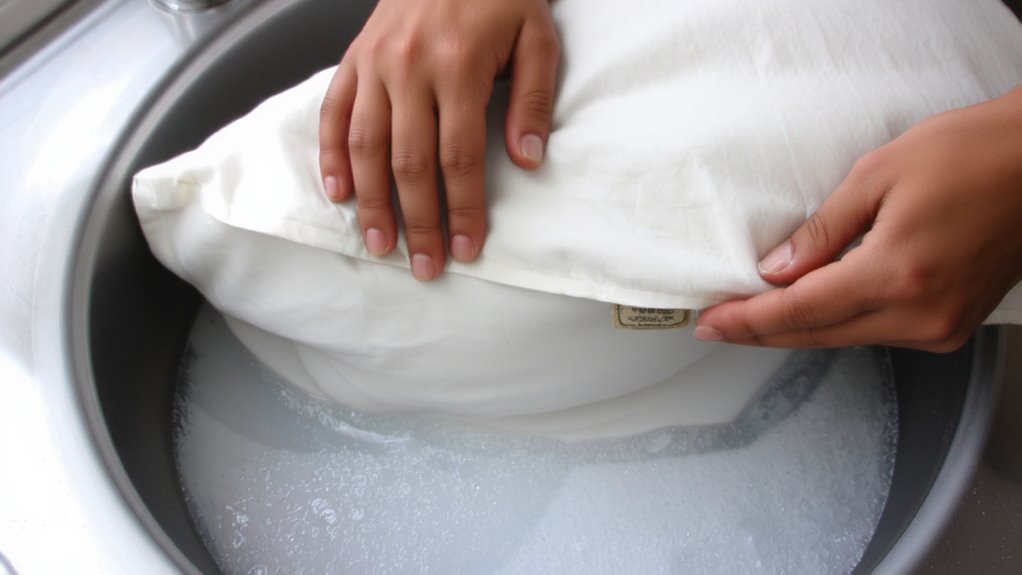
While every down alternative pillow may look similar at first glance, checking the care label before doing anything else can save you time and hassle down the line. You’ll often find specific care instructions that match the pillow’s material types, like polyester fill or microfiber casing. Some pillows are machine washable, while others require hand washing or dry cleaning only. Ignoring these details could damage the pillow’s structure or reduce its lifespan. Material types affect not just cleaning but also breathability and support, which in turn influence sleep quality. If you deal with allergies or sleep disorders, following care instructions guarantees hygiene without compromising performance. Always review trial periods or warranty terms, too-some manufacturers void coverage if care steps aren’t followed. Taking a moment to read the label helps you maintain comfort, cleanliness, and durability over time, supporting better sleep decisions backed by practical upkeep. For side sleepers, choosing the right down alternative pillow can significantly improve spinal alignment and overall comfort.
Choose a Mild Detergent and Gentle Cycle
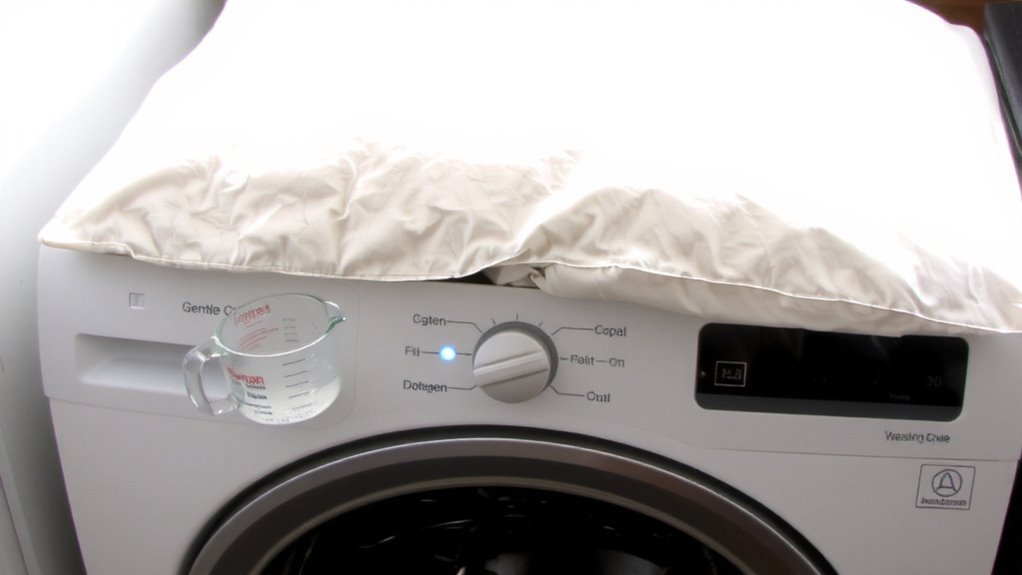
Since harsh chemicals can break down synthetic fibers over time, you’ll want to pick a mild, non-abrasive detergent when washing your down alternative pillow. Detergent selection plays a key role in preserving the pillow’s fill and fabric integrity. Look for a liquid detergent labeled hypoallergenic or free of dyes and fragrances to reduce irritation, especially if you have sensitivities affecting sleep quality. Always close the pillow’s cover zipper, if present, to protect the shell. Set your washing machine settings to cold water and the gentle or delicate cycle-this minimizes stress on the fibers and helps maintain loft. Avoid high spin speeds, as they can damage the internal structure over time. These careful choices support long-term performance and comfort, which matters if you rely on consistent support for restful sleep. Proper care extends the pillow’s life and keeps it a reliable part of your sleep routine.
Wash Down Alternative Pillows in Small Loads
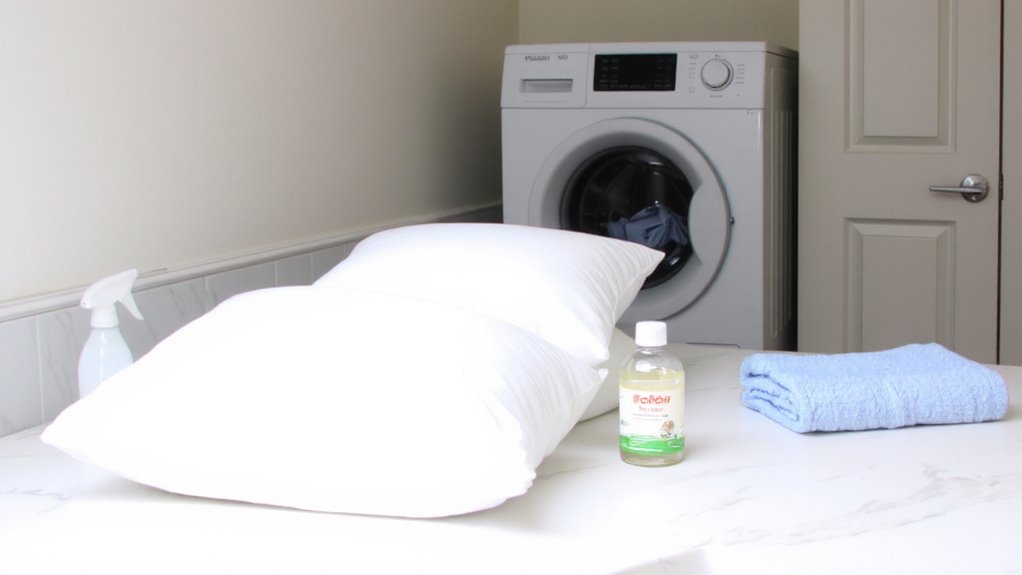
If you want your down alternative pillows to come out clean and retain their shape, it’s best to wash them in small loads. A smaller load size allows the washing machine to agitate the pillows evenly, ensuring thorough cleaning without stressing the fibers. Overloading reduces rinsing efficiency and can leave detergent residue, which may affect breathability and comfort. Place two pillows at most in the machine to maintain balance and allow room for movement during the cycle. This approach supports consistent results, especially important if you rely on these pillows for head or neck support during sleep. Using the right load size also minimizes wear on both the pillow’s synthetic fill and the washing machine’s mechanism. Proper washing helps preserve performance over time, which matters if you’re managing sleep discomfort or adjusting sleep aids. Clean pillows contribute to healthier sleep surfaces without compromising structural integrity. Choosing the right pillow can enhance cleaning effectiveness and overall durability, so consider trusted options by reviewing the best down alternative pillows.
Dry Down Alternative Pillows Completely
You’ve washed your down alternative pillows in small loads to protect their fibers and guarantee even cleaning, so now it’s just as important to dry them thoroughly to maintain their shape and support. For best results, use tumble drying on a low heat setting, adding a few clean tennis balls or dryer balls to help break up clumps and restore fluff. Check the pillows often-most require multiple cycles to dry completely, as damp fibers can lead to odors or clumping. If you prefer air drying, lay the pillows flat on a clean rack in a well-ventilated area, flipping them occasionally to speed drying. Air drying takes longer and increases mildew risk in humid conditions, but avoids heat exposure. Always confirm the care label allows your chosen method. Complete drying ensures performance, longevity, and comfort, especially if you rely on consistent pillow support for restful sleep.
Fluff to Restore Softness and Shape
Shake out any remaining clumps after drying to help your down alternative pillows regain their original loft and softness. Gently press and squeeze the pillow from end to end to redistribute the synthetic fibers evenly. This step is key for effective pillow fluffing, as it encourages airflow and helps maintain material consistency. For best results, toss the pillow into the air a few times, allowing gravity to assist in loosening compacted layers. You’ll notice improved resilience and comfort as part of routine shape restoration. If your pillow still feels flat, repeat the fluffing process or consider a brief tumble dry on low with a clean tennis ball to revive volume. Regular fluffing supports long-term performance, especially in pillows made with polyester or recycled fiberfill. This small effort extends usability and supports consistent support, which matters for those monitoring sleep quality or managing discomfort related to sleep posture.
Use Protectors and Spot Clean Between Washes
Keeping your down alternative pillows in top condition doesn’t end with proper drying and fluffing-how you maintain them between full washes plays a big role in their longevity and support. Pillow maintenance starts with using protectors, which guard against sweat, oils, and allergens while aiding fabric preservation. A quality pillow protector extends time between washes and helps keep fills evenly distributed. When minor spills or stains happen, spot clean with a damp cloth and mild detergent. Avoid soaking the pillow. Let it air dry completely before use. For even better protection, consider using a cotton mattress protector as part of your bedding routine to minimize moisture transfer and enhance breathability.
| Care Step | Benefit |
|---|---|
| Use a protector | Reduces wear, maintains support |
| Spot clean stains | Prevents buildup, keeps fabric fresh |
| Air out weekly | Minimizes moisture, odors |
| Check for lumps | Guarantees even fill distribution |
On a final note
Always check the care label before washing, as materials vary. Use a mild detergent, gentle cycle, and small loads to protect fibers. Dry pillows completely to prevent clumping or mildew, then fluff to restore shape. Using protectors and spot cleaning extends time between washes. Proper care preserves performance and comfort, supporting better sleep. Consider trial periods or warranties when buying new pillows.