Why People With Delayed Sleep Phase Disorder Can’t Fall Asleep Before 2 AM
Your body’s internal clock runs late if you have delayed sleep phase disorder, making it nearly impossible to fall asleep before 2 a.m., no matter how tired you feel. This delay comes from a natural shift in melatonin release and circadian rhythm, often influenced by genes and nighttime light exposure. Trying to sleep earlier usually leads to long sleep latency and frustration, not real rest. Sticking to consistent sleep times, managing light, and using timed melatonin may help reset your rhythm over time-options worth exploring to better align with daily life.
Notable Insights
- Their internal circadian clock is biologically delayed, causing melatonin release much later than typical sleep times.
- Attempting to sleep before their natural wind-down period increases sleep latency due to circadian misalignment.
- Genetic factors can lengthen their circadian cycle, making it harder to fall asleep before 2 AM.
- Nighttime light exposure, especially from screens, further delays melatonin release and sleep onset.
- Irregular sleep schedules and weekend sleep-ins reinforce the delayed sleep phase pattern.
What Is Delayed Sleep Phase Disorder?
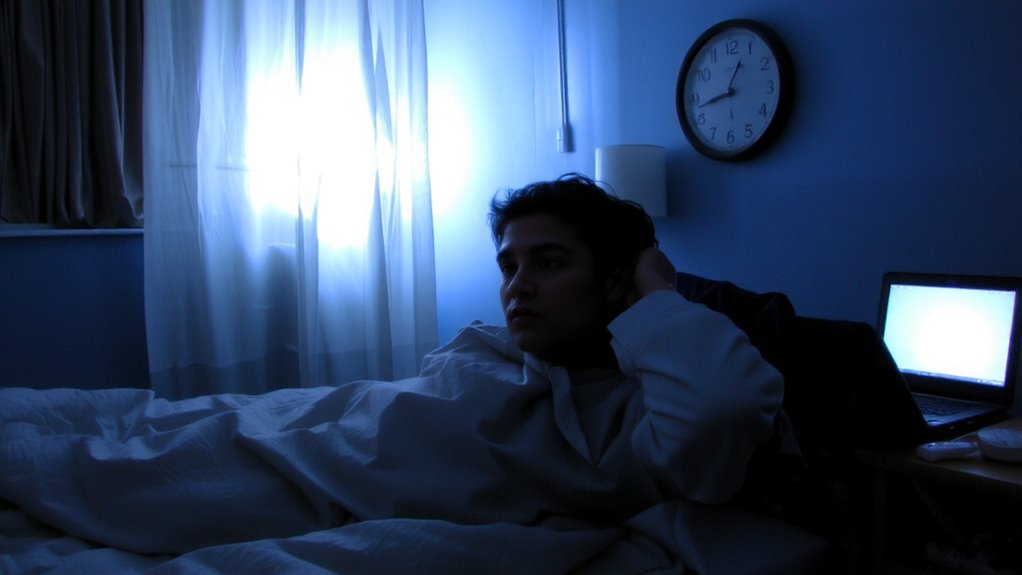
While your body naturally follows a 24-hour sleep-wake cycle, sometimes that rhythm shifts later than usual, and when it does, you might be dealing with delayed sleep phase disorder (DSPD). Your circadian rhythm is still consistent, but it’s delayed-often by two or more hours-making it hard to fall asleep at a conventional time. This isn’t just staying up late; it’s a real shift in your internal clock. Sleep latency, or the time it takes to fall asleep, increases when you try to sleep earlier than your body allows. Even if you’re tired, your brain won’t signal sleep until much later. Though you can eventually sleep well, the timing disrupts typical schedules. Light exposure, genetics, and habits influence this condition. Treatments like light therapy or melatonin exist, but results vary. Understanding DSPD helps you make informed choices about diagnosis and care.
How DSPD Disrupts Daily Life
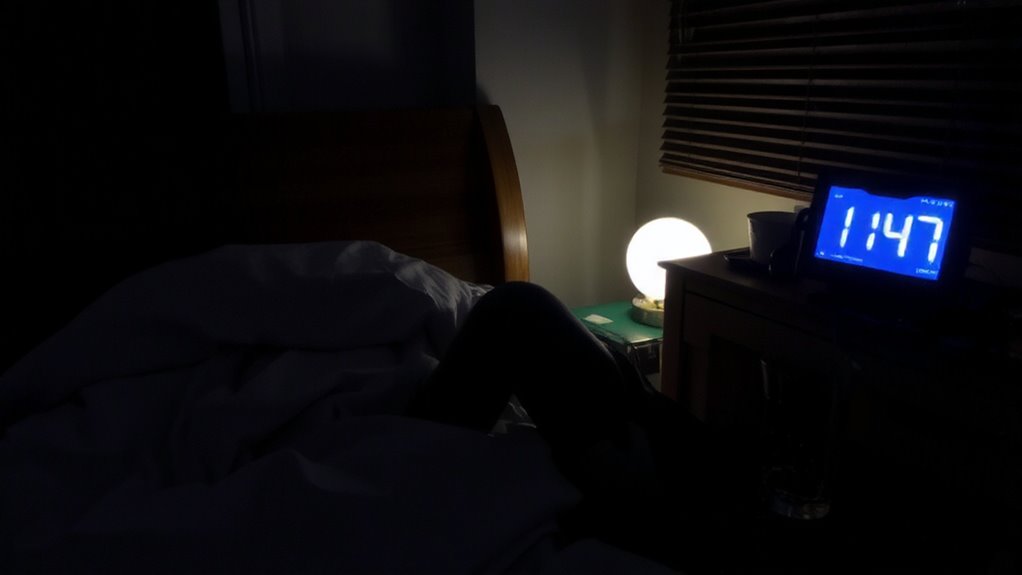
What happens when your internal clock just doesn’t match the world’s schedule? You struggle to fall asleep before 2 a.m., yet still have to wake early for work or school. This misalignment often leads to chronic sleep loss, triggering a productivity decline throughout the day. You might find it hard to focus, make decisions, or complete tasks efficiently. Social commitments become harder to keep-you’re too exhausted by 9 p.m. to join friends, and weekend attempts to sleep in only deepen the cycle. Over time, this can lead to social isolation, as relationships weaken from constant cancellations or fatigue-driven disengagement. Daily routines feel overwhelming, not because you lack effort, but because your sleep timing works against societal rhythms. Recognizing these effects helps clarify whether adjusting habits, trying light therapy, or consulting a specialist could be practical next steps.
Why Your Body’s Clock Runs Late
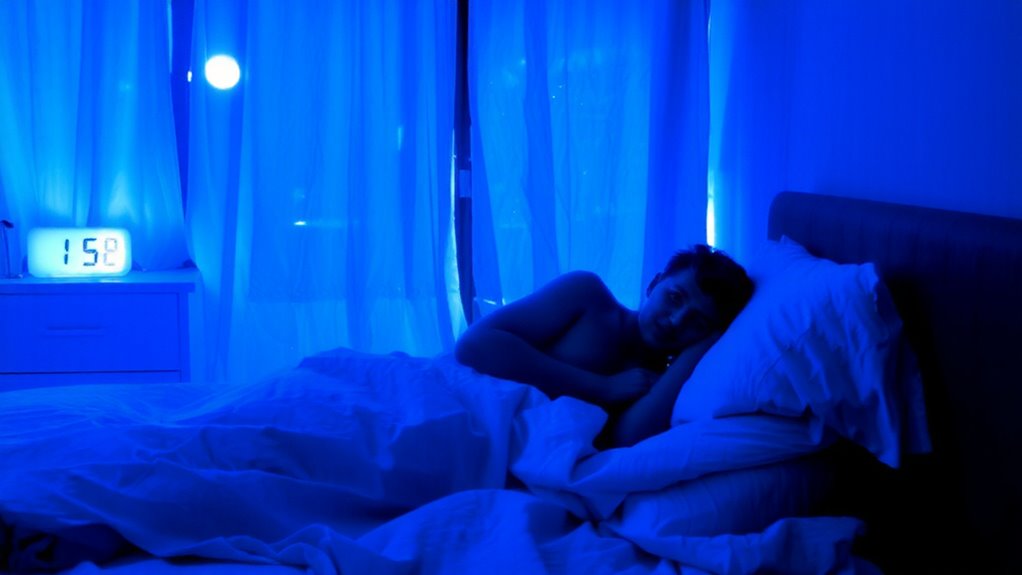
Why does your body resist sleep long after others have drifted off? It’s likely due to a genetic predisposition that shifts your internal clock later than average. This isn’t laziness-it’s biology. Your brain’s circadian rhythm runs on a cycle longer than 24 hours, delaying melatonin release and pushing sleep onset past midnight. That delay leads to circadian misalignment, where your body’s natural timing clashes with societal schedules. As a result, falling asleep early feels impossible, and waking up on time becomes exhausting. This pattern persists even when you try to adjust, suggesting deep-rooted physiological causes. Recognizing this helps inform choices about sleep aids or therapies. Treatments like light therapy or melatonin supplements must align with your body’s delayed signals to be effective. Understanding your clock’s biology lets you make practical, informed steps toward better sleep coordination.
What Triggers DSPD: Light, Genes, and Habits
Your body’s natural delay in sleep timing often stems from a mix of genetic, environmental, and behavioral factors, all interacting in predictable ways. Light exposure, especially at night, shifts your internal clock later, making it harder to fall asleep early. You may carry genes that naturally delay melatonin release, increasing your risk for chronic insomnia if ignored. Habits like late screen use or irregular sleep schedules reinforce delayed patterns, worsening social jetlag-when your weekend and weekday sleep clash. This mismatch strains daily functioning and mental well-being.
| Feeling | Cause | Impact |
|---|---|---|
| Exhausted | Social jetlag | Low focus, irritability |
| Isolated | Missing social events | Loneliness |
| Frustrated | Chronic insomnia | Decreased motivation |
| Overwhelmed | Constant schedule shifts | Poor performance |
| Hopeless | Long-term sleep disruption | Mental fatigue |
How to Reset Your Sleep Schedule
A consistent sleep schedule can improve both sleep quality and daily performance, especially for those affected by delayed sleep phase disorder. You can begin resetting your rhythm by gradually shifting your bedtime earlier-just 15 to 30 minutes every few days. Stick to this new time, even on weekends, to build stability. Strong sleep hygiene supports this shift: keep your bedroom cool, dark, and quiet, and avoid screens at least an hour before bed. Build calming bedtime routines, like reading or light stretching, to signal your body it’s time to wind down. These habits strengthen your natural sleep-wake cycle. Consistency matters more than perfection, so be patient during the adjustment. Small, sustained changes often work better than drastic overhauls. Focus on what you can control-routine, environment, and daily habits-to support your body’s shift toward earlier sleep.
When to See a Doctor for DSPD
Wondering when a late-night pattern becomes something more serious? If your sleep patterns regularly prevent you from falling asleep before 2 a.m. and make daytime functioning difficult, it might be time to seek help. You’re not just a night owl-this could be Delayed Sleep Phase Disorder (DSPD). When school, work, or relationships suffer, a medical evaluation can confirm the diagnosis and rule out other sleep disorders. A doctor may review your sleep history, recommend a sleep diary, or suggest actigraphy to track rhythms. Treatment options vary and could include timed light therapy, melatonin, or chronotherapy. These approaches work best under guidance. Don’t wait years hoping it’ll resolve-early intervention supports better long-term adjustment. A specialist can explain benefits, timing, and consistency needed for each method, helping you make informed choices about managing your sleep health effectively.
On a final note
You might not fall asleep before 2 a.m. because your body’s internal clock runs on a delayed schedule, a condition known as delayed sleep phase disorder (DSPD). Light exposure, genetics, and habits can all play a role. While sleep aids may help short-term, treatments like light therapy and melatonin-used under a doctor’s guidance-can gradually reset your rhythm. Consider tracking your sleep and consulting a specialist if delays persist, affecting daily life.