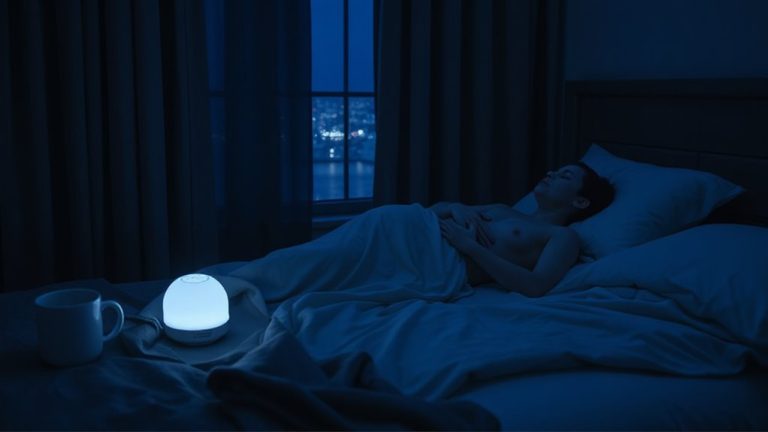
Creating A Comfortable Sleeping Environment That Promotes Healthy Circadian Rhythms
Set your thermostat between 60 and 67°F to support your body’s natural cooldown. Use blackout curtains with side seals or layered fabric to block light and strengthen circadian alignment. Pair them with noise-absorbing curtains rated for sound control to minimize disruptions. Choose breathable bamboo sheets or moisture-wicking fabrics for temperature stability. Keep your bed accessible and positioned away from windows or doors. Reserve the room just for sleep to build a strong mental link with rest-there’s more to contemplate for long-term results.
Notable Insights
- Maintain a bedroom temperature between 60 and 67 degrees Fahrenheit to support natural body cooling and circadian alignment.
- Use blackout curtains with side seals or flaps to block outdoor light and reinforce consistent sleep-wake cycles.
- Install noise-reducing curtains with high NRC ratings to minimize sleep disruptions from ambient sounds.
- Choose cool-toned wall colors and breathable, moisture-wicking bedding to enhance relaxation and temperature regulation.
- Reserve the bedroom exclusively for sleep and optimize layout for symmetry, accessibility, and minimal visual clutter.
How Your Bedroom Affects Your Sleep Clock
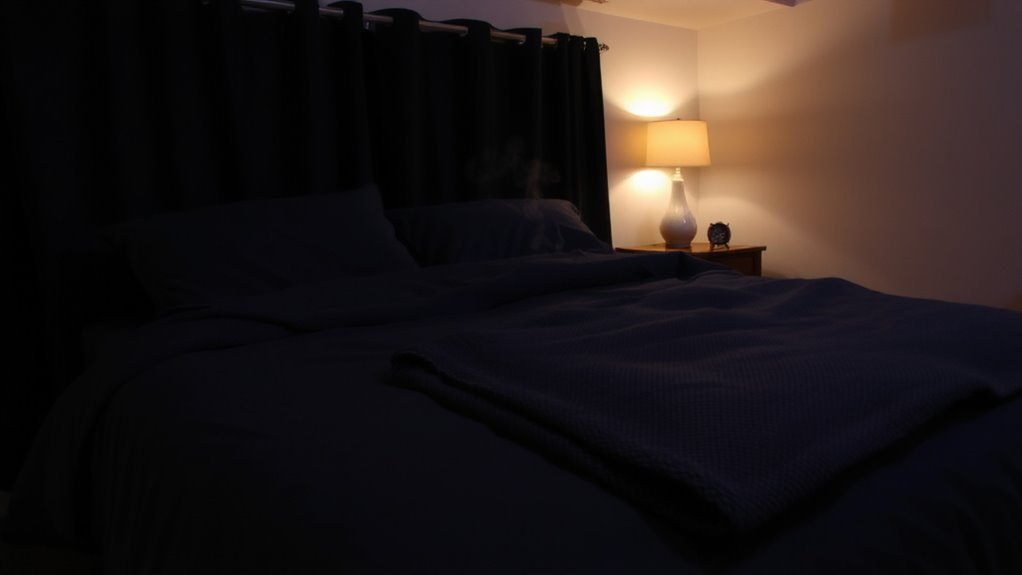
While your body’s internal sleep clock runs on a natural rhythm, the environment you sleep in can either support or disrupt that cycle. Wall colors play a subtle but meaningful role-cooler tones like soft blues or muted grays tend to promote calm, while brighter hues may keep your mind alert. These choices don’t fix sleep disorders, but they can gently guide your mood toward relaxation. Sound patterns also matter: steady, low-volume background noise, like white or pink noise, helps mask sudden sounds that might interrupt sleep. Some sleep aids include sound machines with multiple pattern options and auto-off timers. For those seeking deeper sound masking, a brown noise machine can provide a richer, more grounding auditory experience. When testing changes, give each setup at least a few nights. Look for washable materials in decor and reliable warranties on electronic sleep aids. Small adjustments in wall colors and sound patterns won’t override circadian issues alone, but combined, they support your body’s natural timing with minimal effort.
Block Light to Reset Your Body’s Rhythm
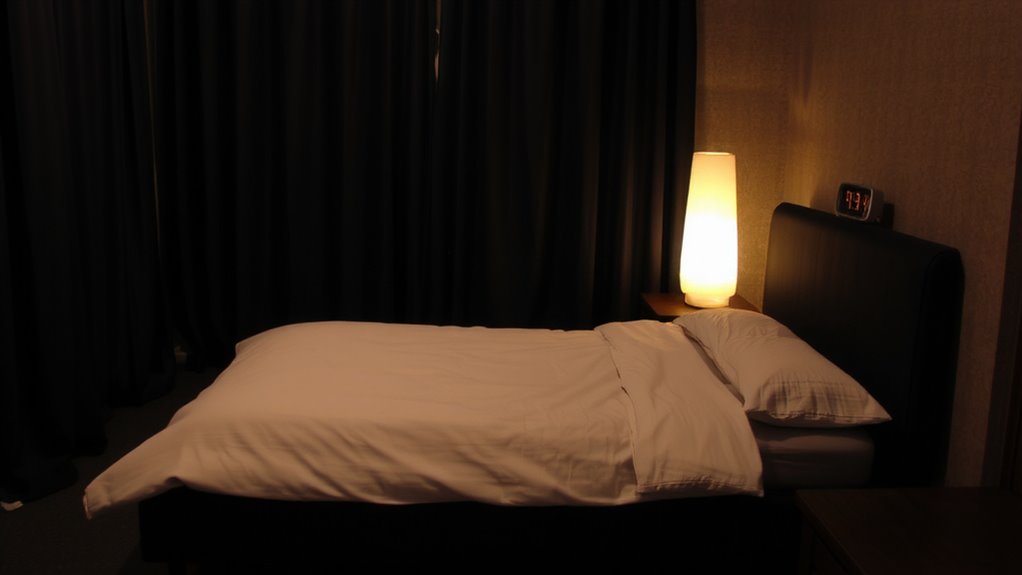
If you’re trying to reset your body’s natural rhythm, blocking light from your sleeping space is one of the most effective steps you can take. Even small amounts of light at night can disrupt melatonin production and delay sleep onset. Blackout curtains are a proven solution-they’re designed with dense, layered fabric that blocks nearly all outdoor light. Look for ones labeled “true blackout” and check if they include built-in light sealing features like side tracks or wraparound flaps to prevent glow leakage. Some models come with a warranty, so you can test their performance risk-free. You might also pair them with blinds or shades for added coverage. Light sealing isn’t just about curtains; consider sealing gaps around windows with tape or adjustable panels if needed. These fixes are affordable, easy to install, and can make a measurable difference in sleep quality. Try them for at least a week to assess changes in your sleep onset and morning alertness. For optimal results, choose curtains with multiple fabric layers to ensure complete darkness.
Set the Right Temperature for Deep Sleep
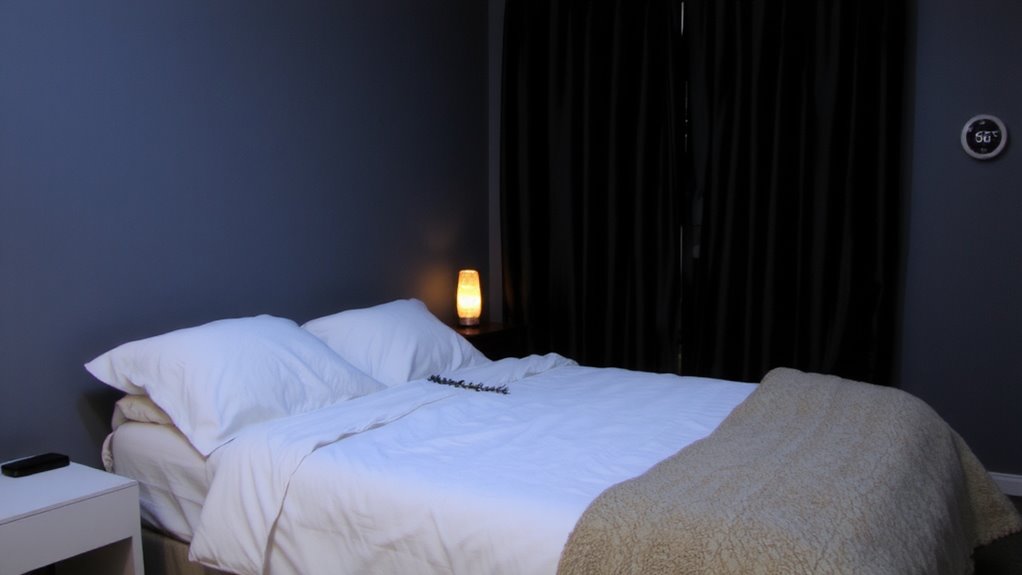
You’ve taken steps to block light and support your body’s rhythm, but temperature plays an equally quiet yet powerful role in how deeply and well you sleep. Your body naturally cools as bedtime approaches, and an ideal thermostat setting-typically between 60 and 67 degrees Fahrenheit-supports that drop. Too warm or too cold, and your sleep cycles may shift, reducing deep sleep. Consider breathable bedding and moisture-wicking fabrics to maintain stable sleep humidity, ideally between 30% and 50%. Devices like smart thermostats or fans with timers can help maintain this balance through the night. Some cooling mattresses or mattress toppers come with warranties and adjustable settings for personalized comfort. Trial periods let you test whether a product fits your routine. Pay attention to how you feel in the morning-refreshed or restless-since that’s a reliable indicator of whether your sleep environment is working. For targeted relief, consider using one of the best sleep temperature regulators designed for cool comfort.
Quiet Your Room for Uninterrupted Rest
How well are you really sleeping if every little sound pulls you out of rest? Even low-level noise can disrupt your sleep cycle, weakening circadian rhythm health over time. If outside traffic, a snoring partner, or household sounds disturb you, consider upgrading your room’s sound control. True soundproof walls require structural changes, like adding insulation or resilient channels, but they offer long-term results. For a simpler fix, noise canceling curtains work well-they’re lined with dense materials that absorb and block sound. Look for ones with high NRC (Noise Reduction Coefficient) ratings and full window coverage to seal gaps. Many brands offer trial periods, so you can test their effectiveness. While they won’t replace professional soundproofing, they’re affordable and easy to install. Try them first before investing in costly renovations. Quiet really does support deeper, more consistent rest.
Pick Cooling, Breathable Bedding
A quiet room sets the stage for rest, but even in silence, your body needs the right sleep surface to stay cool and comfortable through the night. Choose moisture wicking sheets that pull sweat away from your skin, helping regulate temperature during warm spells or restless hours. Bamboo fabrics are naturally breathable and soft, offering a lightweight feel that resists odors and stays fresh longer. These materials work well for people prone to night sweats or those living in humid climates. Many bamboo and moisture wicking sheet sets come with deep pockets for thick mattresses and feature secure elastic edges. Most brands offer trial periods and warranties, so you can test comfort and durability risk-free. While bamboo requires gentle washing, its long-term performance often makes the care worth it. Consider starting with a single set to assess how your body responds before upgrading your entire bedding.
Arrange Furniture for Calm and Flow
When arranging your bedroom furniture, think about how each piece affects both movement and mood, since a layout that promotes easy flow can also support better rest. Position your bed so it’s easy to access from both sides, with space to move freely-this supports feng shui balance by allowing energy to circulate. Avoid placing the bed directly in line with the door or under a window, which can disrupt calm. Choose a minimalist design approach: limit furniture to essentials like a bed, nightstand, and dresser to reduce visual clutter and promote relaxation. Heavy or oversized pieces can make the room feel confined, interfering with both physical and mental ease. Keep pathways clear and symmetrical when possible, as balanced arrangements often feel more soothing. Test different layouts over a few nights to see which supports smoother shifts into rest. A well-arranged room doesn’t guarantee sleep, but it can help reduce nighttime stress.
Make Your Bedroom a Sleep-Only Zone
Your bedroom’s role as a sleep-only zone strengthens its ability to signal rest to your mind, making it easier to fall asleep and stay asleep. When you reserve your bed just for sleep, you reinforce a strong mental association between your bed and rest, which supports healthy sleep hygiene. Avoid working, watching TV, or scrolling on your phone in bed-those activities can confuse your brain’s cues for wakefulness and rest. Creating this clear boundary helps regulate your circadian rhythm over time. If you struggle with falling asleep, consider whether your environment supports this mental association. Devices like sleep trackers or blackout curtains can help, but their effectiveness depends on consistent use and proper setup. Look for products with trial periods to test their real-world performance. Small changes in how you use your bedroom can make a meaningful difference in your sleep quality and overall well-being.
On a final note
You’ll sleep better when your bedroom supports your natural rhythm. Block light with blackout curtains, keep the room cool-around 65°F-and reduce noise with earplugs or a white noise machine. Choose breathable, cooling bedding like cotton or moisture-wicking fabrics. Arrange furniture to create open, calm space, and reserve your bed for sleep only. Try these changes for at least two weeks to see improvements, and consider a sleep tracker to monitor progress.