Magnesium Malate Jitters at Night: The ATP/Malic Acid Cause
You might feel jittery at night because magnesium malate combines magnesium with malic acid, which fuels your cells’ energy production. Unlike calming forms like glycinate, this boost in ATP can increase alertness, especially if taken late. Your body’s response depends on metabolism, stress levels, and sensitivity to stimulation. Taking it earlier in the day may prevent sleep disruption. If you’re prone to restlessness, switching forms could help-there are better options for nighttime use.
Notable Insights
- Magnesium malate contains malic acid, which boosts cellular energy production and may increase alertness at night.
- Malic acid enhances ATP synthesis, the body’s energy currency, potentially disrupting sleep onset when taken before bed.
- Unlike calming forms like glycinate, magnesium malate’s metabolic stimulation can cause jitteriness in sensitive individuals.
- Faster absorption of magnesium malate may intensify its activating effects, especially when taken in the evening.
- People with adrenal fatigue, high stress, or low cortisol are more prone to its stimulating side effects.
Why Magnesium Malate Can Cause Jitteriness at Night

Could something as calming as magnesium actually keep you awake? Yes, especially if it’s magnesium malate. Though magnesium usually helps you relax, the malate form
How Malic Acid Turns Magnesium Into an Energy Boost
Malic acid is the key reason magnesium malate might leave you feeling more alert instead of relaxed. It plays a direct role in cellular respiration, helping fuel energy production in your cells. When you take magnesium malate, the malic acid component supports ATP generation, the body’s main energy currency. This boost in metabolic activity can enhance daytime alertness but may interfere with sleep if taken too close to bedtime. Consider pairing your supplement routine with sleep-supportive bedroom upgrades, such as best bed skirts for adjustable beds, to optimize rest despite metabolic stimulation.
| Process | Effect on Body |
|---|---|
| Malic acid intake | Fuels cellular respiration |
| Magnesium absorption | Supports enzyme function |
| ATP synthesis | Increases energy production |
| Metabolic activation | Promotes daytime alertness |
| Evening consumption | May delay sleep onset |
Consider timing your dose earlier in the day to benefit from sustained energy without disrupting rest. This form’s design favors metabolic performance, so weigh it against your sleep needs.
Why Magnesium Malate Isn’t Like Other Magnesium Forms
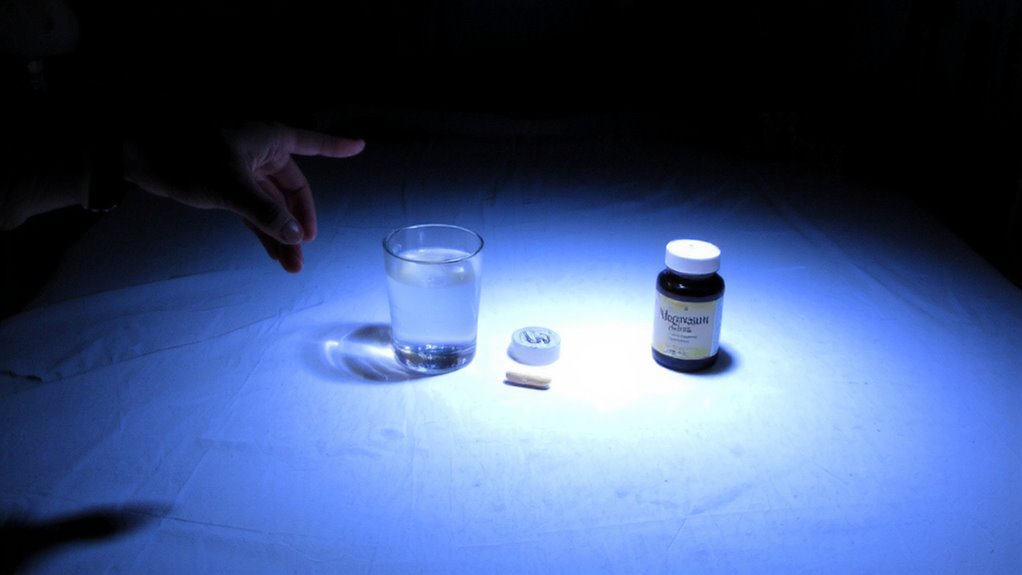
Not every magnesium supplement works the same way, and magnesium malate stands apart in both makeup and effect. Its unique chemical structure combines magnesium with malic acid, a compound involved in energy production. This pairing affects its absorption rate-faster than some forms, which may influence how your body responds. Unlike magnesium glycinate, known for calmness, or oxide, often used for digestion, malate delivers support for muscle function and cellular energy. Because of this, you might feel more alert, especially if taken close to bedtime. The increased absorption rate means magnesium enters your system quickly, contributing to both benefits and potential timing concerns. If you’re choosing a supplement for sleep, you’ll want to take into account how each form behaves. Trying different types, possibly rotating or timing doses earlier, helps determine what works best for your routine. Always check labels and consult with a healthcare provider for personalized guidance.
Who’s Most Sensitive to Magnesium Malate’s Stimulating Effect
Why do some people feel a burst of energy instead of relaxation after taking magnesium malate at night? You might be more sensitive due to genetic predisposition affecting how your body processes nutrients. If your metabolism converts malic acid into energy more efficiently, the result can be unwanted alertness before bed. People with adrenal fatigue are especially prone-your stress-adapted system may overreact to the mild stimulating effect of malate. Even though magnesium typically calms the nervous system, the combo in magnesium malate doesn’t work the same for everyone. You may notice jitteriness if your body is already in a hyper-vigilant state. Consider your health background: if chronic stress, low cortisol, or fatigue mark your routine, this form might disrupt sleep instead of supporting it. It’s not a flaw in the supplement-just a mismatch. Listen to your body’s response, and adjust accordingly for better results. For anxiety and sleep support, best magnesium supplements are often more effective and less likely to cause stimulation.
When to Take Magnesium Malate to Avoid Jitteriness
Could the timing of your magnesium malate dose be affecting your sleep? Yes-timing considerations play a big role. Taking it too late may lead to mild stimulation instead of relaxation. Your body processes the malic acid component in ways that support energy production, which might interfere with winding down. To reduce jitteriness, take your dose earlier in the day, like with lunch or mid-afternoon. This aligns with natural energy cycles and lets the effects taper before bed. Also, pay attention to dosage effects-even a standard amount may be too much if taken late. Starting with a lower dose can help you assess tolerance. Everyone’s response varies based on metabolism and sensitivity. Adjusting when you take magnesium malate is a simple, effective way to avoid sleep disruption while still supporting daily energy and muscle function. For those seeking alternatives, consider trying best magnesium supplements for better sleep that are specifically formulated to promote relaxation and improve sleep quality.
Best Magnesium Forms for Sleep and Relaxation
If you’re looking for better sleep and relaxation, the type of magnesium you choose really matters. Magnesium glycinate is often preferred because it absorbs well and promotes calmness without stimulating your system. It supports sleep quality by interacting with neurotransmitters that regulate your stress response. Magnesium threonate may also help, as it penetrates the brain more effectively, potentially improving sleep patterns and cognitive calm. Unlike magnesium malate, which can cause jitteriness, these forms are less likely to interfere with rest. Pair them with relaxation techniques like deep breathing or gentle stretching for better results. While individual responses vary, many find these types improve both falling asleep and staying asleep. Look for supplements with third-party testing to guarantee purity. A small trial period helps determine effectiveness and tolerance. Always check dosage and consult your healthcare provider, especially if you have sleep disorders or take other sleep aids.
On a final note
You might feel jittery at night with magnesium malate because the malic acid can boost energy production, unlike more calming forms. It’s best taken earlier in the day. If you’re sensitive, switch to magnesium glycinate or citrate before bed, as they support relaxation without stimulation. Check product labels for form and dosage, and consider a trial period to see what works best for your sleep routine.