How To Use Aromatherapy Oils As Part Of Your Nightly Wind-Down Routine For Better Rest
You can use aromatherapy oils in your nightly routine by diffusing calming scents like lavender or chamomile about 30 minutes before bed, adding a drop to your night cream, or mixing diluted oils into a warm bath. These methods help ease stress and signal your body to unwind. Consistent use over a few weeks improves results. Try varying scents to avoid fatigue and see what works best for your sleep patterns. There’s more to discover about tailoring these practices to your needs.
Notable Insights
- Use a diffuser with lavender or chamomile oil 30 minutes before bed to calm the nervous system.
- Add 1–2 drops of essential oil to your night cream for soothing skin absorption during sleep.
- Take a warm bath with 5–8 drops of diluted cedarwood or lavender oil to ease into rest.
- Diffuse oils intermittently overnight to maintain a relaxing atmosphere without sensory overload.
- Rotate calming oils weekly to prevent scent fatigue and maintain aromatherapy effectiveness.
How Essential Oils Improve Sleep
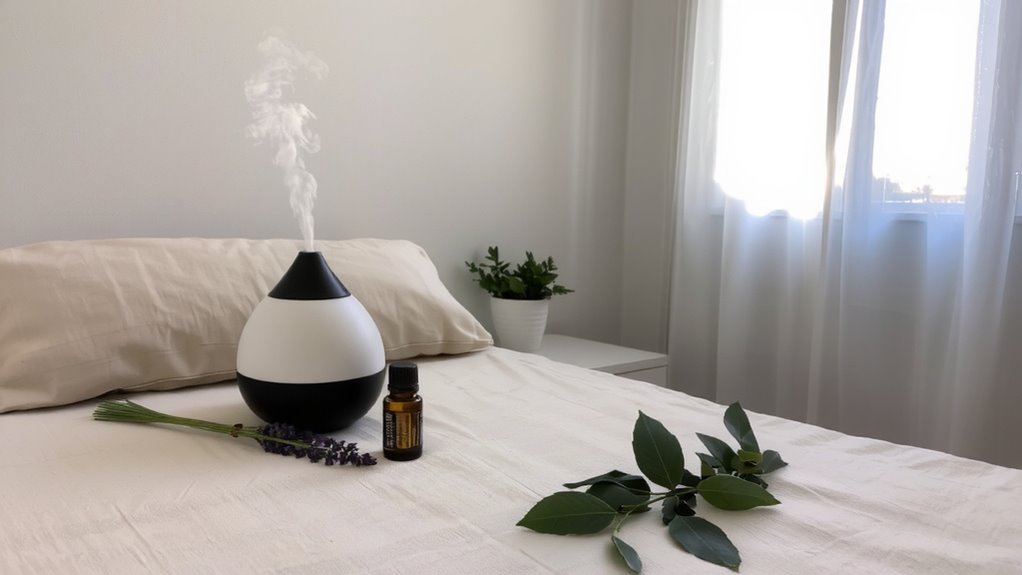
While you might not think a few drops of oil could make a real difference, essential oils can play a meaningful role in supporting better sleep by influencing the nervous system. When inhaled, certain scents interact with your brain chemistry, helping to reduce stress hormones and promote relaxation. This shift can ease your body into rest mode, making it easier to fall asleep and stay asleep. Essential oils like lavender and chamomile have been studied for their impact on sleep cycles, showing potential to extend deep sleep phases. Though individual responses vary, consistent use may help regulate your nightly rhythm. You can try oils as part of a sleep aid routine-especially if you struggle with mild sleep disruptions. Since results depend on personal sensitivity, a trial period of 2–3 weeks helps assess effectiveness. Always check product purity and safety info before use. For best results, choose from the best essential oils for sleep based on purity, potency, and user reviews.
Use a Diffuser for Sleep-Inducing Aromatherapy
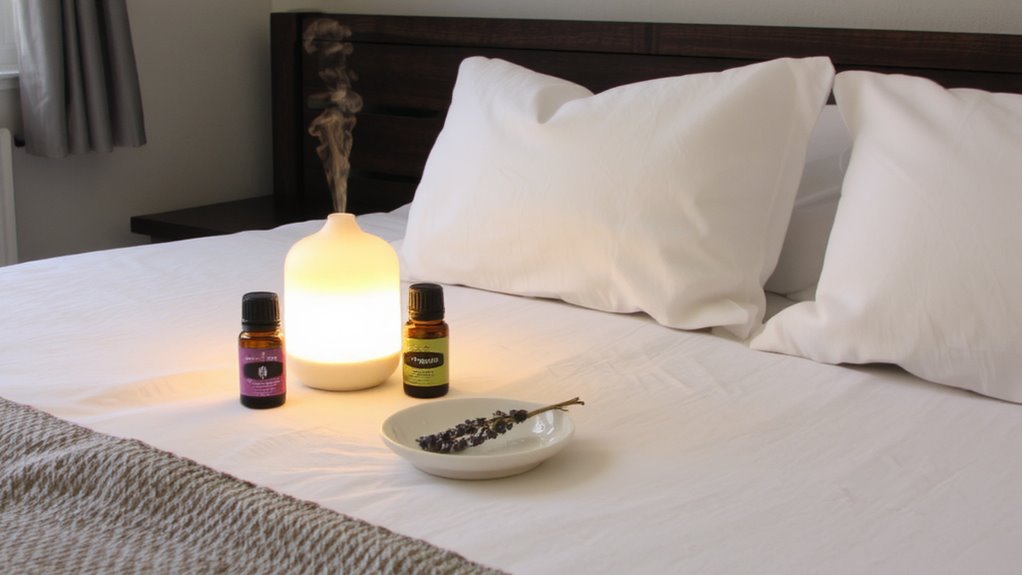
If you’re looking for a simple way to enjoy essential oils at bedtime, a diffuser offers a convenient and effective option. Just add water and a few drops of your chosen oil to let the mist carry calming fragrance through your bedroom. Proper diffuser placement matters-set it on a stable surface about three feet off the ground, away from walls and electronics, for ideal dispersion. To avoid scent fatigue, practice scent rotation by switching oils every few nights. This keeps your senses responsive and supports consistent relaxation over time. For best results, choose a high-quality ultrasonic diffuser that evenly disperses fine mist without altering the oil’s therapeutic properties.
| Oil Type | Recommended Drops | Runtime (Hours) |
|---|---|---|
| Lavender | 3–5 | 1–2 |
| Chamomile | 4–6 | 1–2 |
| Cedarwood | 3–5 | 2 |
| Bergamot | 4–6 | 1–2 |
Choose intermittent diffusion to maintain balance and comfort throughout the night.
Add Essential Oils to Your Night Cream
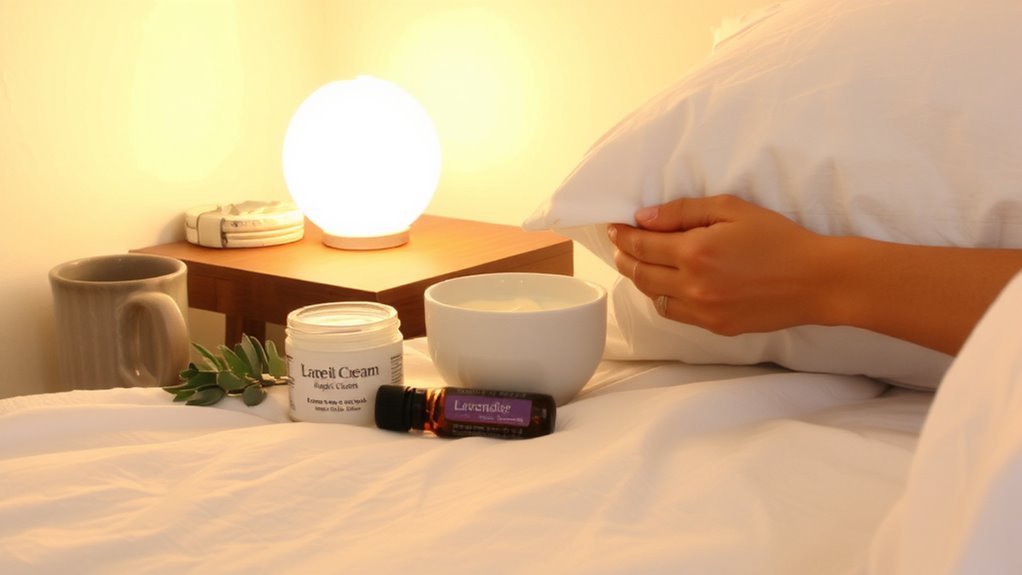
You can enhance your nighttime routine by adding a drop or two of essential oil to your night cream, blending skincare benefits with aromatherapy. This method supports slow skin absorption, allowing both the moisturizer and oil to work overnight. Choose oils like lavender or chamomile for their calming properties, and always check cream compatibility before mixing-some essential oils may separate in certain bases or irritate sensitive skin. Patch test first, and stick to non-irritating, dermatologist-approved options. Since your skin absorbs compounds more effectively at night, timed application enhances performance. Look for creams free from harsh alcohols or synthetic fragrances to improve oil integration. If you’re managing sleep issues, this subtle sensory cue can support relaxation without relying on heavier sleep aids. Experiment gently, track how you feel, and adjust based on comfort and results. With consistent, informed use, it may help signal your body it’s time to wind down. Pairing this ritual with a supportive sleep environment, such as choosing the right mattress, can further enhance rest-consider a mattress for back pain to align your spine while you relax into sleep.
Take a Relaxing Bath With Calming Oils
Adding calming essential oils to your evening bath can deepen relaxation, building on the soothing nighttime habits you may already practice, like using fragranced moisturizers. You’ll want to set the bath temperature slightly warmer than body temperature-around 98°F to 100°F-so it doesn’t overstimulate your nervous system. High heat may increase heart rate, counteracting relaxation. For best results, limit your soaking duration to 20–30 minutes; longer soaks can dry your skin or cause overheating. Add 5–8 drops of diluted essential oil to running water to help disperse the oils evenly and prevent skin irritation. A bath earlier in the evening gives your body time to cool down before bed, supporting natural sleep onset. This routine works well alongside other wind-down habits, offering a sensory cue that it’s time to shift into rest mode.
Pick the Best Oils for a Restful Night
What makes certain essential oils more effective for sleep? It’s their natural compounds that interact with your nervous system to promote calm. When choosing oils, consider both Lavender benefits and chamomile effects-both are backed by research for reducing anxiety and improving sleep quality. Lavender helps slow heart rate, while chamomile acts as a mild sedative.
| Oil | Feeling It Promotes | Best For |
|---|---|---|
| Lavender | Deep calm, eased tension | Restless minds, stress |
| Chamomile | Gentle drowsiness | Light sleepers, anxiety |
| Cedarwood | Grounded, cozy comfort | Interrupted sleep patterns |
These oils vary in strength and scent, so test a few to see what works for your body. Always use pure oils and patch-test first. There’s no universal fix, but trying these can guide you toward better, more natural rest.
Build a Scent-Based Bedtime Routine
While winding down for the night, incorporating essential oils into your routine can support a smoother shift into sleep by signaling your brain that it’s time to rest. Start with scent layering-use a diffuser with calming oils like lavender or chamomile, then follow with a personal roll-on on wrists or temples. This layered approach prolongs exposure and deepens relaxation. Add pillow misting by lightly spraying a few drops of diluted essential oil onto your pillowcase; it releases fragrance slowly as you settle in. Choose products clearly labeled for nighttime use, with natural ingredients and no synthetic fragrances. Many brands offer trial sizes, letting you test effectiveness without long-term commitment. Consistency matters-using the same scents nightly strengthens the mental association with sleep. Over time, this routine may improve sleep onset and quality, especially if stress or mild insomnia is a factor.
On a final note
You can use essential oils to support better sleep by incorporating them into your nightly routine. Try a diffuser, adding oils to moisturizer, or using them in a bath. Lavender, chamomile, and cedarwood are often effective. Start with small amounts to see what works for you. Consistency matters more than intensity. These methods complement good sleep habits and may reduce reliance on stronger aids over time.